






Definition and Overview of Procurement Agreement Template
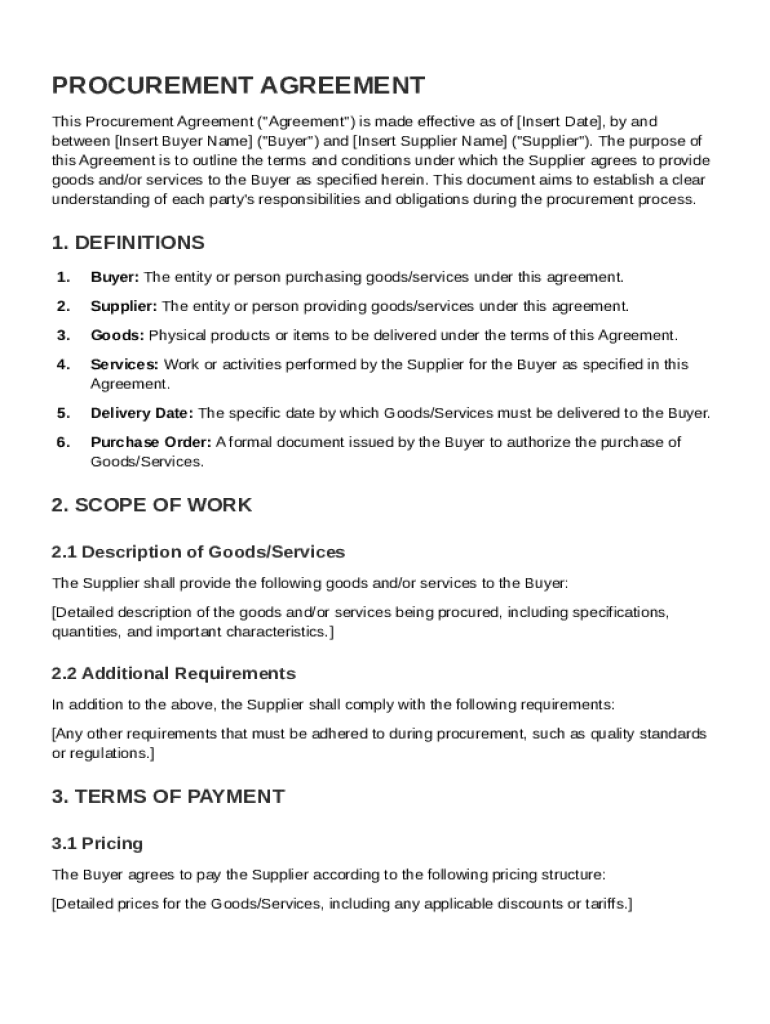
A procurement agreement template is a structured legal document that outlines the terms and conditions for procuring goods or services between a buyer and a supplier. It serves as a formal contract to ensure both parties have a clear understanding of their roles, responsibilities, and obligations. This template typically covers payment terms, delivery requirements, warranties, confidentiality obligations, and dispute resolution procedures. It aims to facilitate a seamless procurement process by standardizing expectations and minimizing misunderstandings.
Key Components
The procurement agreement template usually includes the following elements:
- Parties Involved: Identifies the buyer and supplier, including their legal names and addresses.
- Scope of Work: Details the goods or services to be provided, including specifications, quantities, and timelines.
- Payment Terms: Specifies the payment structure, including pricing, invoicing, and payment schedule.
- Delivery and Acceptance: Outlines delivery methods, inspection procedures, and criteria for acceptance of goods or services.
- Warranties: Provides assurances concerning the quality and performance of the goods or services.
- Confidentiality: Sets forth obligations to protect sensitive information exchanged during the procurement process.
How to Use the Procurement Agreement Template
Utilizing a procurement agreement template streamlines the creation of formal procurement contracts. Here's how you can effectively use it:
- Customize for Specific Needs: Tailor the template to fit the specifics of your transaction, including details about the goods or services, payment terms, and delivery schedules.
- Collaborate with Stakeholders: Engage both legal and procurement teams to review and finalize the agreement. Ensure all business requirements and regulatory compliance issues are addressed.
- Negotiate Terms: Discuss the draft agreement with the supplier to negotiate terms that are mutually beneficial and adhere to industry norms.
- Finalize and Execute: Once all parties are satisfied with the terms, sign the agreement to execute it formally.
Practical Examples
- Example 1: A manufacturing firm uses the template to procure raw materials from a new supplier, ensuring clarity in quality standards and delivery timelines.
- Example 2: A tech company employs the template for outsourcing IT services, establishing expectations for service levels and data security.
Steps to Complete the Procurement Agreement Template
Completing a procurement agreement involves several structured steps:
- Gather Information: Compile all pertinent details, such as specifications, delivery timelines, and payment terms, before filling out the template.
- Fill In the Blanks: Use the template’s placeholders to input specific information about the transaction.
- Review Legal Clauses: Pay special attention to legal terms like indemnity, liability limitations, and dispute resolution methods.
- Validation: Have both parties review the completed agreement to verify accuracy and completeness.
- Secure Approvals: Obtain necessary approvals from the appropriate authorities within both organizations.
- Sign the Agreement: Ensure signatures from authorized representatives of each party, securing the agreement’s enforceability.
Common Pitfalls to Avoid
- Overlooking jurisdictional laws that could affect the agreement.
- Failing to specify detailed product specifications, which may lead to disputes.
Key Elements of the Procurement Agreement Template
Every procurement agreement template should incorporate certain key elements to ensure effectiveness and enforceability:
- Terms of Delivery: Clearly defined timelines and conditions under which the goods or services should be delivered.
- Pricing and Payment: Detailed breakdown of costs, payment methods, and any financing terms.
- Risk Management: Provisions for managing risks, including liabilities and force majeure.
- Amendment Procedures: Steps required for modifying the agreement post-execution, preserving flexibility while maintaining contractual integrity.
- Termination Conditions: Conditions under which the agreement may be terminated by either party.
Legal, Secure, and Binding Applications
A procurement agreement template must meet certain legal standards to be considered binding under U.S. law:
- Compliance with Regulations: Must align with relevant federal and state procurement laws.
- Electronic and Manual Signatures: Should include provisions for electronic signatures in compliance with the ESIGN Act, ensuring legally binding digital agreements.
- Confidentiality and IP Provisions: Protects intellectual property and sensitive business information from unauthorized disclosure.
Security Measures
- Stored in Secure Platforms: Use encrypted document management systems to store and manage the completed agreements.
- Controlled Access: Limit access to the signed agreements to authorized personnel only.
Software and Compatibility Considerations
The procurement agreement template should be compatible with various software solutions for easy integration into business workflows.
- Document Compatibility: Ensure the template is available in formats such as DOC, PDF, and XLS for versatility across different platforms.
- Editing Tools: Use platforms like DocHub, which offer functionalities for editing, signing, and collaborating on documents.
- Integration with Cloud Services: Save the finalized document in cloud services like Google Drive or OneDrive for streamlined document management and sharing.
Real-World Scenario
A multinational corporation integrates the template into their procurement management software, enabling seamless drafting, editing, and approval processes across various departments and regions.
Who Typically Uses the Procurement Agreement Template
A wide range of businesses and organizations can benefit from using the procurement agreement template:
- Corporate Procurement Teams: Facilitates clear communication and standardized purchasing processes in large organizations.
- Small Business Owners: Ensures legal protection and clarity in supplier relationships.
- Public Sector Entities: Complaint with regulations governing public procurement to ensure transparency and fairness.

Benefits for Different Business Types
- Manufacturing Firms: Streamlines supplier onboarding and contract management processes.
- Retail Companies: Ensures consistency and reliability in product sourcing.
- Service Providers: Formalizes agreements with clients for service deliverables.
State-Specific Rules and Variations
While the procurement agreement template provides a standardized form, there are state-specific considerations:
- State Procurement Regulations: Each state may have unique laws governing procurement practices, requiring adjustments to the agreement templates.
- Tax Implications: States may have different taxation rules impacting the financial sections of the agreement.
Example: California
In California, the procurement agreement template must account for strict state labor laws and environmental regulations potentially impacting supplier selection and compliance.
These sections focus on detailed elements, practical applications, and the legal dimensions of using a procurement agreement template, providing comprehensive insights for users across various contexts.