






Definition and Importance of a Pricing Agreement Template
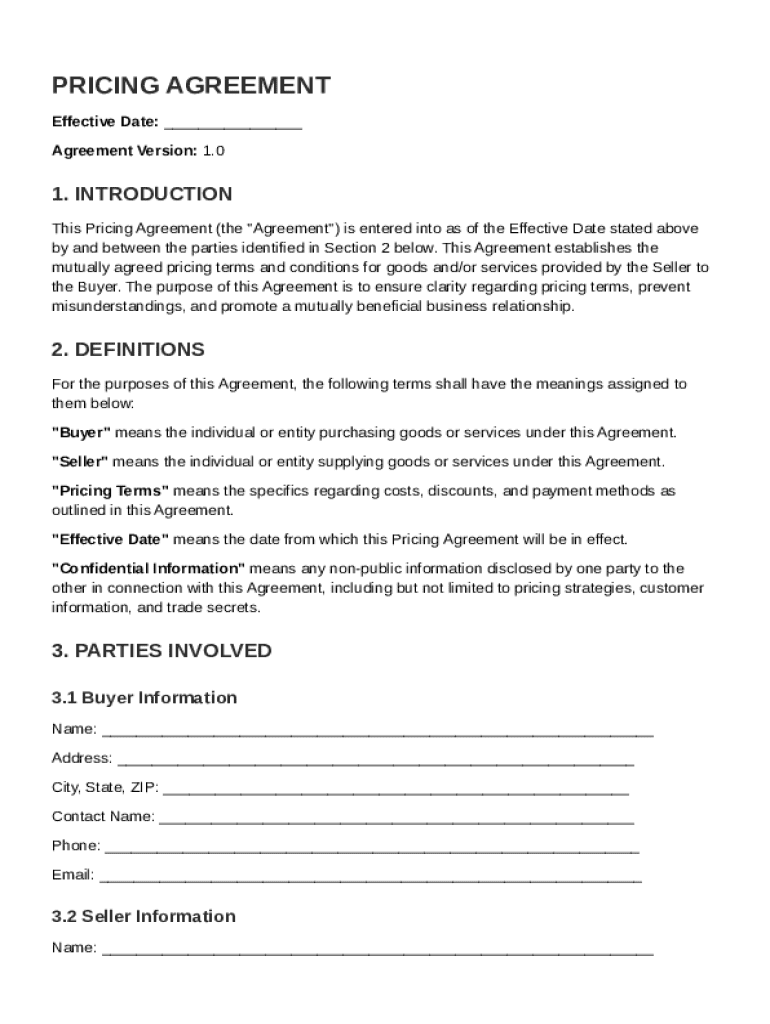
A Pricing Agreement Template is crucial for delineating the terms and conditions under which a Buyer and a Seller engage in transactions involving goods or services. By providing a structured format, this template aids in setting clear pricing terms, which helps prevent misunderstandings and fosters a mutually beneficial business relationship. Essential elements typically included in this template are definitions, parties involved, scope of agreement, pricing structure, payment terms, confidentiality clauses, dispute resolution processes, and termination conditions. These elements form the backbone of a coherent pricing strategy, ensuring all parties understand the financial expectations and legal obligations.
In practical use, the Pricing Agreement Template serves as a reference point during the business relationship, safeguarding both parties from potential disputes by providing a documented agreement on pricing terms. It also facilitates smoother negotiations, as both parties can pinpoint and discuss specific terms laid out in the template, such as pricing structure adjustments or the inclusion of additional fees.
Steps to Complete the Pricing Agreement Template
Completing the Pricing Agreement Template involves a series of methodical steps:
-
Identify Parties Involved: Begin by clearly identifying the Buyer and Seller, including their contact details and business identifiers.
-
Define Scope of Agreement: Articulate the specific goods or services covered, including quantities and quality standards if applicable.
-
Establish Pricing Structure: Specify the pricing details, including base prices, discounts if any, and criteria for price changes.
-
Outline Payment Terms: These should include due dates, payment methods, and any penalties for late payment.
-
Incorporate Confidentiality Clauses: Detail how confidential information will be handled and the repercussions of breaches.
-
Detail Dispute Resolution Processes: Provide clear steps or forums for addressing disputes, such as mediation or arbitration.
-
Set Termination Conditions: Define the conditions under which the agreement may be terminated by either party.
Careful completion of each section ensures clarity and legal security for both parties involved.
Key Elements of the Pricing Agreement Template
The template's structure is pivotal to its effectiveness. Among the key elements are:
- Definitions: Clear definitions of terms used throughout the agreement to prevent ambiguity.
- Pricing Structure: Detailed breakdown of costs, including potential price adjustments based on conditions or timelines.
- Payment Terms: Specifics on payment timelines, methods, and penalties for non-compliance.
- Confidentiality Clauses: Provisions for maintaining the confidentiality of sensitive information exchanged between parties.
- Dispute Resolution: Clearly defined mechanisms for addressing disputes, such as arbitration or legal recourse.
- Termination Conditions: Conditions under which either party can terminate the agreement, ensuring both have an exit strategy if necessary.
These elements collaboratively function to create a comprehensive guide that governs the pricing aspect of trade engagements.
Legal Use of the Pricing Agreement Template
The Pricing Agreement Template not only sets financial terms but also aligns with legal expectations, supporting enforceability and compliance with relevant laws. Its legal utility extends to providing a documented basis for enforcing contracts in the event of disputes. The presence of clearly defined terms within the template helps in defending against legal accusations and ensures that parties have understood their obligations and rights.
U.S. businesses, for example, are bound by contract laws that necessitate clear terms; hence, incorporating legally sound clauses within the template enhances its reliability. This is particularly critical for handling disputes related to pricing or breaches of confidentiality, making the template a highly functional legal tool.
Examples of Using the Pricing Agreement Template
In real-world scenarios, various businesses utilize the Pricing Agreement Template:
- Retailer and Supplier Contract: A retailer may use the template to agree on product pricing with a supplier, ensuring stable pricing over a contract period.
- Service Agreement in IT Sector: IT companies might employ the template to establish service fees and project deliverables for their clients.
- Manufacturing Agreements: Manufacturers could fix component costs with suppliers, thereby securing essential materials at agreed prices for production cycles.
These examples illustrate the template's role in diverse business settings, demonstrating its adaptability to different industry needs.
Important Terms Related to Pricing Agreement Template
Key terminologies within the Pricing Agreement Template include:
- Base Price: The standard cost before discounts or modifications.
- Discount Schedule: Detailed planning of timing and conditions under which discounts apply.
- Force Majeure Clause: Conditions under which contractual obligations may be voided due to events outside control.
- Arbitration: An alternative dispute resolution methodology specified within agreements.
- Breach of Contract Terms: Potential consequences defined for any party failing to meet stipulated obligations.
Understanding and including these terms enhances the template’s efficacy, ensuring comprehensive coverage of all potential scenarios.
State-Specific Rules for the Pricing Agreement Template
State-specific variations can influence how a Pricing Agreement Template is structured. Compliance with state laws ensures the agreement's enforceability:
- California: Emphasizes strict privacy clauses aligned with CCPA requirements.
- New York: Often requires detailed arbitration clauses to alleviate extensive court cases.
- Texas: May necessitate explicit terms regarding financial liability to comply with state business codes.
Customizing the template to adhere to state-specific legislation helps maintain its legal robustness and practical utility.
Who Typically Uses the Pricing Agreement Template
A wide range of professionals and industry entities employs the Pricing Agreement Template:
- Corporate Legal Teams: Use it to draft binding agreements between companies.
- Procurement Officers: Rely on it to secure favorable pricing when sourcing materials.
- Sales Managers: Ensure customer contracts clearly outline price structures and payment terms.
This diversity in use reflects the template’s fundamental role in facilitating transparent and accountable business transactions.