






Definition & Meaning
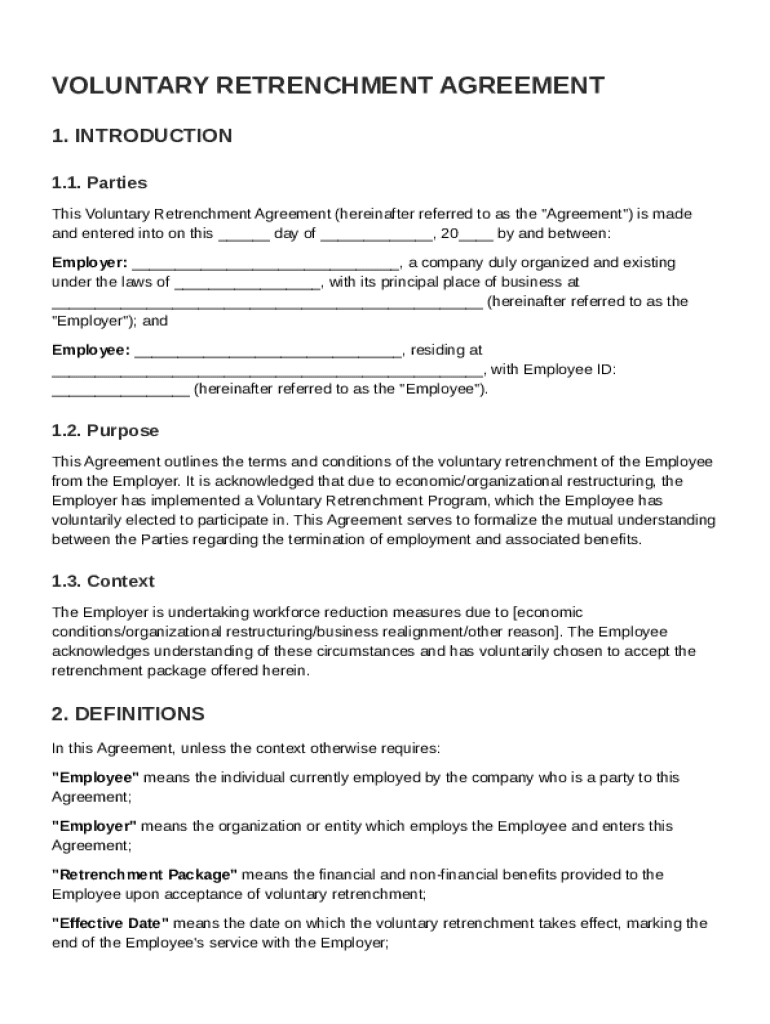
The Voluntary Retrenchment Agreement Template is a document designed to formalize an agreement between an employer and an employee regarding the voluntary termination of employment due to economic or organizational restructuring. This type of agreement is generally used to outline the terms under which an employee agrees to leave the organization, often involving severance pay and other benefits. It serves as a legal framework to ensure that both parties have a mutual understanding of their respective responsibilities and obligations.
The agreement may include several components, such as a breakdown of the retrenchment package, employee obligations post-termination, and confidentiality clauses. It aims to provide clarity and legal protection to both the employer and the employee, ensuring a smooth transition and reducing the likelihood of disputes.
Key Elements of the Voluntary Retrenchment Agreement Template
1. Retrenchment Package
A critical component of the agreement is the retrenchment package, which details the financial and other compensatory elements provided to the employee. This section typically includes:
- Severance Pay: Describes how severance is calculated and when it will be paid.
- Accrued Leave Payout: Specifies any payout for unused vacation or sick leave.
- Continuation of Benefits: Outlines whether health or life insurance benefits will continue beyond the termination date.
2. Employee Responsibilities
The agreement outlines specific expectations from the employee after their termination, which might include:
- Return of Company Property: Specifies what company assets must be returned.
- Non-Compete Clauses: Stipulates restrictions on working with competitors post-termination.
- Confidentiality: Reiterates the importance of maintaining confidentiality about company information.
Steps to Complete the Voluntary Retrenchment Agreement Template
Completing the Voluntary Retrenchment Agreement Template involves several structured steps to ensure comprehensiveness and legal compliance:
-
Initiate Discussion: Begin a conversation with the involved employee to explain the reasons for voluntary retrenchment.
-
Customize the Template: Modify the template to reflect specific terms agreed upon during discussions, including severance and other benefits.
-
Legal Review: Have legal counsel verify the agreement to ensure compliance with relevant employment laws and regulations.
-
Review with Employee: Go over the agreement with the employee to make sure they understand all aspects.
-
Signatures: Obtain signatures from both parties to finalize the agreement, confirming mutual consent.
-
Distribution: Provide a copy of the completed and signed document to the employee for their records.
Legal Use of the Voluntary Retrenchment Agreement Template
Governing Law and Jurisdiction
It's important that the legal context of the agreement is clearly delineated:
- Applicable Law: Ensure the agreement specifies the relevant state and federal laws governing its terms.
- Dispute Resolution: Outline steps for resolving disputes, including mediation or arbitration options.
This section ensures that both parties are aware of their legal standing and rights, which helps prevent misunderstandings that can lead to legal challenges.
Why Use the Voluntary Retrenchment Agreement Template
The Voluntary Retrenchment Agreement Template is a valuable tool for both employers and employees due to several reasons:
- Clarity and Consistency: Ensures both parties have a clear understanding of terms and expectations, reducing ambiguity.
- Legal Protection: Offers legal safeguards by documenting mutual consent and understanding.
- Mutual Respect: Demonstrates an employer's respect for the employee's contributions and facilitates a respectful parting.
- Efficient Process: Streamlines administrative processes related to employee termination and compensation.
Who Typically Uses the Voluntary Retrenchment Agreement Template
This template is predominantly used by:
- Human Resources Departments: HR professionals use it to standardize the voluntary retrenchment process and ensure compliance with company policies.
- Legal Departments: Legal teams utilize the template to ensure agreements adhere to labor laws and mitigate potential legal issues.
- Employees: Individuals considering voluntary retrenchment can use it to better understand their rights and the compensation they are entitled to receive.


State-Specific Rules for the Voluntary Retrenchment Agreement Template
Different states in the U.S. may have specific laws regarding retrenchment agreements, such as:
- Severance Pay Regulations: Some states have guidelines on mandatory severance pay.
- Notification Requirements: Certain states require advance notice if a significant number of employees are being retrenched.
- Legal Clauses: State-specific legal clauses might be required to make an agreement enforceable.
Examples of Using the Voluntary Retrenchment Agreement Template
In practice, the template might be used in the following scenarios:
- Economic Downsizing: A company facing financial difficulties offers retrenchment agreements to reduce its workforce while minimizing the risk of future litigation.
- Organizational Restructuring: A corporate merger leads to redundancy in roles, prompting the use of these agreements as a means to manage the transition smoothly.
Such examples illustrate the template's versatility and utility in adapting to various organizational needs while preserving legal and ethical standards.