






Key Elements of the Master Lease Agreement Template
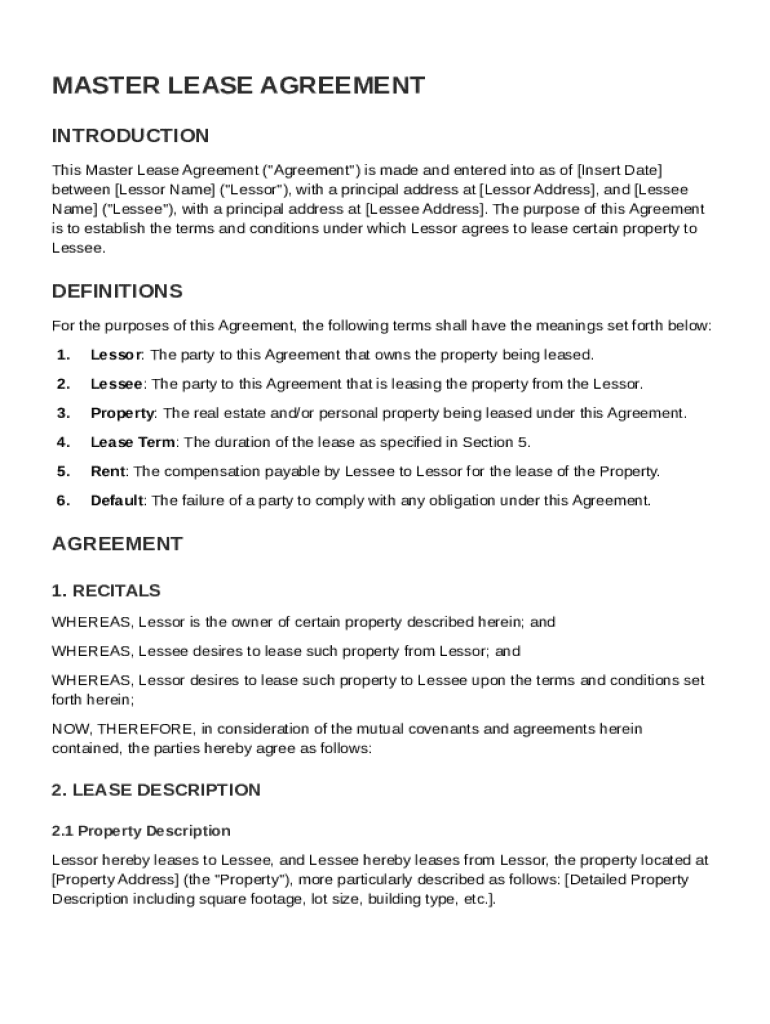
A Master Lease Agreement Template is a comprehensive document that outlines the terms and conditions under which property is leased. Key elements include:
- Lease Duration: Specifies the start and end dates of the lease term, and includes options for renewal or extension.
- Rent Payment Structure: Details the amount of rent due, the payment frequency, acceptable payment methods, and any late fees or discounts.
- Maintenance Responsibilities: Outlines the responsibilities of both the lessor and lessee concerning property upkeep, repairs, and maintenance procedures.
- Permitted Uses: Defines what activities are allowed on the property, ensuring the lessee complies with zoning laws and other regulations.
- Insurance Requirements: Mandates the types and levels of insurance both parties must maintain throughout the lease period.
- Default Conditions: Lists circumstances under which the lease may be terminated due to a party's default, including non-payment or breach of terms.
- Termination Procedures: Describes the process for ending the lease agreement, whether due to expiration, mutual agreement, or breach.
How to Use the Master Lease Agreement Template
To effectively utilize a Master Lease Agreement Template, follow these steps:
- Review the Template: Understand the core components, ensuring familiarity with each section.
- Customize for Specific Needs: Tailor sections like property details, rent specifics, and maintenance duties to reflect the agreement made between the lessor and lessee.
- Consult Legal Advice: Engage a legal professional to review the customized template, ensuring compliance with local laws and regulations.
- Fill Out Required Information: Complete sections with specific details such as names, contact information, and property address.
- Review and Revise: Both parties should carefully review the final document for accuracy.
- Execute the Agreement: Sign and date the completed agreement, with copies distributed to all involved parties.
Steps to Complete the Master Lease Agreement Template
Completing a Master Lease Agreement Template involves several critical steps:
- Gather Necessary Information: Collect relevant details, including property description, lessor and lessee information, lease term, and payment figures.
- Fill in the Template: Input gathered data into the appropriate sections of the template, ensuring no fields are left blank.
- Negotiate Terms: Discuss and agree upon negotiable terms like lease duration, rent payment methods, and termination conditions with the other party.
- Seek Clarification: Address any uncertainties or discrepancies with all parties to ensure mutual understanding and agreement.
- Finalize Amendments: Incorporate any last-minute adjustments agreed upon by both parties.
- Review for Compliance: Verify that the agreement adheres to relevant legal standards and local regulations.
Who Typically Uses the Master Lease Agreement Template
Certain individuals and entities frequently utilize the Master Lease Agreement Template:
- Property Owners (Lessors): Use the template to formalize the leasing process, ensuring legal protection and clarity between parties.
- Tenants (Lessees): Employ the template to secure terms regarding rights, responsibilities, and protections when leasing property.
- Property Managers: Utilize the template to streamline leasing operations across multiple properties, ensuring consistency.
- Real Estate Attorneys: Offer the template as a standardized starting point for crafting legally sound lease agreements for clients.


Important Terms Related to the Master Lease Agreement Template
Understanding specific terminology within the Master Lease Agreement Template is crucial for clarity and legal compliance:
- Lessor: The party granting the lease, typically the property owner.
- Lessee: The party receiving the lease, usually the tenant.
- Tenant Improvements: Refers to modifications made to the leased premises to suit the lessee’s needs.
- Net Lease: A lease type wherein the lessee also covers additional expenses like taxes, insurance, and maintenance, aside from rent.
- Gross Lease: Opposite of a net lease; the lessor absorbs most expenses related to property upkeep.
Legal Use of the Master Lease Agreement Template
The legal implications of using a Master Lease Agreement Template are significant for both parties:
- Binding Agreement: Once signed, the document becomes a legally enforceable contract, holding parties accountable to the outlined terms.
- Dispute Resolution: Clearly stated terms can help mitigate disputes, providing a clear framework for resolution.
- Compliance with Local Laws: Ensures that both parties adhere to state-specific landlord-tenant regulations to avoid legal infractions.
State-Specific Rules for the Master Lease Agreement Template
Compliance with state-specific regulations is crucial when crafting a Master Lease Agreement:
- Varied Disclosure Requirements: Certain states demand specific disclosures about property conditions or history.
- Rent Control Laws: Some jurisdictions have rent control ordinances affecting allowable rent increases.
- Notice Requirements: State laws dictate how much notice must be given for lease termination or property entry.
- Security Deposit Limitations: There may be statutory caps on the amount a lessor can request for a security deposit.
Examples of Using the Master Lease Agreement Template
Real-world scenarios illustrate the practical utility of the Master Lease Agreement Template:
- Commercial Lease Arrangements: A business owner leasing retail space would use the template to define permitted uses, like ensuring compliance with zoning restrictions.
- Long-Term Residential Leases: Landlords and tenants establish maintenance tasks and rent terms to avoid future disputes.
- Shared Office Spaces: A lessor could detail shared space use, ensuring all permissible activities are well-documented and agreed upon by lessees.