




01. Edit your form online
Type text, add images, blackout confidential details, add comments, highlights and more.

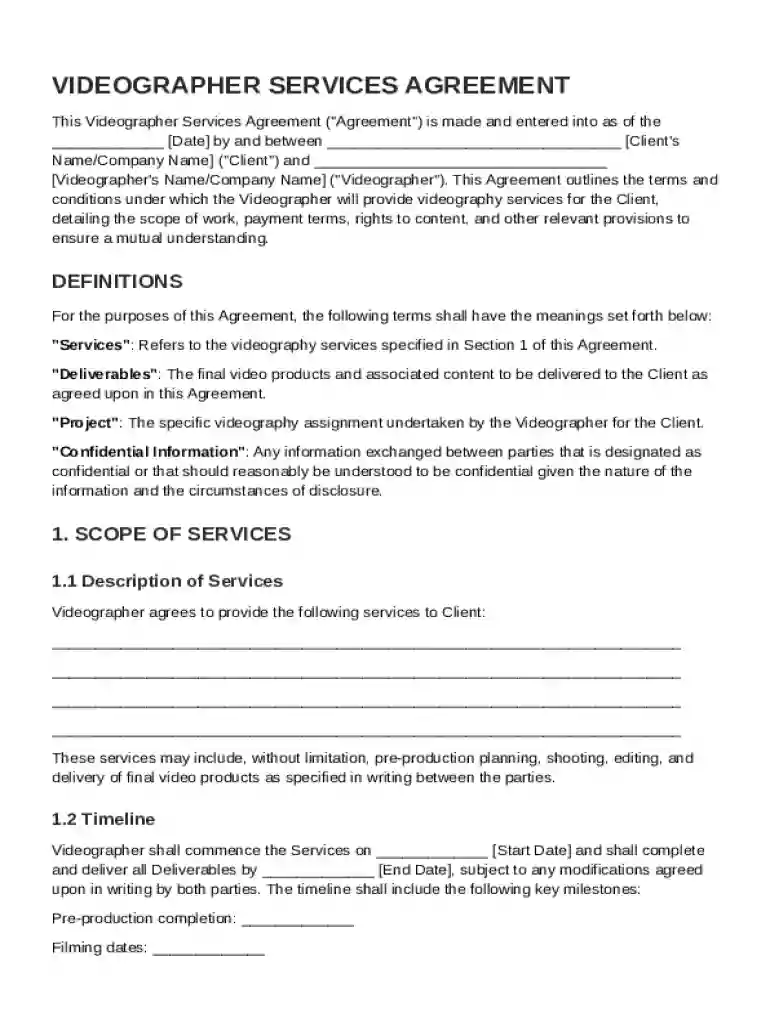
Type text, add images, blackout confidential details, add comments, highlights and more.

Draw your signature, type it, upload its image, or use your mobile device as a signature pad.

Send it via email, link, or fax. You can also download it, export it or print it out.
A Videographer Agreement Template is essential for clearly outlining the terms of a videography service contract. It specifies the rights, responsibilities, and expectations of both the videographer and the client. The agreement typically includes the following elements:
Definitions: Clarify key terms used throughout the agreement, such as "Client," "Videographer," "Deliverables," and "Services."
Scope of Services: Detail the specific services to be provided, including filming locations, duration, and any editing work required.
Compensation Details: Clearly outline the payment terms, including the total fee, deposit requirements, payment schedule, and any late fee penalties.
Rights and Ownership of Deliverables: Specify who retains the rights to the final video products and whether the videographer can use the footage for promotional purposes.
Confidentiality Obligations: Establish guidelines for both parties regarding the confidentiality of shared information and materials.
Termination Conditions: Include provisions for how the agreement can be terminated by either party and any associated consequences.
Liability and Indemnity Clauses: Address responsibility for any damages or losses that may occur during the filming process.
Dispute Resolution Procedures: Outline methods for resolving disputes, such as mediation or arbitration.
Miscellaneous Provisions: Additional clauses that may cover governing law, severability, and other legal considerations.
When preparing a Videographer Agreement, it is important to follow a structured approach to ensure all relevant details are captured:
Gather Information: Collect all necessary details from the client, including project scope, timeline, and specific requirements.
Customize the Template: Tailor the template to fit the specific project by filling in relevant sections, adjusting payment terms, and adding any additional clauses required.
Review and Revise: Carefully review the draft agreement for accuracy and completeness. Ensure that all parties' needs and expectations are clearly articulated.
Seek Legal Advice: If necessary, consult with a legal professional to address any complex clauses or jurisdiction-specific legalities.
Finalize the Agreement: Make any final adjustments based on feedback from the client or legal counsel.
Sign and Share: Once both parties are satisfied, sign the agreement electronically using a platform like DocHub, which ensures legally binding signatures and provides a secure audit trail.
Implementing a Videographer Agreement Template offers numerous advantages for both videographers and clients:
Clarifies Expectations: Establishes clear expectations for all parties, reducing the potential for misunderstandings and disputes.
Legal Protection: Provides a legally enforced document that protects both parties' rights and interests.
Professionalism: Demonstrates a level of professionalism and commitment to quality service by the videographer.
Streamlined Processes: Saves time and effort in drafting agreements from scratch and ensures consistency across different projects.
Flexible Customization: Allows for easy adjustments to accommodate unique project requirements or client preferences.
Using a Videographer Agreement Template efficiently involves a series of targeted actions:
Select a Suitable Template: Start by choosing a template that aligns closely with the nature of your videography projects.
Ensure Compatibility: Verify that the template is compatible with your document editing tools, such as DocHub, for seamless digital modifications.
Adapt to Project Needs: Modify sections to accurately reflect the specific services, terms, and conditions agreed upon with the client.
Add Specific Clauses: Include any additional terms needed for the specific context of the project, such as intellectual property rights or special editing requirements.
Automate Signatures: Utilize a platform like DocHub to facilitate easy and secure digital signatures from all parties involved.
Organize Completed Agreements: Store finalized agreements in a cloud-based service integrated with DocHub to maintain organization and accessibility.
When using a Videographer Agreement Template, it's crucial to ensure it conforms to legal standards and practices:
Compliance with Laws: Ensure the agreement complies with the legal regulations applicable in the jurisdiction where the services are provided.
Adhere to the ESIGN Act: Use DocHub's signing capabilities to fulfill the ESIGN Act requirements, ensuring all electronic signatures are valid and legally binding.
Incorporate Necessary Clauses: Include clauses that address any industry-specific legal requirements or typical contractual provisions related to videography services.
Consult Legal Experts: When introducing any complex legal clauses, verify them with a qualified legal professional to reduce the risk of disputes.
Understanding the target users of the Videographer Agreement Template helps in tailoring its application:
Professional Videographers: Individuals or companies providing professional videography services looking to establish formal agreements with their clients.
Freelancers: Independent videographers seeking to protect their rights and clarify work scopes with clients.
Event Planners: Organizations or individuals involved in planning events, ensuring the videography services are well-regulated through contractual agreements.
Media Production Companies: Enterprises specializing in multimedia services that require detailed contracts for each project to ensure consistent service delivery and client satisfaction.


Given the variation in legal requirements across different states in the U.S., there are specific considerations to keep in mind:
Governing Law Clauses: Ensure that the agreement explicitly states which state's laws will govern the contract.
State-Specific Clauses: Incorporate any additional clauses needed to comply with state-specific regulations concerning business operations and contract law.
Sales Tax Regulations: Where applicable, include provisions related to the collection and remittance of sales tax on services according to the client's location.
Industry Standards: Adapt the agreement to meet any regional standards or licensing requirements specific to videography.
Incorporating appropriate software enhances the utility and convenience of using the Videographer Agreement Template:
Integration with Google Workspace: Utilize DocHub's integration with Google Drive and Gmail to import, edit, and share the agreement directly within the Google Workspace environment.
Compatibility with PDF Editors: Ensure the template is adaptable for use with popular document editing and signing tools such as Adobe Acrobat.
Digital Version Over Paper: Leverage digital document solutions to streamline the process of completing and managing agreements, reducing the need for printouts and manual signing.
Cross-Platform Accessibility: Use platforms like DocHub that offer compatibility across desktop and mobile browsers for easy access and editing regardless of device.
At DocHub, your data security is our priority. We follow HIPAA, SOC2, GDPR, and other standards, so you can work on your documents with confidence.


Request at or above $15,000: Agreements for qualified vendors to provide professional photography/videography/drone services. Phone: 512-471-4412
Aug 29, 2026 Contract promises delivery in 60 or 90 days. Six to twelve months later, nothing. Raw footage refusal. The studio refuses to hand over RAW filesRead more


