
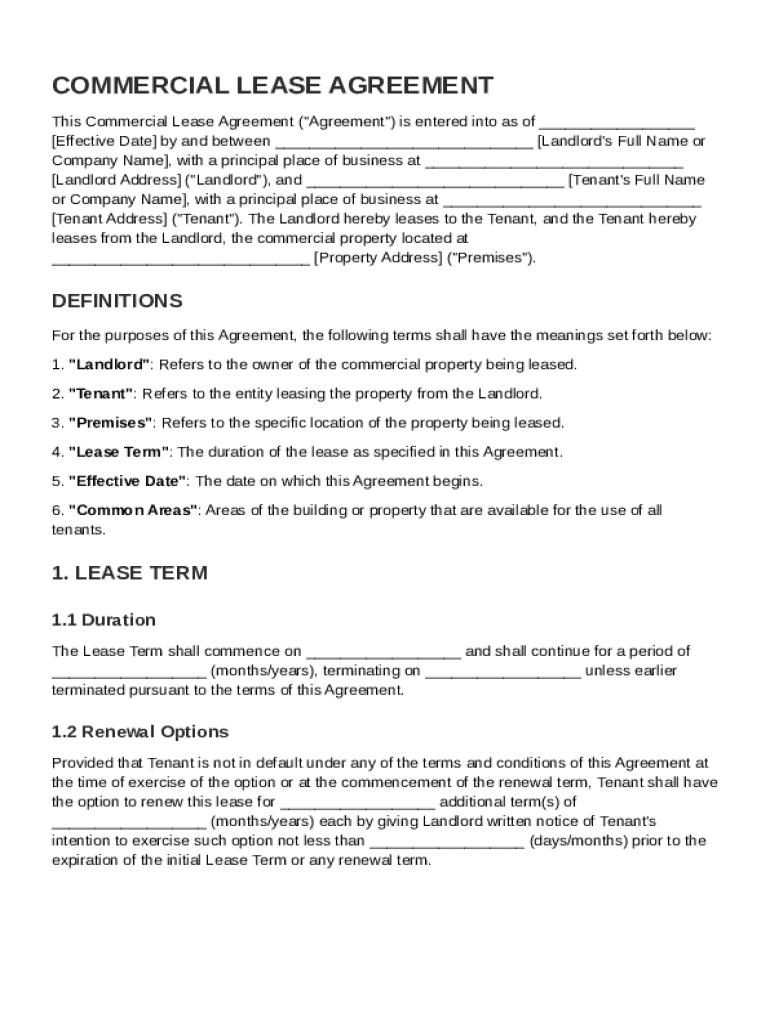







Definition & Meaning
A Lease Commercial Property Agreement Template is a structured document designed to outline the terms and conditions under which a landlord rents out commercial property to a tenant. This template facilitates a clear understanding of obligations, rights, and expectations for both parties, encompassing key areas such as rent, lease duration, property maintenance, and permitted usage. By utilizing this template, both landlords and tenants can ensure that their business dealings are formally documented, protecting their interests and providing a legal framework for resolving disputes should they arise.
Key Elements of the Lease Commercial Property Agreement Template
Commercial lease agreements typically contain several critical elements:
- Lease Duration: Specifies the term of the lease, including start and end dates.
- Rent Details: Outlines the rent amount, payment frequency, and accepted payment methods.
- Security Deposit: Details the amount required as a deposit and conditions for its return.
- Permitted Use: Defines how the property can be used by the tenant.
- Maintenance and Repairs: Clarifies the responsibilities of each party regarding property upkeep.
- Insurance Requirements: Specifies any insurance policies both parties must maintain.
- Termination Conditions: Outlines conditions under which either party can terminate the lease.
These elements ensure both parties have a clear and mutual understanding of their contractual relationship, minimizing the potential for conflicts.
Steps to Complete the Lease Commercial Property Agreement Template
Filling out the Lease Commercial Property Agreement Template involves several essential steps:
- Identification Details: Include the names and contact information for both the landlord and tenant.
- Property Description: Describe the commercial property in detail, including its address and unique features or limitations.
- Define Terms: Specify terms such as rent amount, payment schedule, and lease duration.
- Draft Responsibilities: Clearly outline maintenance duties and repair responsibilities.
- Insurance Documentation: Include any necessary insurance requirements.
- Termination Clauses: Provide possible scenarios and conditions for early termination of the lease.
- Final Review: Ensure all sections are accurately filled and understood by both parties before signing.
Completing the template accurately ensures that the agreement is legally sound and enforceable.
Legal Use of the Lease Commercial Property Agreement Template
The template serves as a legally binding document when correctly completed and signed by all parties. Its legal enforceability ensures that all outlined obligations, responsibilities, and rights are respected throughout the lease term. The agreement is guided by state-specific laws that regulate commercial leases, which might affect certain clauses like rent control, security deposit handling, and lease termination procedures. Consulting with a legal professional to tailor the template to specific jurisdictions is advisable for ensuring compliance with local laws.
State-Specific Rules for the Lease Commercial Property Agreement Template
Commercial property lease agreements can vary significantly across different states. Differences may include:
- Security Deposit Laws: Varying limits on the amount that can be requested.
- Lease Renewal Regulations: Different states impose unique rules regarding automatic renewals.
- Eviction Procedures: Legal requirements for eviction may have specific notice periods and procedures.
- Rent Control Ordinances: Some states have regulations that limit rent increases.
Understanding state-specific regulations is crucial for drafting compliant agreements and avoiding potential legal issues.
Who Typically Uses the Lease Commercial Property Agreement Template
This template is primarily utilized by:
- Landlords: Individuals or entities leasing out commercial spaces to tenants.
- Business Owners: Entrepreneurs seeking spaces to conduct business operations.
- Real Estate Agents: Professionals facilitating leases between property owners and prospective tenants.
These users rely on the template for ensuring all lease aspects are comprehensively addressed, reducing ambiguity and fostering smooth business operations.


Who Issues the Form
The Lease Commercial Property Agreement Template is generally derived from standardized forms provided by legal services or property management companies. These entities craft templates following industry standards to ensure comprehensive coverage of essential leasing elements and compliance with applicable laws. While not issued by a government body, these forms are designed to meet legal standards and can be customized to specific circumstances.
Software Compatibility and Integration
DocHub's platform supports seamless integration with various cloud storage solutions such as Google Drive, Dropbox, and OneDrive, facilitating easy access and management of the Lease Commercial Property Agreement Template. Additionally, users can work with a wide range of file formats including DOC, PPT, and XLS, ensuring compatibility with different document editing software. This flexibility allows both landlords and tenants to collaborate efficiently without being restricted to a single document format.
State-by-State Differences
Leasing commercial property in the United States involves various state-specific regulations that can impact the structure and enforceability of a lease agreement. Each state has distinct laws governing aspects such as security deposit handling, eviction procedures, and business operation permissions. These differences necessitate careful consideration when drafting a lease agreement template to ensure compliance. For instance:
- California: Specific laws regulate the return of security deposits within a set time frame after tenancy ends.
- New York: Certain areas impose limitations on commercial rent increases within designated zones.
- Texas: Regulations may affect the conditions under which a landlord can terminate a lease.
By adapting the template to state-specific requirements, users can create legally compliant and effective lease agreements for commercial properties across the country.




