






Definition & Meaning
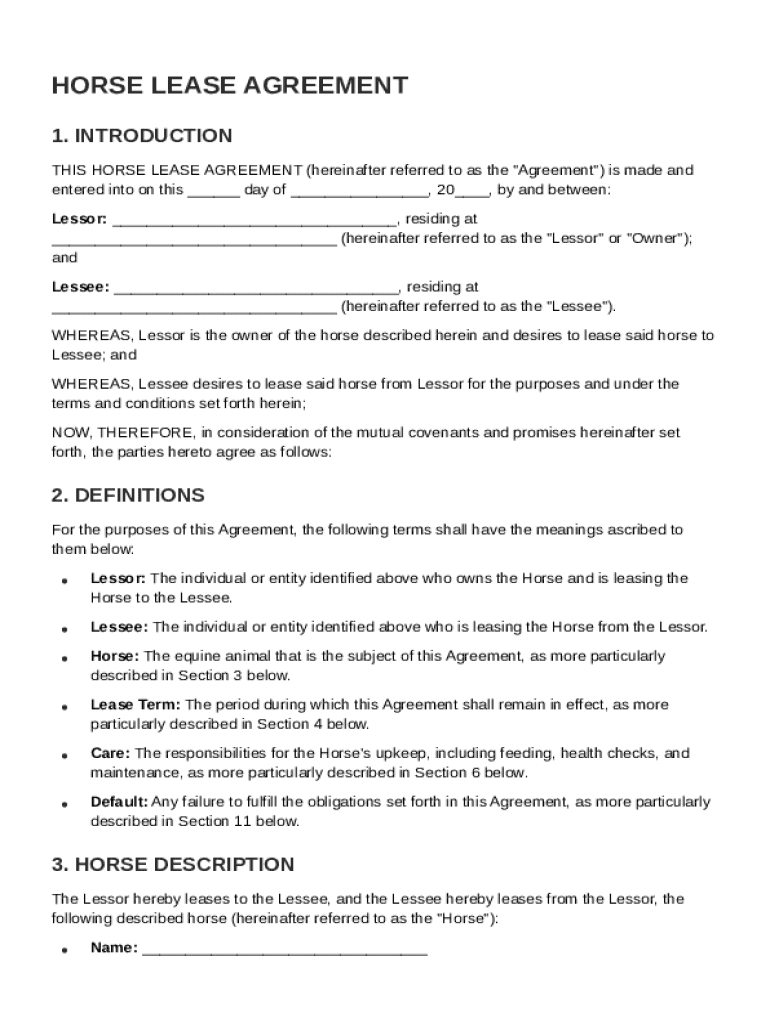
A Horse Lease Agreement Template is a legally binding document that outlines the terms and conditions under which a horse is leased from its owner (often referred to as the Lessor) to another party (known as the Lessee). This agreement serves as a crucial tool in managing and protecting the interests of both parties involved. It establishes clear obligations concerning payment, care and maintenance, liability, and other critical aspects of horse leasing. Such agreements ensure that all parties are aware of and consent to the conditions of the lease, thereby minimizing misunderstandings and potential disputes.
Key Elements of the Horse Lease Agreement Template
The Horse Lease Agreement Template typically includes several essential components to ensure comprehensive coverage of the leasing arrangement:
- Lease Term: Outlines the duration of the lease, including start and end dates. It may also specify conditions for renewal or early termination.
- Payment Obligations: Details the rental fees, payment schedule, and any penalties for late payments. It may specify any additional costs the Lessee must cover, such as insurance or veterinary care.
- Care Responsibilities: Specifies the expectations for horse care, including feeding, grooming, and medical needs. It may also indicate who is responsible for these tasks.
- Liability and Indemnification: Addresses who is liable for injuries to or caused by the horse and how indemnification will be handled.
- Use Restrictions: Describes any limitations on how the horse can be used, such as restrictions on competitive events or geographical constraints.
- Termination Conditions: Explains how the lease can be terminated by either party, including notice requirements and potential fees.
Steps to Complete the Horse Lease Agreement Template
Filling out the Horse Lease Agreement Template involves several key steps to ensure it is accurate and thorough:
- Gather Information: Collect detailed information about the horse, including its name, breed, age, and any identifying marks.
- Identify Parties: Clearly list the full names and contact details of the Lessor and the Lessee.
- Define Terms: Specify the lease duration and financial terms, covering payment amounts and schedules.
- Outline Care Duties: Detail who is responsible for the horse's daily care and any specific instructions related to their well-being.
- Discuss Liability: Agree on the terms of liability and include any necessary indemnity clauses.
- Review and Sign: Both parties should review the completed agreement thoroughly before signing. It may be prudent to have a legal professional review the document.
Legal Use of the Horse Lease Agreement Template
Using a Horse Lease Agreement Template legally binds the involved parties to the outlined terms, ensuring clarity and legal protection. In the United States, such agreements are governed by state laws, so it is essential to ensure compliance with specific legal requirements in the applicable jurisdiction. These agreements are enforceable in court, making it crucial that they are completed accurately and thoroughly. Legal advice may be sought to tailor the template to specific needs and ensure all clauses are valid under state law.
Who Typically Uses the Horse Lease Agreement Template
The Horse Lease Agreement Template is widely used by individuals and organizations involved in equestrian activities:
- Private Horse Owners: Utilize the template to lease out their horses for a fixed term, often for breeding or riding purposes.
- Equestrian Centers: Lease horses to clients for lessons, competitions, or leisure riding.
- Professional Riders: Lease horses for competitive events or training purposes.
- Leasing Companies: Specialized businesses that facilitate horse leases for various clients.


State-Specific Rules for the Horse Lease Agreement Template
Different states may have specific rules governing horse lease agreements, impacting several sections of the template. Users should consider:
- Contract Law Variations: Differences in how terms and conditions are interpreted and enforced.
- Liability Requirements: Variations in laws regarding liability and indemnification clauses, particularly concerning equine activity statutes.
- Notification Regulations: State-specific notice requirements for lease termination or alterations to the agreement.
Examples of Using the Horse Lease Agreement Template
Real-world scenarios help illustrate how the Horse Lease Agreement Template can be applied:
- Competitive Riding: A professional rider leases a high-performance horse for a show season, with specific terms for training and competition rights.
- Leisure Riding: An individual leases a horse for personal use, with terms focusing on care and recreational riding restrictions.
- Educational Programs: An equestrian school leases horses for student lessons, with agreements outlining usage limits and care responsibilities.
Software Compatibility and Form Variants
The Horse Lease Agreement Template is often available in multiple formats, compatible with common editing software:
- DocHub and PDF Editors: The template is accessible and editable via platforms like DocHub, enabling digital signatures and easy sharing.
- Word Processors: Available versions for programs like Microsoft Word or Google Docs ensure flexibility in editing and customization.
- Version Variants: Some templates offer variations tailored to specific uses, such as short-term leases or breeding-specific agreements.