






Definition & Meaning
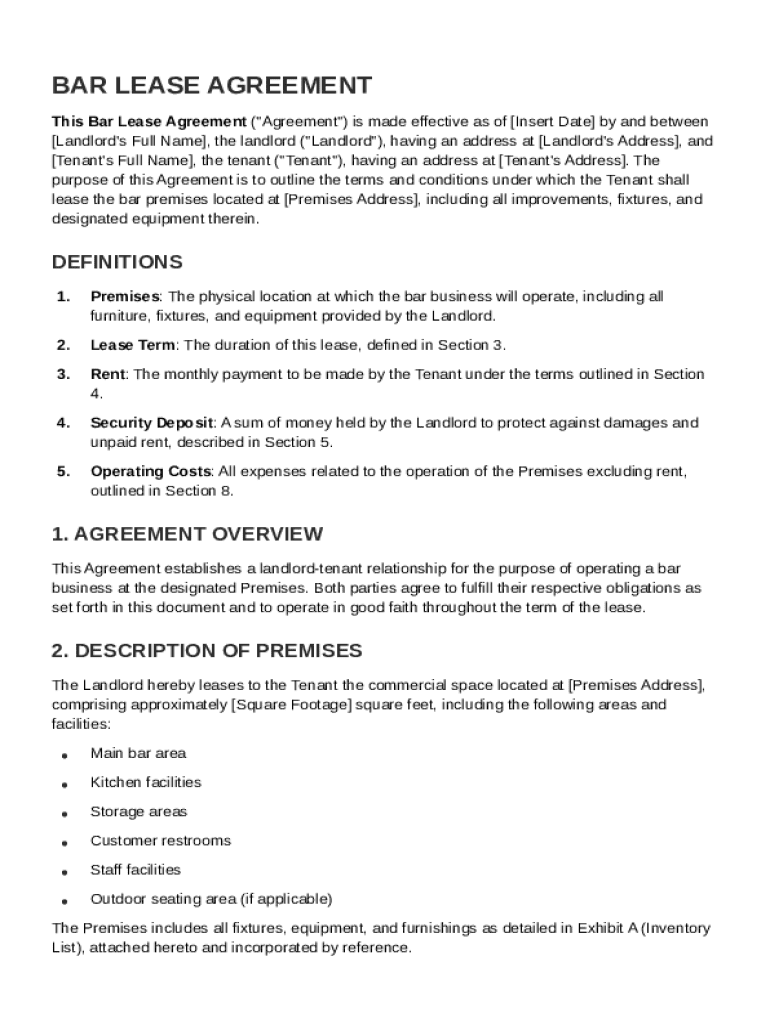
A Bar Lease Agreement Template is a legally binding document that outlines the terms and conditions for leasing a bar premises between a landlord and tenant. It serves as a foundational contract establishing the rights and responsibilities of both parties involved. This agreement ensures that both the landlord and tenant have a mutual understanding of the lease duration, rent amount, payment terms, and other essential aspects needed for operating a bar business successfully.
Components of the Agreement
- Lease Term: Defines the start and end date of the lease agreement.
- Rent Details: Specifies the amount, frequency, and method of rent payment.
- Security Deposit: Indicates the deposit amount required for potential damages or unpaid rent.
- Maintenance Obligations: Outlines the responsibilities for property maintenance and repairs.
- Termination Conditions: Describes the conditions under which the lease can be terminated by either party.
How to Use the Bar Lease Agreement Template
Using the Bar Lease Agreement Template effectively involves several steps to ensure that all necessary information is captured and legally binding. The template serves as a guide to customize the agreement according to specific needs.
Steps for Customization
- Review the Template: Familiarize yourself with the standard terms included in the template.
- Customize Terms: Adjust the lease duration, rent payment terms, and maintenance responsibilities to suit your specific situation.
- Add Parties' Information: Include the names, contact information, and legal identifiers of the landlord and tenant.
- Verify Legal Language: Ensure that the language used is precise and legally acceptable for the lease's jurisdiction.
Practical Example
If a Seattle-based landlord is leasing a bar to a new tenant, they must specify local regulations regarding commercial real estate in the template and confirm the benefits of adhering to these stipulations.
Key Elements of the Bar Lease Agreement Template
The Bar Lease Agreement Template must include certain key elements to be comprehensive and legally binding. These elements ensure clarity and prevent future disputes.
Essential Clauses
- Insurance Obligations: Requires the tenant to maintain adequate insurance coverage for the premises.
- Permitted Use: Specifies the allowed uses of the premises, particularly focusing on its operation as a bar.
- Sublease Rights: Determines whether the tenant can sublease the property to another party.
- Alterations and Improvements: Outlines the tenant’s authority to make changes to the property and under what conditions.
Real-World Scenario
A tenant may need to make improvements to the bar; this clause will outline the process for gaining approval and who bears the financial responsibility.
Legal Use of the Bar Lease Agreement Template
Understanding the legal applications of the Bar Lease Agreement Template ensures that the agreement adheres to state and federal laws. Ensuring compliance prevents legal disputes and enhances the enforceability of the lease.
Compliance Requirements
- State Regulations: Ensure that the agreement complies with all state-specific legal requirements.
- Federal Guidelines: Be aware of federal laws like anti-discrimination in leasing practices.
- Legal Review: Having the template reviewed by a legal professional can help identify and mitigate potential legal risks.
Example of Legal Compliance
In California, a bar lease must comply with the state’s strict liquor licensing laws, which should be referenced in relevant sections of the agreement.
Steps to Complete the Bar Lease Agreement Template
To finalize the Bar Lease Agreement Template, certain steps are necessary. Completing these methodically ensures the document is ready for implementation.
Completing the Template
- Gather Necessary Information: Collect details about both parties, the premises, and financial terms.
- Fill in the Template: Use the collected information to complete each section of the template.
- Review and Edit: Carefully review each section for errors or omissions.
- Sign and Notarize: Both parties should sign the agreement, and it may require notarization to confirm its legal standing.
Case Study
A new bar owner may find that verifying the completion of each step ensures a smooth opening process and mitigates potential disruptions.
State-Specific Rules for the Bar Lease Agreement Template
Since laws vary significantly by state, the Bar Lease Agreement Template must be adjusted to reflect these differences. This ensures the lease is legally enforceable in the specific location where the bar operates.
Common State Variations
- Lease Terms and Renewal: Some states have different requirements for maximum lease terms and renewal conditions.
- Security Deposit Regulations: States like New York have specific rules governing the handling of security deposits.
- Local Zoning Laws: Compliance with local zoning laws that regulate bar operations is mandatory.
Example
In Texas, a bar lease must consider the state’s property landmark laws, as well as any city-specific alcohol ordinances.
Important Terms Related to Bar Lease Agreement Template
Understanding the terminology in a Bar Lease Agreement Template is crucial for both parties. Many terms have specific legal definitions that impact the rights and responsibilities within the agreement.
Glossary of Terms
- Assignment: The transfer of a leaseholder’s interest in the lease to another party.
- Indemnity: A promise to compensate for loss or damage incurred by another party.
- Estoppel Certificate: A document used by a lessor to prevent a tenant from contesting previously agreed-upon facts.
Practical Implications
Tenants must understand indemnity provisions as these can affect liability and financial obligations in the event of legal claims or property damage.
Examples of Using the Bar Lease Agreement Template
The versatility of the Bar Lease Agreement Template allows it to be used in various scenarios, providing solutions for different leasing needs within the bar industry.
Use Cases
- New Bar Ventures: Entrepreneurs launching a new bar may use the template to establish initial lease agreements.
- Property Management: Property managers can use the template to standardize lease agreements for multiple bar properties.
- Lease Negotiations: Parties can utilize the framework to negotiate favorable terms, using it as a baseline for adjustments.
Example Application
A property owner managing several facilities can customize the template for various bar tenants, ensuring each lease is tailored to specific business requirements.