






Definition and Meaning
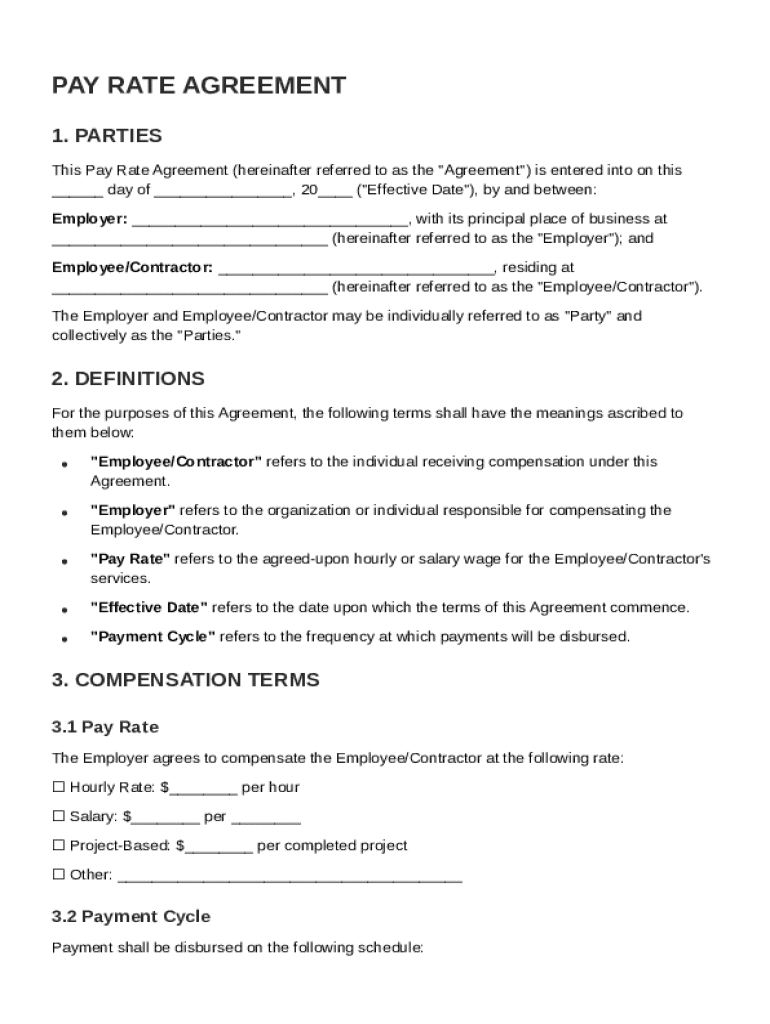
A Pay Rate Agreement Template serves as a comprehensive document outlining the compensation terms between an employer and an employee or contractor. It stipulates various aspects of remuneration, such as the defined pay rates, whether hourly, salary, or project-based. Additionally, it specifies payment cycles, the duration of the contract, and conditions for bonuses, overtime pay, and any possible modifications or terminations of the agreement. Its objective is to provide a clear, legally binding framework that governs employment compensation, ensuring transparency and mutual understanding between both parties. It also includes confidentiality clauses and details about the legal governance of the agreement, assuring both parties about the protection and enforcement of agreed terms.
Key Elements of the Pay Rate Agreement Template
The Pay Rate Agreement Template comprises several crucial components to ensure comprehensive coverage of all aspects of employment compensation. These elements include:
- Definitions of Key Terms: Clear definitions of terms related to employment and compensation to prevent any misunderstandings.
- Agreed-upon Pay Rates: Specifications of whether the payment is hourly, salaried, or project-based, with corresponding amounts.
- Payment Cycles: Clarification of the frequency of payments, whether weekly, bi-weekly, or monthly.
- Duration of the Agreement: Details on how long the agreement remains valid and effective.
- Overtime Pay and Bonuses: Description of policies related to additional compensation for overtime work and potential bonuses.
- Conditions for Modification and Termination: Guidelines on how changes can be made to the agreement and under what circumstances it can be terminated.
These elements ensure the agreement is comprehensive, minimizing potential disputes and enhancing understanding between both parties involved.
Steps to Complete the Pay Rate Agreement Template
Completing a Pay Rate Agreement Template involves several detailed steps:
- Identify Parties Involved: Clearly state the names and roles of both the employer and the employee/contractor.
- Specify Payment Details: Outline the agreed-upon pay rate, including frequency and method of payment.
- Define Duration: Include the start date and end date of the agreement.
- Outline Job Responsibilities: Clearly detail the specific duties and responsibilities required of the employee or contractor.
- Include Additional Clauses: Address any specific clauses related to overtime, bonuses, or confidentiality.
- Set Conditions for Modifications: Explain how changes to the agreement can be made if necessary.
- Signatures: Both parties must sign the agreement to validate it.
Following these steps ensures that all necessary information is articulated clearly and that both parties have a mutual understanding of the terms.
Legal Use of the Pay Rate Agreement Template
The legal use of a Pay Rate Agreement Template is grounded in its role as a formal, binding contract between the two parties. It ensures compliance with applicable employment laws and regulations, thus protecting the rights and interests of both the employer and the employee. To maintain its legal standing, it must include certain elements:
- Signature of Both Parties: Ensures that both parties acknowledge and agree to the terms outlined.
- Compliance with Labor Laws: All terms should be in adherence to federal and state labor laws.
- Clarity in Terms: Should avoid ambiguous language to reduce the potential for legal disputes.
A correctly executed template serves as a legal safeguard against misunderstandings or contractual disagreements.
Important Terms Related to Pay Rate Agreement Template
Understanding the terms within the Pay Rate Agreement Template is essential for both parties:
- Remuneration: The compensation or payment received for services or employment.
- Confidentiality Clause: A provision restricting parties from disclosing confidential information.
- Modification Clause: Terms under which the agreement can be altered.
- Termination Clause: Details how and when the agreement can be legally terminated.
These terms are fundamental to ensuring each party comprehends their obligations and rights under the agreement.
State-Specific Rules for the Pay Rate Agreement Template
Each state within the United States might have specific rules and regulations regarding employment contracts:
- Minimum Wage Laws: States may have varying minimum wage requirements.
- Overtime Regulations: Differences in acceptable overtime practices and pay.
- Legal Requirements for Benefits: States might mandate specific employee benefits as part of the agreement.
Employers should ensure the Pay Rate Agreement Template aligns with state-specific regulations to remain compliant and avoid legal consequences.
Who Typically Uses the Pay Rate Agreement Template
A variety of users may benefit from a Pay Rate Agreement Template, including:
- Small Business Owners: To clearly define compensation terms for new hires.
- Independent Contractors: To ensure clarity and understanding with clients about payment terms.
- Human Resource Managers: To standardize compensation agreements across an organization.
- Freelancers: To formalize arrangements with clients regarding project-based payments.
This template supports multiple scenarios, promoting transparency and fairness across diverse employment arrangements.


Examples of Using the Pay Rate Agreement Template
Real-world applications of the Pay Rate Agreement Template can vary, illuminating its importance in different contexts:
- Startups: A startup founder formalizes payment terms with new employees, providing clarity about salaries and bonuses.
- Contractors: A tech contractor uses the template to secure agreement on hourly rates and overtime policies with a corporate client.
- Non-profits: A non-profit organization employs the template to manage volunteer stipends and ensure compliance with internal policies.
These examples demonstrate the versatility and practical application of the Pay Rate Agreement Template across multiple industries.