






Definition & Meaning
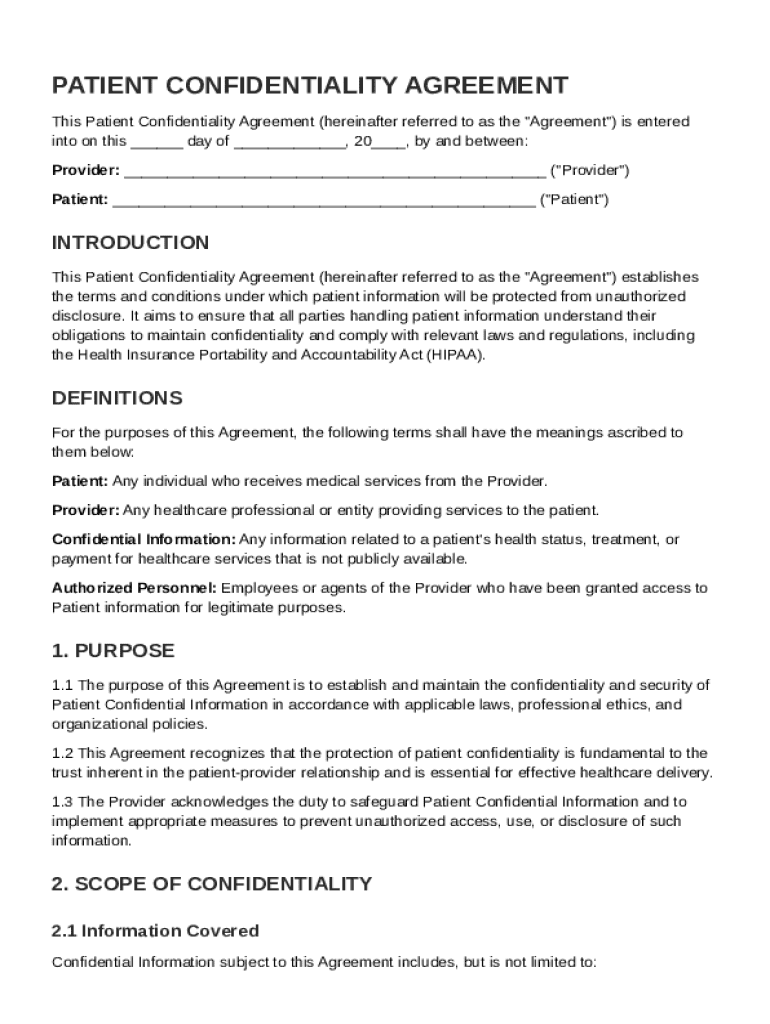
The Patient Confidentiality Agreement Template is an essential legal tool used by healthcare providers to ensure the privacy and protection of patient information. It outlines the obligations of both the healthcare provider and the patient in terms of handling sensitive health data. This template serves as a formal agreement to prevent unauthorized disclosure of confidential patient information. It is designed to comply with relevant laws such as the Health Insurance Portability and Accountability Act (HIPAA), which sets the standard for sensitive patient data protection.
- Confidential Information: Typically includes personal identifiers, medical history, test results, and other sensitive details that require protection.
- Breach of Confidentiality: When unauthorized access or disclosure of patient information occurs, resulting in privacy violations.
- Importance: Upholds trust in the patient-provider relationship and safeguards against legal and financial repercussions.
How to Use the Patient Confidentiality Agreement Template
Using the Patient Confidentiality Agreement Template involves several deliberate steps to ensure that the document effectively protects patient information. Here’s how you can utilize this template:
- Review the Template: Carefully read through the entire agreement to understand all included terms and obligations.
- Customize Information: Input specific details such as the healthcare provider's name, address, and contact information. Tailor clauses to fit specific organizational needs and state laws if necessary.
- Add Parties’ Names: Clearly state the names of the involved parties (e.g., healthcare provider, patient, or legal representative).
- Detail Confidentiality Obligations: Ensure that all confidentiality obligations, including information sharing protocols and permitted disclosures, are well-defined.
- Signing the Agreement: Both the patient and the provider should sign and date the document to establish its legality and binding nature.
Important Terms Related to Patient Confidentiality Agreement Template
When working with this template, understanding key terms is crucial for accurate and effective use. Some important terms associated with the Patient Confidentiality Agreement Template include:
- HIPAA Compliance: Refers to adherence to national standards that protect sensitive patient information from being disclosed without the patient's consent.
- Protected Health Information (PHI): Any data concerning health status, provision of healthcare, or payment for healthcare that can be linked to an individual.
- Authorization and Consent: Required documentation that allows healthcare providers to disclose patient information to third parties.
Understanding these terms ensures clarity in both executing the agreement and communicating its provisions to all parties involved.
Key Elements of the Patient Confidentiality Agreement Template
Several critical elements form the foundation of a comprehensive Patient Confidentiality Agreement Template. These components collectively ensure thorough protection of sensitive information:
- Purpose Statement: Explains the reason for the agreement and emphasizes the importance of safeguarding patient information.
- Scope of Information: Clearly outlines what constitutes confidential information under the agreement.
- Disclosure Conditions: Enumerates specific situations where information disclosure is permissible, such as legal requirements or patient consent.
- Data Protection Measures: Details the security protocols and measures in place to protect patient information, including encryption and access controls.
These key elements are pivotal in drafting an effective confidentiality agreement that prepares healthcare providers to handle sensitive data responsibly.
Steps to Complete the Patient Confidentiality Agreement Template
Completing the Patient Confidentiality Agreement Template involves a series of well-defined steps to ensure accuracy and compliance:
- Gather Necessary Information: Collect all pertinent details required to fill out the template, including patient and provider information.
- Input Data Into Template: Enter the gathered information accurately into the specified fields of the template.
- Verify Legal Compliance: Cross-check the agreement against legal regulations, particularly HIPAA, to ensure it meets all necessary standards.
- Review for Accuracy: Proofread the document to confirm that all entered data is correct and no sections are omitted.
- Obtain Signatures: Both parties should add their signatures, either manually or using legally binding electronic signatures.
- File Securely: Keep a secured copy of the signed agreement in compliance with storage protocols.
Following these steps ensures that the confidentiality agreement is valid and enforceable.
Legal Use of the Patient Confidentiality Agreement Template
The legal use of a Patient Confidentiality Agreement Template encompasses several aspects that healthcare providers must consider to achieve compliance and legal protection:
- Compliant Drafting: Ensure the agreement is drafted in accordance with state and federal laws, particularly HIPAA, to be legally binding.
- Informed Consent: Patients must fully understand the terms before signing, requiring clear and transparent communication.
- Enforcement: Legal mechanisms should be outlined for addressing breaches of the agreement and protecting the rights of the involved parties.
For these reasons, legal counsel considers these agreements indispensable for healthcare settings to mitigate risks and foster trust.
State-Specific Rules for the Patient Confidentiality Agreement Template
While federal laws like HIPAA provide a nationwide framework, states also impose their own specific rules regarding patient confidentiality. Here's what you need to know concerning state-specific considerations:
- Additional Protections: Certain states might enforce more stringent data protection requirements than those on the federal level.
- Record Retention: States may dictate specific time frames for storing patient records and agreements.
- Children's Rights: Varies by state regarding consent requirements and confidentiality rules for minors' medical records.
Being vigilant about state-specific laws is crucial to ensure comprehensive compliance and to avoid litigation.
Examples of Using the Patient Confidentiality Agreement Template
The Patient Confidentiality Agreement Template finds diverse applications in real-world scenarios. Examples of its use include:
- Healthcare Facilities: Hospitals and clinics utilize these agreements to protect patient information during treatment or when transferring records.
- Research Institutions: Often used when sharing de-identified data for studies while maintaining patient anonymity.
- Insurance Companies: Confidentiality agreements are mandatory when handling claims that involve sensitive personal health information.
These examples highlight the versatile nature of confidentiality agreements in upholding privacy across various settings.