






Definition & Meaning
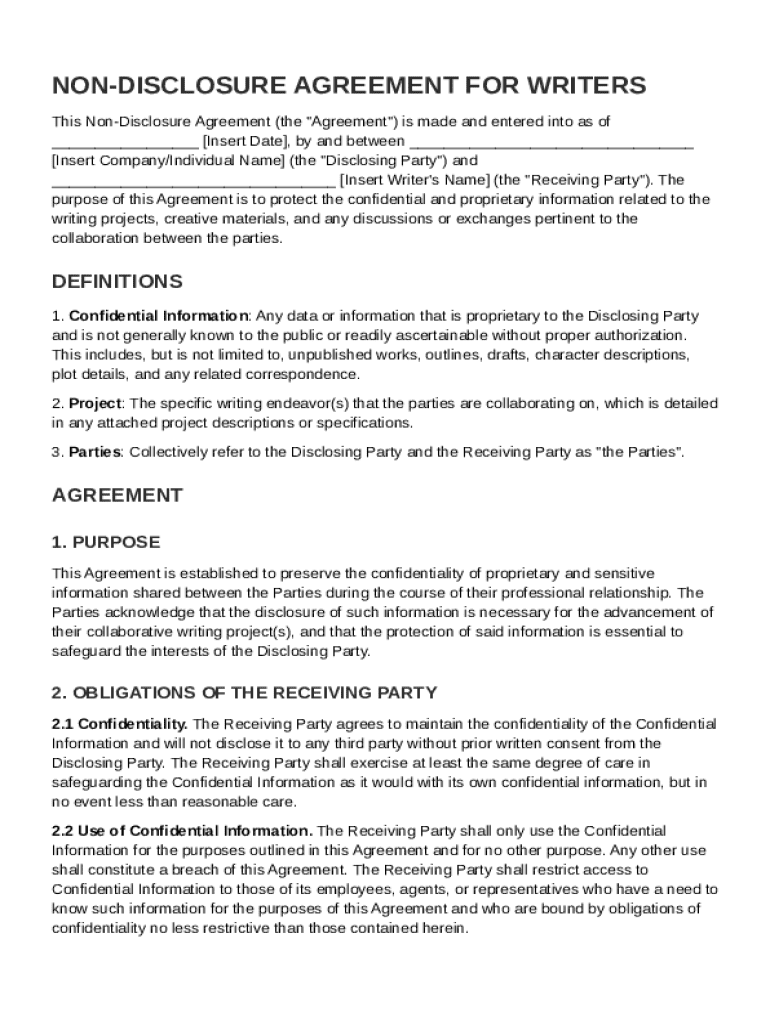
A Non-Disclosure Agreement (NDA) for writers is a legally binding document that protects confidential and proprietary information shared between a Disclosing Party and a Receiving Party. It establishes clear terms under which sensitive information related to writing projects is shared. The agreement is crucial for safeguarding intellectual property, ensuring that neither party discloses information beyond the intended scope. Examples of confidential information might include story plots, unpublished manuscripts, and personal data. It's an essential tool for writers who wish to protect their ideas and maintain control over how their work is shared and used.
How to Use the Non-Disclosure for Writers Agreement Template
Using the Non-Disclosure for Writers Agreement Template involves several critical steps. First, both parties should review the template thoroughly to understand the terms and whether they fit their particular needs. Next, the parties should fill in the required information, which includes the names of the parties involved, the scope of the confidential information, and the duration of confidentiality. It's advisable to customize the template to address any specific needs or concerns. After completing these sections, both parties should sign and date the document. Retaining a copy for personal records is a wise step to ensure that terms are legally enforceable if needed.
Key Elements of the Non-Disclosure for Writers Agreement Template
The key elements include the identification of the parties, definition of what constitutes confidential information, obligations of the Receiving Party, and the duration of confidentiality. The template should also address any exclusions from what is considered confidential, such as information that becomes publicly known through no fault of the Receiving Party. Intellectual property rights, limitations on disclosure, and the consequences of a breach are vital components. Including a clause on governing law ensures the agreement aligns with specific legal frameworks. An additional provision for amendments can help adapt the agreement to future changes.
Steps to Complete the Non-Disclosure for Writers Agreement Template
- Identify the Parties: Begin by listing the full legal names of the Disclosing Party and Receiving Party.
- Define Confidential Information: Clearly specify what information is to be considered confidential. This may include scripts, drafts, character details, or any proprietary material.
- Set Obligations: Outline the Receiving Party's responsibilities in terms of maintaining the information's confidentiality.
- Determine the Term: Decide how long the confidentiality obligations will last. This can continue indefinitely until the information becomes public by other means.
- Specify Exclusions: Note what information is not covered under the NDA, such as info independently developed without the use of the disclosed information.
- Intellectual Property: Include a section detailing the ownership of intellectual property and rights remains with the original creator.
- Signatures: Conclude with signatures and dates from both parties to finalize the agreement legally.
Legal Use of the Non-Disclosure for Writers Agreement Template
The legal use of this template is to provide a structured framework that ensures the protection of sensitive information in writing collaborations. When signed, it's a legally enforceable document that can be used in court to argue breaches of confidentiality. It's critical to ensure the terms align with the ESIGN Act if executed digitally. Both parties should fully comprehend the contract terms before signing. Consulting with a legal professional might be beneficial for more complex agreements to ensure all nuances are covered and legally sound.
Who Typically Uses the Non-Disclosure for Writers Agreement Template
This agreement is commonly used by authors, screenwriters, and ghostwriters who collaborate with editors, publishers, and literary agents. It serves not only individuals but also companies engaging writers for specific projects. Typically, the Writing Party would involve professional writers or content creators interacting with businesses in need of creative services. Maintaining confidentiality ensures that intellectual ideas remain secured and exclusively accessible to authorized parties.


Important Terms Related to Non-Disclosure for Writers Agreement Template
- Disclosing Party: The entity or individual sharing the confidential information.
- Receiving Party: The entity or individual obligated to maintain the secrecy of the information shared.
- Confidential Information: Details and data not meant for public dissemination that hold propriety value, such as unpublished manuscripts or unique concepts.
- Term: The duration the NDA remains effective.
- Exclusions: Situations or types of information not covered by confidentiality.
- Intellectual Property Rights: Legal prerogatives concerning the use and dissemination of creative works.
State-specific Rules for the Non-Disclosure for Writers Agreement Template
State-specific rules may affect the enforceability of NDAs. For instance, California law may impose restrictions on NDAs that impair an individual's ability to work or include clauses that are overly broad in confidentiality obligations. Certain states might have additional requirements, such as specific language or provisions. Parties should ensure the agreement conforms to local legal standards to remain legally enforceable across state lines.
State-by-State Differences
State-by-state differences in NDAs can influence the enforceability of certain clauses, particularly related to duration and scope. While some states endorse indefinite confidentiality, others might require a specific termination date. Variations may also exist concerning remedies for breaches, with some states providing more extensive protection for trade secrets than others. Understanding these differences is crucial to ensure the agreement is compliant and retains its intended legal force across different jurisdictions.