






Definition & Meaning
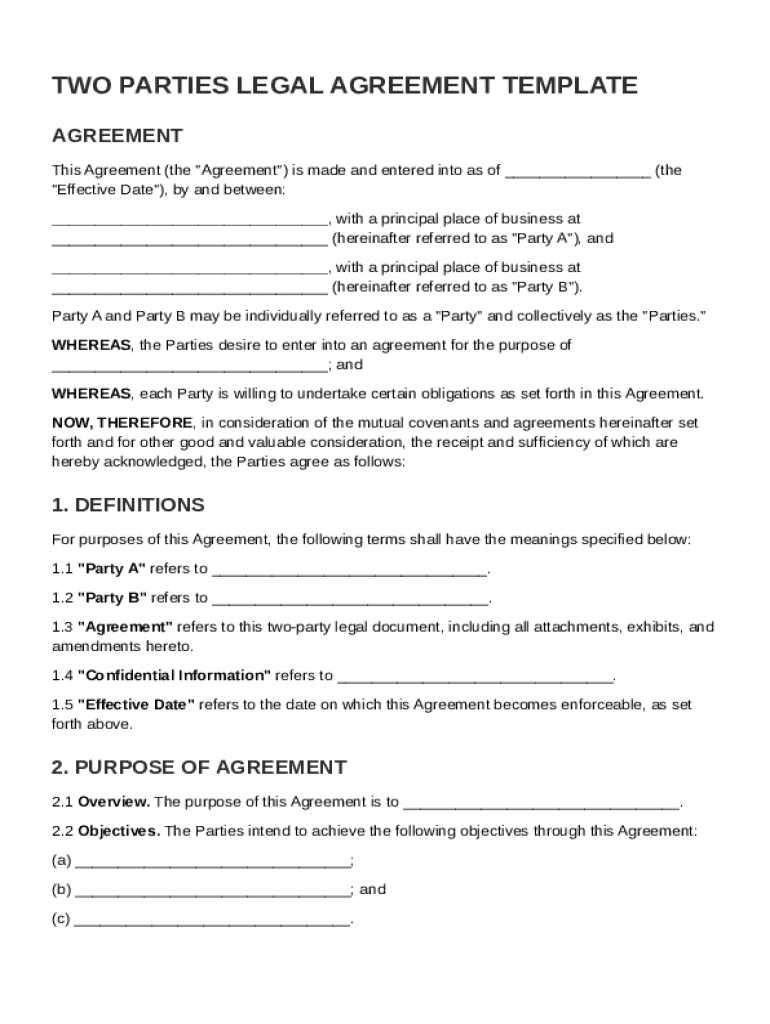
A Two Parties Legal Document Agreement Template is a pre-structured legal document designed to facilitate an agreement between two distinct parties. Typically, this template outlines the terms and conditions governing their collaborative efforts. It includes various sections such as definitions of relevant terms, purpose, scope of work, compensation details, confidentiality obligations, termination conditions, governing laws, and miscellaneous provisions. The template acts as a formal record that establishes mutual obligations, payment structures, and procedures for resolving any potential disputes.
How to Use the Two Parties Legal Document Agreement Template
To effectively use this template, follow these steps:
-
Download and Review: Start by downloading the template from a trusted source like DocHub. Review its structure and content to ensure it meets your specific needs.
-
Customize the Sections: Customize each section to reflect the unique aspects of your agreement. Adjust the terms in the scope of work, compensation, and confidentiality as needed.
-
Input Party Details: Ensure accurate information for both parties involved is inserted, including names, contact details, and roles within the agreement.
-
Seek Legal Advice: Before finalizing, it is wise to have a legal professional review the agreement to ensure compliance with applicable laws.
-
Execute the Agreement: Once finalized, both parties should sign the document. Use platforms like DocHub to maintain a legally binding electronic signature.
Steps to Complete the Two Parties Legal Document Agreement Template
Completing the Two Parties Legal Document Agreement Template involves several key steps:
-
Understand the Parties Involved: Clearly define who Party A and Party B are, detailing their responsibilities and roles.
-
Define the Objective: Specify the purpose of the agreement, outlining the goals of the collaboration.
-
Set Terms and Conditions: Detail the terms related to compensation, term length, delivery schedules, and other specific conditions.
-
Confidentiality and Non-Disclosure: Outline how confidential information will be handled and the penalties for breach of confidentiality.
-
Conflict Resolution: Define the process for resolving disputes—whether through arbitration, mediation, or litigation.
-
Legal Review: Have a legal expert evaluate the document for validity and enforceability.
-
Signing Process: Use electronic signing tools to execute the document formally, ensuring each party has a signed copy.
Key Elements of the Two Parties Legal Document Agreement Template
The template includes several key elements essential for establishing a comprehensive legal agreement:
- Definitions: Clearly define key terms that are used throughout the agreement.
- Purpose and Scope: Articulate the purpose and scope of the work or agreement to ensure clarity.
- Compensation and Terms of Payment: Detail how and when payments will be made.
- Confidentiality: Outline expectations for keeping information confidential.
- Term and Termination: Indicate how long the agreement is in effect and the circumstances under which it can be terminated.
- Governing Law: Specify which state’s laws will govern the agreement.
- Miscellaneous Provisions: Include any other clauses necessary to cover scenarios not encapsulated in the main sections.
Legal Use of the Two Parties Legal Document Agreement Template
The legal use of this template requires adherence to several criteria:
- Compliance with Laws: Ensure the agreement complies with federal and state laws, including contract and commercial laws in the U.S.
- Verification of Parties’ Identities: Confirm the identities of both parties to avoid fraudulent agreements.
- Comprehensive Clauses: All legal clauses should be comprehensive and cover all potential variations of the agreement.
- Validity of E-Signatures: Utilize legally recognized e-signature platforms like DocHub to ensure that electronic signatures are binding and enforceable.
Examples of Using the Two Parties Legal Document Agreement Template
Real-world applications of this template include:
- Business Contracts: Used in contractual agreements between companies and freelancers or vendors and clients.
- Partnership Agreements: Establish terms for partners in a business endeavor outlining shared responsibilities and profit-sharing.
- Consulting Services: Define the scope of work, deliverables, and compensation for consultants or service providers.
In each instance, the template ensures all terms are clearly laid out and agreed upon by both parties to prevent misunderstandings.
State-Specific Rules for the Two Parties Legal Document Agreement Template
While this template is versatile, it's important to consider state-specific regulations that may affect the enforceability and structure of agreements.
- Varying Contract Laws: Different states may have unique contract laws affecting the agreement’s terms, enforcement, and dispute resolution.
- Notary Requirements: Some states may require notarization for certain types of agreements or additional witnesses for execution.
Examine these aspects based on the location of both parties or where the contract is executed to ensure compliance.
Digital vs. Paper Version
There are significant differences between the digital and paper versions of a legal agreement template:
- Accessibility: Digital versions can be easily accessed, edited, and shared without the need for physical storage.
- Security: Digital documents can be encrypted to protect sensitive information. Platforms like DocHub offer enhanced security measures.
- Efficiency: E-signatures expedite the signing process, enabling quicker execution compared to traditional paper methods.
Both versions serve the same legal purpose, but the digital format provides flexibility and security that paper cannot match.