






Definition and Meaning
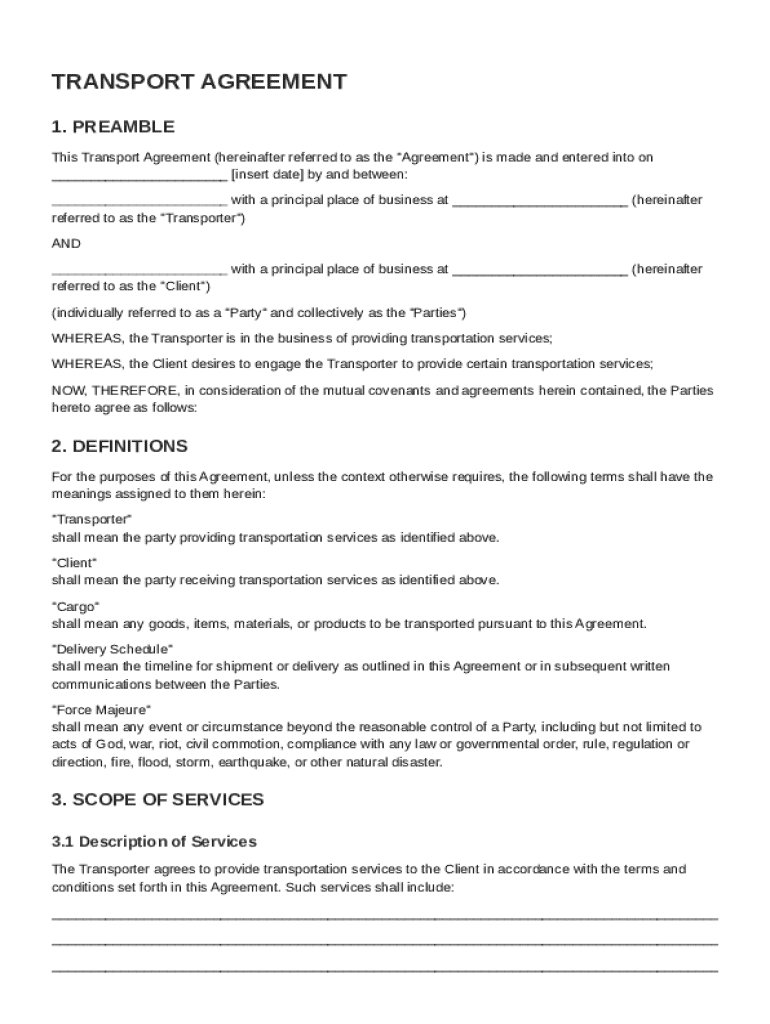
A Transport Agreement Template is a legal document that establishes the terms and conditions between a transporter and a client for providing transportation services. This template simplifies the creation of contracts outlining detailed arrangements and expectations, such as the scope of services, responsibilities, pricing, liability limitations, and compliance with applicable laws. By using a standardized template, both parties can ensure all essential elements are included, mitigating potential disputes and misunderstandings. The document typically includes legal stipulations about safety protocols and information sharing, ensuring clarity in mutual obligations.
How to Use the Transport Agreement Template
To effectively utilize the Transport Agreement Template, follow these steps:
- Review the Template: Begin by carefully examining the template to understand all sections and clauses. This will help you comprehend which details are required and how they should be completed.
- Customize Details: Tailor the template by filling in specific information relevant to the transportation service being provided, such as the names of both parties, precise service descriptions, dates, and pricing.
- Include Additional Terms: If necessary, augment the template with terms specific to your unique agreement that are not covered by the standard template.
- Review and Revise: Check the completed document for accuracy and clarity. Ensuring that all details are correct can prevent disputes later on.
- Sign and Save: Once both parties are satisfied with the agreement, ensure it is duly signed and saved in a secure manner, either digitally or as a hard copy for future reference.
Key Elements of the Transport Agreement Template
This template consists of the following crucial elements:
- Definitions: Clarifies key terms used throughout the agreement to ensure both parties have a shared understanding.
- Scope of Services: Outlines the specific services that the transporter will provide, including the type of goods transported and delivery timelines.
- Pricing and Payment Terms: Details the agreed pricing for services, billing cycles, payment methods, and deadlines.
- Party Obligations: Specifies the responsibilities of both the transporter and the client, ensuring each party knows what is expected of them.
- Liability and Indemnity: Defines the extent of liability and the indemnification responsibilities in cases of breach or damage.
- Termination Conditions: Lists the circumstances under which either party may terminate the agreement.
- Dispute Resolution: Provides the processes for resolving conflicts, which can include mediation or arbitration.
Steps to Complete the Transport Agreement Template
Follow these step-by-step instructions to fill out the Transport Agreement Template:
- Identify Parties: Clearly state the names and contact information of the transporter and the client involved in the agreement.
- Complete Scope of Services: Accurately describe the transportation services, including what will be transported and the delivery schedule.
- Specify Payments: Detail the agreed-upon fees, when payments are due, and acceptable payment methods.
- Outline Obligations: Define each party's duties and responsibilities, ensuring there is no ambiguity.
- Include Legal Terms: Ensure that all necessary legal terms and clauses such as liability limitations and governing law are included.
- Finalize Details: Double-check all entered information for accuracy and completeness before finalizing.
- Sign and Distribute: Both parties should sign the document after review, and each should retain a copy for their records.
Legal Use of the Transport Agreement Template
The Transport Agreement Template is legally binding once signed by both parties. It adheres to U.S. contract law principles, ensuring that the document can be enforced in legal proceedings if necessary. The template itself complies with the legal requirements for such agreements in the United States, emphasizing obligations to comply with transportation laws and regulations. It's important for both parties to fully understand the terms before signing, as the agreement serves as a safeguard to protect both parties' interests and clarify their responsibilities in the transportation arrangement.
Who Typically Uses the Transport Agreement Template
The Transport Agreement Template is commonly used by various parties, including:
- Independent Transporters and Carriers: Individuals or small businesses offering transportation services for goods and need to formalize terms with their clients.
- Businesses and Corporations: Companies that frequently engage transportation services to manage logistics and product delivery.
- Logistics and Freight Companies: Firms specializing in large-scale transportation services that require numerous agreements with diverse clients.
- Legal Professionals: Lawyers and legal teams aiding clients in drafting and reviewing transportation agreements to ensure legal compliance and protect client interests.


Examples of Using the Transport Agreement Template
Real-world scenarios where the Transport Agreement Template could be beneficial include:
- Retail Logistics: A small retail company hires a local transporter to deliver products from a warehouse to various store locations. The agreement defines the schedule, rates, and liability for damages during transit.
- Event Equipment Transport: An event management company uses a transporter for moving equipment to multiple venues. The template ensures that both parties agree on delivery schedules and handling responsibilities.
- Freight Services: A logistics company arranges for a carrier to move large shipments across state lines. The agreement stipulates compliance with state and federal regulations and outlines the freight charges and insurance coverages.
State-Specific Rules for the Transport Agreement Template
While the Transport Agreement Template provides a standardized framework, it's essential to consider state-specific regulations which could alter contract stipulations. Variations may include:
- State Licensing Requirements: Some states may require transporters to have specific licenses or permits, which should be mentioned in the agreement.
- Insurance Mandates: Different states have unique insurance requirements for transport operations.
- Governing Laws: Specify the state laws that will govern the agreement, especially if the transporter operates in multiple states.
- Safety and Compliance: Transporter responsibilities might be adjusted to accommodate state-specific safety regulations, directly influencing how services are rendered and documented.