






Definition and Meaning of the Nesting Agreement Template
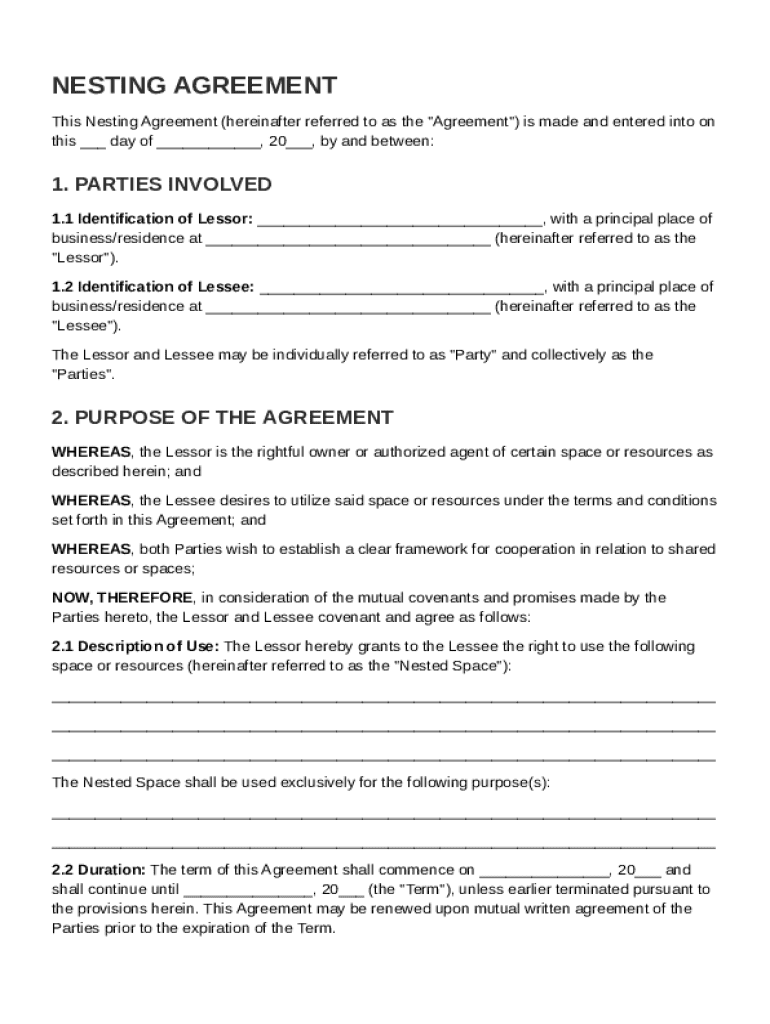
The "Nesting Agreement Template" is a structured document that delineates the terms and conditions between two primary parties: the Lessor and the Lessee. This agreement is utilized for the purpose of using specified spaces or resources. The fundamental objective of this template is to establish clear, documented expectations for both parties involved, ensuring a framework for cooperation regarding shared resources. The terms within the agreement cover various aspects such as the responsibilities of each party, financial obligations, and termination conditions. It also includes processes for dispute resolution and general provisions, all of which facilitate a comprehensive understanding between the Lessor and the Lessee.
How to Use the Nesting Agreement Template
Utilizing the Nesting Agreement Template involves several key steps that enable both parties to clearly outline the terms of their agreement. First, both the Lessor and the Lessee should review the template to ensure it covers all necessary details pertinent to their specific situation. It's advisable to customize sections to fit particular needs, including financial responsibilities, usage terms, and the extent of access to resources. The document should be reviewed in a collaborative manner, with both parties agreeing on the details before finalization. When all parts of the agreement are satisfactory, both the Lessor and Lessee should sign the document to formalize the contract.
Key Elements to Address
- Financial Obligations: Clearly outline any rent, fees, or other financial responsibilities.
- Resource Specification: Include a detailed description of the resources or space to be used.
- Use Conditions: Specify any limitations or conditions around the use of the resources.
Steps to Complete the Nesting Agreement Template
Completing the Nesting Agreement Template requires attention to detail and a systematic approach to ensure that all necessary elements are adequately addressed.
- Initial Review: Both parties should review the template to understand its structure and content fully.
- Customization: Modify applicable sections to accurately reflect the specific agreement terms.
- Financial Terms: State the agreed-upon financial arrangements, including payment schedules.
- Responsibilities and Conditions: Clearly define the obligations and rights of each party pertaining to resource use.
- Review and Approve: Conduct a thorough review to confirm that both parties agree on the content.
- Sign and Date: Each party signs and dates the document, finalizing the agreement.
Who Typically Uses the Nesting Agreement Template
The Nesting Agreement Template is often used by businesses or individuals who require a formalized structure for sharing resources or spaces. This can include:


Common Users
- Business Partnerships: Companies that share office space or equipment.
- Freelancers and Start-ups: Independent contractors or new businesses entering shared workspace agreements.
- Community Organizations: Groups that alternate use of community spaces or assets.

Key Elements of the Nesting Agreement Template
The template is designed to ensure comprehensive coverage of all necessary aspects to avoid potential conflicts and misunderstandings.
Important Provisions
- Termination Conditions: Define the circumstances under which the agreement may be terminated.
- Dispute Resolution: Outline the process for addressing any disagreements or issues.
- General Provisions: Include any additional clauses that may be unique to the agreement.
Legal Use of the Nesting Agreement Template
The Nesting Agreement Template serves as a legally binding document upon signature, provided that all necessary legal standards are met. This includes adherence to applicable state laws and fairness in conditions, which ensures enforceability in a court of law.
Legal Considerations
- Jurisdiction Clauses: Specify which state's laws govern the agreement.
- Compliance: Ensure the agreement complies with any relevant local or federal regulations.
State-Specific Rules for the Nesting Agreement Template
While the template provides a generalized structure, specific rules may vary based on state legislation. It's crucial to adapt the agreement to align with regional requirements.
Regional Variations
- Property Laws: Certain states may have unique property laws that affect terms of use or lease.
- Tax Implications: Financial responsibilities like tax obligations may differ depending on location.
Examples of Using the Nesting Agreement Template
There are various scenarios where the Nesting Agreement Template effectively streamlines resource sharing and cooperation.
Practical Scenarios
- Shared Office Spaces: Businesses co-locating within a single building to optimize resources.
- Equipment Sharing: Companies or individuals sharing expensive machinery or technology.
- Community Hubs: Local groups utilizing shared facilities for events or activities.
In summary, the Nesting Agreement Template is a vital tool for clearly defining terms and responsibilities between parties sharing resources or spaces. Proper use ensures that all parties are aware of their obligations and rights, fostering an environment of cooperation rather than conflict.