
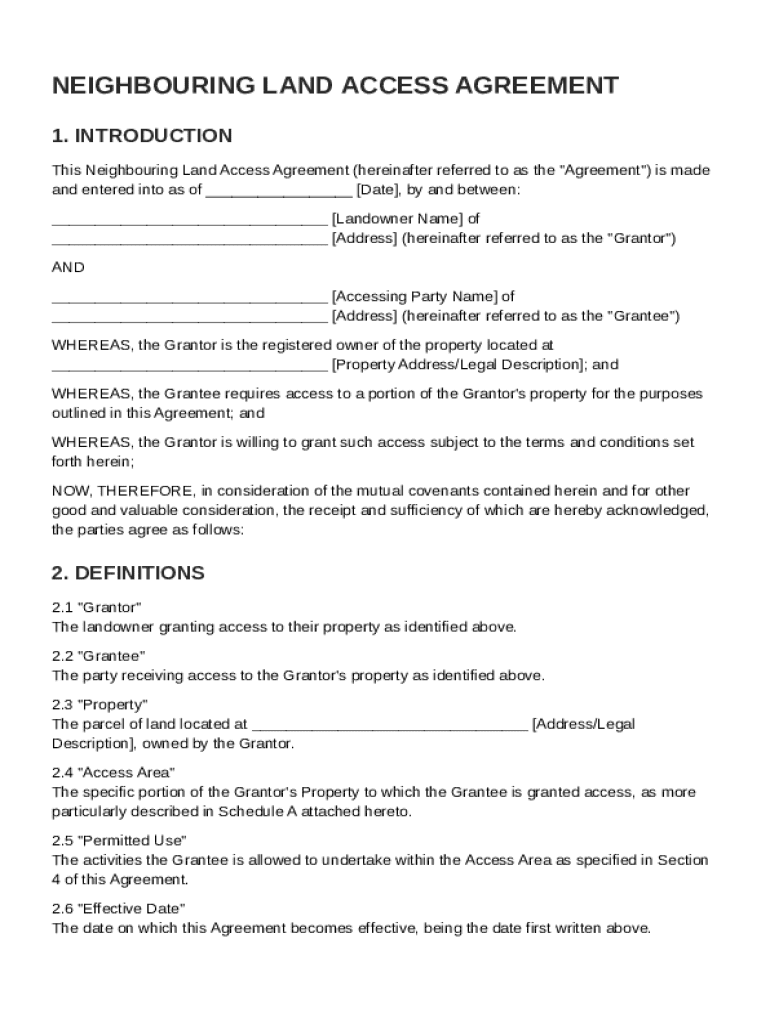







Definition and Purpose of a Neighbouring Land Access Agreement
The Neighbouring Land Access Agreement is a legal document that defines the conditions under which a property owner (Grantor) permits another party (Grantee) access to their land. This agreement is essential for clarifying terms related to access for specific activities, such as maintenance, construction, or resource extraction. It ensures both parties clearly understand their rights and obligations, reducing the risk of disputes. The agreement typically outlines who can use the land, what activities are permitted, and any limitations on usage. It also specifies the duration of access and the scope within which the Grantee can operate.
Key Components of the Neighbouring Land Access Agreement Template
A comprehensive Neighbouring Land Access Agreement Template includes several crucial components to protect both the Grantor and the Grantee:
- Definitions: Clarify important terms used throughout the agreement, such as "Access Area," "Grantor," and "Grantee."
- Scope of Access: Describe the specific areas covered by the agreement and the extent of access granted.
- Permitted Uses: Detail the allowed activities the Grantee can perform on the property, such as maintenance or temporary works.
- Obligations: Highlight the responsibilities of both parties, including care for the land, restoration obligations, and adherence to laws.
- Duration: Define the timeline for the agreement, including start and end dates.
- Termination Conditions: Specify conditions under which the agreement can be terminated by either party.
- Indemnity and Liability: Establish who bears responsibility for damages or losses incurred during activities on the property.
- Dispute Resolution Procedures: Offer mechanisms for resolving disputes, often requiring mediation or arbitration before litigation.
How to Use the Neighbouring Land Access Agreement Template
Using the Neighbouring Land Access Agreement Template involves several critical steps to ensure accuracy and compliance:
- Review and Customize: Start by thoroughly reading the template. Customize it to reflect the specific details of the agreement between the parties, such as retaining only relevant sections and adding specific property information.
- Consult Legal Counsel: Engage with legal professionals to ensure that the customized document complies with local laws and adequately protects both parties.
- Negotiate Terms: Work collaboratively with the other party to finalize agreeable terms. It’s vital to negotiate in good faith to address any concerns or specific needs.
- Execution and Notarization: Sign the finalized agreement with all parties involved. Consider notarization to ensure authenticity and future enforceability.
- Maintain Records: Keep copies of the signed document for future reference, as both parties may need to refer to the agreement throughout its duration.
Legal Considerations for Neighbouring Land Access Agreements
Adhering to legal requirements when drafting a Neighbouring Land Access Agreement protects the interests of both parties and enhances enforceability. Legal considerations include:
- Compliance with Local Laws: Ensure the agreement adheres to state-specific property and contract laws.
- Clear Terms: Use precise language to minimize ambiguity which could lead to disputes or legal challenges.
- Enforceability: Secure signatures and consider notarization to enhance the agreement's legal standing.
- Adaptability: Allow flexibility for amendments, providing a mechanism to officially incorporate changes if both parties agree.
- Indemnity Clauses: Protect both parties from potential liability, ensuring each is responsible for their actions.
Steps to Complete the Neighbouring Land Access Agreement Template
Completing the Neighbouring Land Access Agreement Template involves a systematic approach:
- Gather Information: Collect all necessary property details, including descriptions, titles, and relevant maps or diagrams.
- Input Data: Fill out the template with specific information, such as party names, property descriptions, and access terms.
- Review and Revise: Ensure all sections are complete, and check for accuracy and any legal requirements.
- Negotiate and Finalize Terms: Use this stage to make any necessary adjustments based on discussions between the parties.
- Confirm Understanding: Verify that both parties understand and agree to the terms before signing.
- Secure Signatures: Acquire written consent from all involved parties, and consider obtaining witnesses if necessary.
Who Typically Uses the Neighbouring Land Access Agreement Template
This template is utilized by a wide range of parties in various contexts:
- Property Owners: Grantors allowing temporary access for specific purposes.
- Construction Companies: Grantees needing access for building or renovation projects.
- Utility Providers: Companies requiring entry to install or maintain infrastructure.
- Environmental Organizations: Groups conducting conservation or research activities.
- Resource Miners: Accessing landh for extraction purposes under defined terms.


Important Terms within the Neighbouring Land Access Agreement
Understanding specific terms enhances clarity and execution of the agreement:
- Grantor: The landowner granting access.
- Grantee: The party receiving access rights.
- Access Area: The specific part of land under the agreement.
- Permitted Uses: Activities the Grantee is allowed to perform.
- Indemnity: Protection against legal responsibility for losses.
- Duration: Time period for access rights.
- Termination: Conditions under which the agreement can end.




