






Understanding the Draft Agreement Template
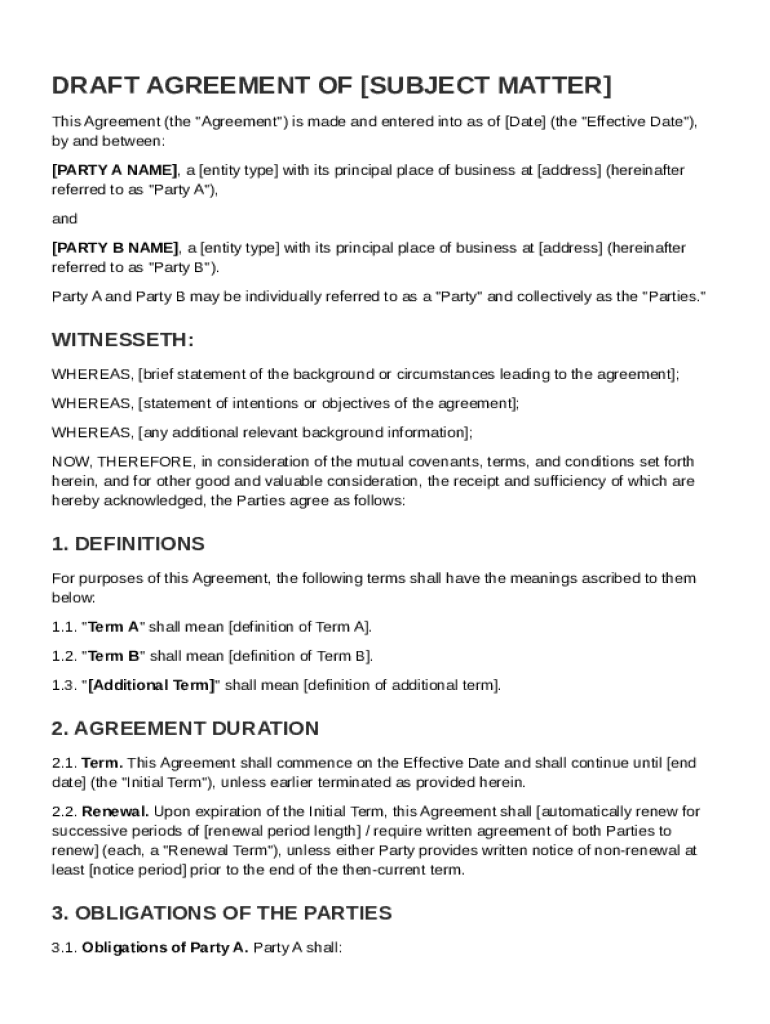
The Draft Agreement Template serves as a foundational tool for creating contracts between two parties. It delineates the rights and obligations of each party, steering clear of ambiguities by providing a structured outline to follow. This type of template is commonly used in business contexts where formalizing an agreement is essential to ensure clarity and legal compliance.
Definition and Purpose
- Definition: A Draft Agreement Template is a preliminary document that outlines the essential terms and conditions of an agreement between parties before the finalization of the formal contract.
- Purpose: It facilitates negotiations by presenting a clear framework for discussion, ensuring that all critical aspects of the agreement are addressed systematically.
Who Typically Uses the Draft Agreement Template
- Businesses: Companies often use these templates when engaging in partnerships, joint ventures, or service contracts.
- Legal Professionals: Lawyers use draft agreements to ensure all client needs are addressed and to expedite the contract creation process.
- Consultants and Freelancers: Used to formalize terms with clients, ensuring both parties have clear expectations of deliverables and payment schedules.


Creating and Completing the Draft Agreement Template
Completing a Draft Agreement Template involves several steps to tailor it to the specific needs of the parties involved. This process helps ensure that the agreement is comprehensive and reflects the intentions of both parties.
Steps to Complete
-
Review the Template: Analyze the template's structure to understand which sections are applicable to your agreement.
-
Fill in Party Details: Enter the names and contact information of the parties involved, typically referred to as Party A and Party B.
-
Define the Terms: Clearly outline the objectives of the agreement, including roles, responsibilities, and deliverables.
-
Specify the Duration: Indicate the effective period of the agreement, including start and end dates.
-
Address Compensation: Detail the financial terms, including payment amounts, schedules, and methods.
-
Include Confidentiality Clauses: If necessary, specify clauses to protect sensitive information shared between parties.
-
Add Termination Conditions: Define the conditions under which the agreement may be terminated by either party.
Key Elements to Include
- Definitions: Section defining key terms used throughout the agreement.
- Obligations: Detailed responsibilities of each party.
- Compensation: Clearly outlined compensation details.
- Dispute Resolution: Procedures for managing disagreements.
- Miscellaneous Provisions: Other relevant provisions tailored to the specific agreement.
Legal and Practical Considerations
Understanding the legal and practical implications of using a Draft Agreement Template is essential for ensuring validity and enforceability.
Legal Use and Compliance
- Ensure that the agreement complies with relevant laws and regulations within the jurisdiction it is executed.
- Consider legal requirements for specific clauses, especially those relating to confidentiality and dispute resolution.
State-Specific Rules
- Variations in state laws may affect the enforceability of certain clauses, such as non-compete agreements or confidentiality provisions.
- State-specific regulations might also impact the required inclusions or exclusions in certain contract types.
Real-World Applications and Examples
Draft Agreement Templates are utilized in various scenarios across different fields, providing versatility in formalizing agreements while minimizing legal risks.
Business Scenarios
- Joint Ventures: When two companies collaborate on a project, outlining each party's contributions, resource sharing, and revenue distribution.
- Service Agreements: Establishing terms between a service provider and client, detailing scope, deliverables, and payment terms.
Non-Business Contexts
- Partnerships: Individuals forming partnerships can use templates to delineate responsibilities and financial arrangements.
- Contract Work: Freelancers engaging with multiple clients often use these templates to standardize terms across different projects.
Software Compatibility and Integration
Working with Draft Agreement Templates using DocHub can streamline the editing process, providing users with tools to modify and complete documents efficiently.
Integration with DocHub
- Edit and Annotate: Utilize DocHub's editing capabilities to modify the agreement template according to specific needs.
- Secure Signatures: Use electronic signature features to sign agreements digitally, providing both security and convenience.
- Collaboration: Share the draft agreement with relevant stakeholders for input and approval before finalizing the document.
By leveraging tools like DocHub, users can expedite the agreement process while maintaining accuracy and compliance.