






Definition & Meaning
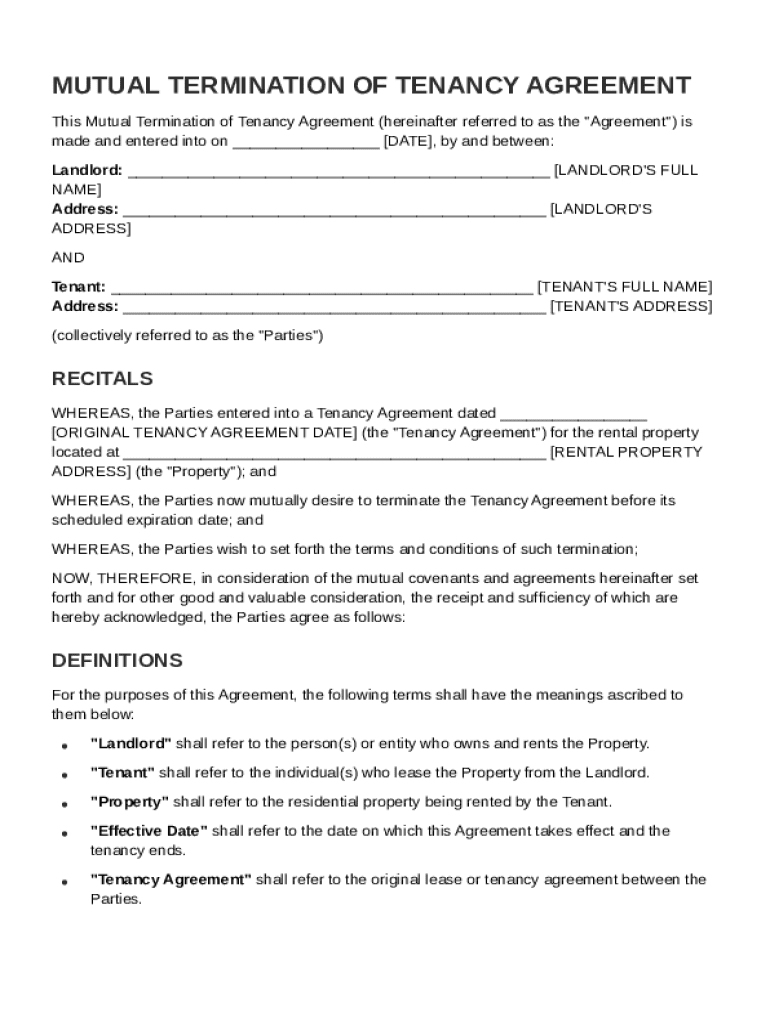
A Mutual Termination of Tenancy Agreement Template is a legal document used to outline the terms under which a landlord and tenant agree to end a tenancy before its scheduled expiration. This template serves to clearly detail the responsibilities and rights of both parties when deciding to conclude a rental agreement amicably. It provides a structured format for defining essential elements such as the effective date of termination and conditions regarding the property's state at the time of vacating. By using this document, both landlord and tenant can ensure a mutual understanding of their legal obligations and facilitate a smooth transition out of the lease agreement.
How to Use the Mutual Termination Agreement Template
To effectively utilize the Mutual Termination of Tenancy Agreement Template, follow these steps:
- Download the Template: Obtain the template from a trusted document management platform like DocHub.
- Fill in Basic Information: Include names of the landlord and tenant, property address, and intended termination date.
- Outline Property Condition: Note the expected state of the property upon the tenant's departure, which may include inspections or cleaning duties.
- Include Financial Arrangements: Specify any financial agreements, such as the return of a security deposit and final utility payment responsibilities.
- Review Legal Clauses: Ensure that both parties understand governing laws, mutual release of claims, and any additional provisions.
- Signing: Collect signatures using an electronic signature platform to formalize the agreement.
This process helps ensure that both parties are in alignment and compliant with any legal obligations.
Steps to Complete the Template
Gathering Information
- Contact Information: Gather the full names and current addresses of all parties involved, including both landlord and tenant.
- Property Details: Record the property address and any relevant identifiers, such as unit numbers.
Documenting Terms and Conditions
- Termination Date: Clearly define the agreed-upon date when the tenancy will end.
- Property Inspection: Schedule a date for inspecting the property for any damages or needed repairs, and record the findings.
Finalizing Financial Matters
- Security Deposit: Determine the distribution of the security deposit based on the inspection results.
- Outstanding Payments: Account for and settle any remaining utility or rental payments owed by the tenant.
Executing the Agreement
- Signature Collection: Use an electronic signature system to capture and date signatures from all parties.
- Distribution: Provide copies of the signed agreement to both the landlord and tenant for their records.
Adhering to these steps ensures a thorough and comprehensive approach to completing the agreement.
Key Elements of the Agreement Template
Basic Components
- Personal Information: Involves detailed identification of the landlord and tenant.
- Property Description: An exact reference to the rental unit in question.
- Termination Date: Specifies the date on which the tenancy officially ends.
Financial Clauses
- Security Deposit Terms: Covers conditions for its refund or deductions for damages.
- Utility Payments: Ensures all related utility bills are addressed before the agreement closure.
Legal Provisions
- Release of Claims: Mutual agreement that both parties waive any legal claims against each other once the agreement is signed.
- Governing Law: Specifies which state laws will preside over the agreement.
These elements work in tandem to clarify expectations and legal obligations.
Who Typically Uses the Template
The Mutual Termination of Tenancy Agreement Template is essential for several user groups:
- Landlords: Primarily used to formally conclude a lease with minimal dispute and ensure legal compliance.
- Tenants: Beneficial for tenants who wish to exit a lease early without penalties or future claims.
- Property Managers: Utilized by professionals managing multiple properties and aiming to maintain organized tenant transitions.
This template ensures that both residential and commercial rental scenarios are handled with due diligence.


Legal Use of the Agreement Template
When using the Mutual Termination of Tenancy Agreement Template, it is crucial to consider:
- Compliance with State Laws: The agreement must be drafted in accordance with the state's landlord-tenant laws where the property resides.
- Legally Binding Nature: Once signed, the document is considered legally binding and enforceable in a court of law.
- Amendments and Modifications: Any changes post-signing must be documented and agreed upon in writing by both parties.
These considerations help secure the legal standing of the document.
State-Specific Rules
Different states may have varying requirements and guidelines that affect the Mutual Termination of Tenancy Agreement:
- California: Requires specific disclosures about hazards such as asbestos or lead-based paint for older properties.
- Texas and Florida: Do not mandate formal inspection reports but require final accounting of the security deposit within a specified period.
Ensure you are aware of and comply with any state-specific adaptations or rules required when using this template.
Why You Should Use the Template
Utilizing the Mutual Termination of Tenancy Agreement Template offers several advantages:
- Clarity and Precision: Clearly outlines the rights and duties of both parties in a structured format.
- Reduced Conflict: Minimizes the potential for disputes by preemptively addressing areas of concern.
- Efficiency: Streamlines the termination process, helping both parties transition smoothly without legal complications or misunderstandings.
These benefits make the template an invaluable tool in managing rental agreements.