






Key Elements of the Mutual NDA Agreement Template
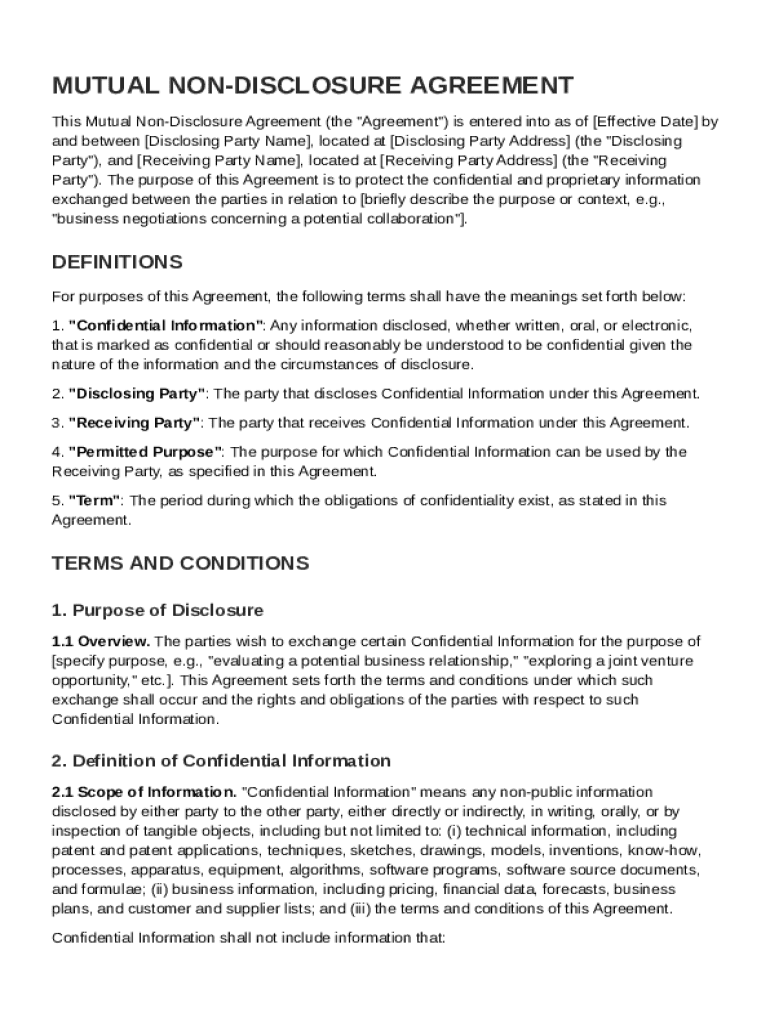
Understanding the core components of a Mutual Non-Disclosure Agreement (NDA) is crucial for ensuring confidentiality in business dealings. This template typically includes:
- Confidential Information Definition: Clearly specifies what constitutes confidential data. This may include trade secrets, business plans, customer lists, or proprietary practices.
- Obligations of the Receiving Party: Outlines the responsibilities of the party receiving confidential information, particularly focusing on non-use and limited disclosure.
- Exclusions from Confidential Information: Details exceptions where information is not considered confidential, such as publicly known data or information independently developed.
- Duration of Obligations: Sets the time frame during which confidentiality obligations apply, which may extend beyond the term of the agreement.
How to Use the Mutual NDA Agreement Template
To effectively use the Mutual NDA Agreement Template, follow these steps:
- Identifying Parties: Clearly list the disclosing and receiving parties involved in the agreement.
- Customize for Specific Needs: Adjust the template to fit the unique parameters of your agreement, adding or removing clauses as necessary.
- Define the Scope: Specify the purpose for sharing confidential information and the extent of its usage.
- Review Legal Provisions: Ensure clauses related to governing law, amendments, and remedies are appropriate for your business context.
Steps to Complete the Mutual NDA Agreement Template
Completing the template involves:
- Fill in the Party Details: Include the full legal names of both the disclosing and receiving parties.
- Detail the Information: Clearly describe the type of confidential information involved.
- Set Terms for Confidentiality: Establish time frames and specific conditions under which disclosure is permissible.
- Include Legal Provisions: Add sections on applicable law, and any clauses related to disputes or enforcement.
- Signatures: Both parties must sign the agreement for it to be legally binding.
Important Terms Related to Mutual NDA Agreement Template
Familiarize yourself with these essential terms:
- Non-Disclosure: A commitment to keep information private.
- Proprietary Information: Data deemed exclusive to the disclosing party.
- Breach of Contract: Breaking the terms set out in the agreement.
- Governing Law: Legal framework under which the agreement is interpreted.
Legal Use of the Mutual NDA Agreement Template
Legally, this template:
- Validates protection of intellectual property.
- Serves as evidence in potential legal disputes over information misuse.
- Must comply with local jurisdiction laws, particularly within the U.S., which may require state-specific modifications.
Who Typically Uses the Mutual NDA Agreement Template
Common users include:
- Businesses in Partnerships: Companies collaborating on joint ventures or potential mergers.
- Entrepreneurs & Start-ups: Protecting innovative ideas during pre-launch discussions.
- Technology Firms: Sharing software or hardware designs with development partners.


State-Specific Rules for the Mutual NDA Agreement Template
Different states may have additional requirements. For instance:
- California: Restricts covenants not to compete within NDAs.
- New York: May require specific language regarding trade secret protection.
It’s essential to consult legal experts when customizing the NDA for specific state laws.
Examples of Using the Mutual NDA Agreement Template
Practical applications include:
- Partnership Discussions: Securing discussions on new product lines or services.
- Mergers and Acquisitions: Safeguarding sensitive company data during negotiations.
- Supplier Contracts: Ensuring confidentiality when a supplier gains access to proprietary production processes.
By integrating these elements and considerations, the Mutual NDA Agreement Template serves as a robust tool for maintaining confidentiality and fostering trust among collaborating parties.