






Key Elements of a Tenant Agreement Template
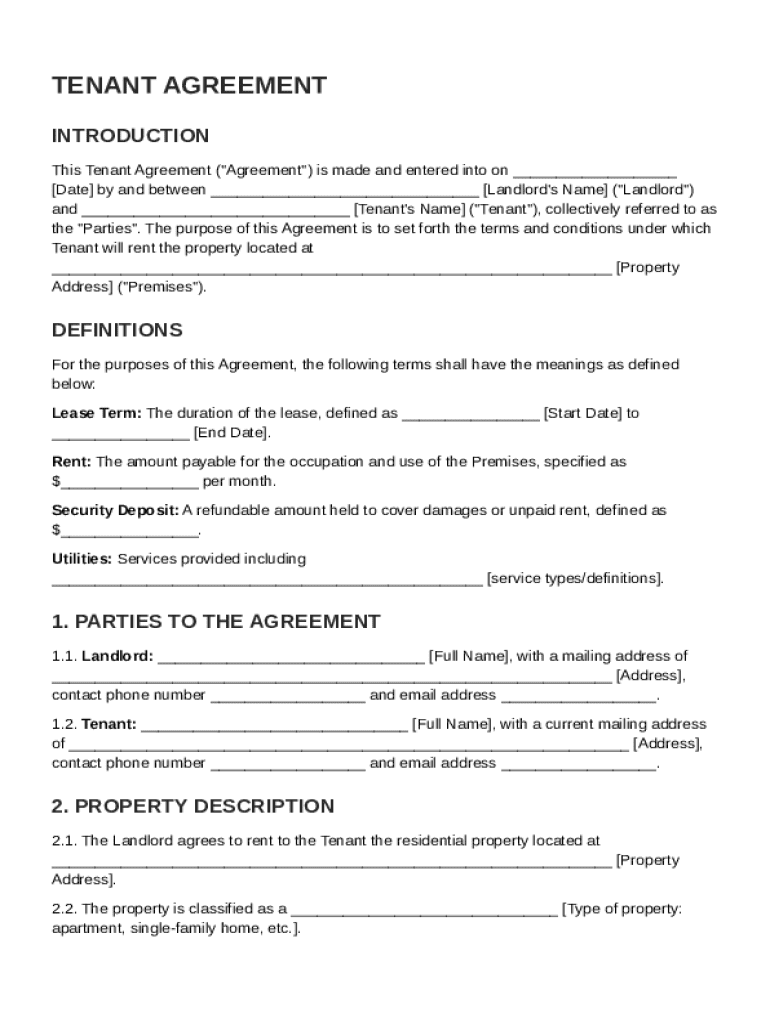
The Tenant Agreement Template is a fundamental document outlining the conditions for leasing a property. Key elements include:
- Lease Duration: Specifies the start and end dates, defining the rental period.
- Rent Payment Details: Includes the rental amount, due dates, and accepted payment methods.
- Security Deposit Information: Details the amount, conditions for refund, and circumstances under which it may be withheld.
- Utilities and Services: Clarifies responsibilities for payment of utilities like water, gas, and electricity.
- Maintenance Responsibilities: Outlines tenant and landlord obligations for property repairs and maintenance.
- Rules and Regulations: Covers policies on noise levels, pets, and alterations to the property.
- Termination Conditions: Describes the process for terminating the lease early, including notice periods and any penalties.
- Governing Law: Indicates which state's laws will apply to the agreement.
- Additional Provisions: May include clauses on subletting, property use, and unique property-specific conditions.
How to Use the Tenant Agreement Template
Using the Tenant Agreement Template effectively involves a few key steps:
- Download the Template: Access the tenant agreement document from your chosen platform that offers templates like DocHub.
- Review for Relevance: Ensure that the standard terms align with your specific needs and legal requirements in your state.
- Customize the Content: Modify sections such as payment details, and maintenance clauses to reflect your situation.
- Consult a Legal Professional: Before finalizing, have a legal expert review the document to ensure compliance with local laws.
- Share and Sign: Distribute the customized template to the tenant for agreement and signatures using platforms that support electronic signatures, ensuring a timestamped, legally binding document.
Legal Use of the Tenant Agreement Template
The legal utility of a Tenant Agreement Template is rooted in its comprehensive coverage of landlord and tenant responsibilities. When crafted and executed correctly, it provides a binding contract suitable for legal proceedings if necessary. It must:
- Comply with State Laws: Adhere to specific legal requirements, which vary across states, regarding rental agreements.
- Include Essential Clauses: Cover all elements required by law, including but not limited to provisions for habitability, anti-discrimination laws, and fair housing.
- Be Executed Properly: Signatures from both parties are needed to make the document legally enforceable.
- Be Stored Securely: Maintain a signed copy in a secure location, either digitally or physically, to reference in disputes or legal queries.
Steps to Complete the Tenant Agreement Template
Completing the Tenant Agreement Template involves several clear steps to ensure accuracy and compliance:
- Gather Necessary Information: Collect details regarding the property, tenant, and landlord, including names, addresses, and contact information.
- Enter Lease Details: Fill in specifics about the lease duration, rent amount, and additional charges.
- Specify Responsibilities: Clearly outline maintenance duties, utility responsibilities, and any unique rules for the property.
- Include Pertinent Clauses: Ensure that all relevant clauses, such as security deposit terms and termination protocol, are filled in accurately.
- Review and Amend: Carefully review the document for any needed amendments to ensure clarity and correctness.
- Sign and Date: Both parties should sign and date the document, either in print or electronically, confirming agreement of terms.
State-Specific Rules for the Tenant Agreement Template
Tenant agreements must adapt to specific state regulations, impacting their legal standing. Key considerations include:
- Security Deposit Regulations: Varies by state regarding maximum amounts, interest accrual, and return timelines.
- Habitability Standards: State laws dictate landlord responsibilities to maintain safe and livable rental conditions.
- Eviction Procedures: Different states have unique protocols for tenant eviction, affecting notice periods and legal actions.
- Disclosure Requirements: State-mandated disclosures may include information about lead paint, mold, or other environmental hazards.
Who Typically Uses the Tenant Agreement Template
Tenant Agreement Templates are widely used by various parties within the real estate sector:
- Residential Landlords: Private property owners renting homes or apartments.
- Property Management Companies: Organizations managing multiple properties for different owners.
- Commercial Landlords: Owners leasing out business premises or offices to businesses.
- Real Estate Agents: Professionals assisting clients in rental property transactions, often facilitating the agreement process.


Important Terms Related to the Tenant Agreement Template
Several terms are pivotal to understanding and using tenant agreements effectively:
- Lessee: The tenant, or person renting the property.
- Lessor: The landlord, or person providing the rental property.
- Premises: The property being rented.
- Default: Failure to comply with agreement terms, potentially leading to lease termination.
- Indemnity Clause: Protects one party from financial loss due to the other party's actions.
Examples of Using the Tenant Agreement Template
Tenant Agreement Templates offer versatility across diverse scenarios:
- Short-Term Residential Rentals: Useful for durations less than six months, often utilized for temporary assignments or assignments.
- Long-Term Leases: Agreements lasting a year or more, suited for families or individuals seeking stability.
- Commercial Property Leasing: Adaptable for commercial space rentals, requiring additional considerations like business operations and signage.
- Shared Living Situations: Templates can be customized for roommate arrangements, defining shared responsibility for rent and utilities.