
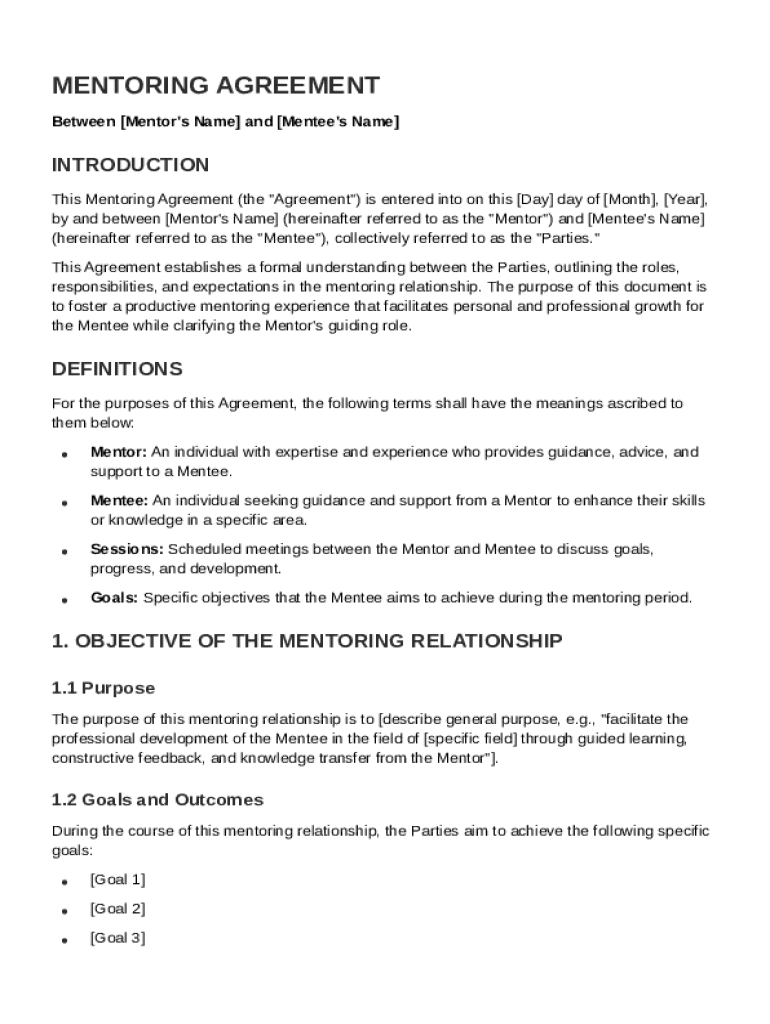







Key Elements of the Mentoring Agreement Template
The Mentoring Agreement Template is a comprehensive document detailing the essential components of a mentoring relationship. It typically includes sections outlining the roles and responsibilities of both the mentor and the mentee, establishing a framework for collaboration. Important aspects are:
- Roles and Responsibilities: Define the specific functions and expectations for both parties to promote a clear understanding of each other's commitments.
- Objectives and Goals: Outline the personal and professional targets that the mentee aims to achieve through the mentoring relationship. Set measurable goals for tracking progress.
- Meeting Frequency: Specify how often meetings should occur, whether weekly, bi-weekly, or monthly, to ensure a consistent and productive mentoring schedule.
- Confidentiality Agreements: Detail the need for discretion regarding shared information, fostering an environment of trust and security.
- Amendment Provisions: Include clauses allowing for modifications to the agreement as necessary to reflect changes in goals or circumstances.
Definition & Meaning
A Mentoring Agreement is a formalized document that establishes the structure of a mentoring relationship. It serves as a contract between mentor and mentee, outlining their mutual expectations and the logistical framework of their interactions. This document is crucial for setting clear communication channels and achieving shared objectives.
- Formal Relationship: Defines the professional bond and sets the tone for interactions between the mentor and mentee.
- Structured Growth: Facilitates intentional development through targeted objectives and feedback mechanisms.
- Clarity of Purpose: Provides a shared vision, minimizing miscommunications and enhancing collaboration.
How to Use the Mentoring Agreement Template
Utilizing the Mentoring Agreement Template requires understanding its purpose and function. This template serves as a guide to craft a tailored agreement that suits the specific needs of the participants.
- Customization: Begin with a review of the template to tailor sections according to specific mentoring goals and the unique expectations of both parties.
- Review of Key Sections: Ensure that roles, responsibilities, and expectations are clearly documented.
- Validation: Both parties should agree on the contents of the template before signing off to confirm mutual understanding and commitment.
- Implementation: After finalization, refer to the document periodically to ensure adherence to agreed terms.
Steps to Complete the Mentoring Agreement Template
Completing the template involves a sequential approach designed to be thorough and reflective of the mentee's goals:
- Identify Goals: Define and document specific objectives.
- Assign Roles and Responsibilities: Specify who will do what, ensuring clarity.
- Determine Logistics: Agree on meeting schedules and preferred communication methods.
- Establish Confidentiality Requirements: Discuss and document confidentiality obligations.
- Finalize the Agreement: After both parties have reviewed and made necessary adjustments, sign the document to formalize the agreement.
Legal Use of the Mentoring Agreement Template
The Mentoring Agreement Template is a legally binding document once signed. It is essential to ensure that the terms comply with all relevant legal standards, particularly regarding confidentiality and non-disclosure clauses.
- Jurisdictional Compliance: The document should be reviewed to ensure alignment with state laws where the parties operate.
- Binding Obligations: Once signed, the terms become enforceable; hence, it is crucial for both parties to fully understand their commitments and rights.
Who Typically Uses the Mentoring Agreement Template
Typically, the Mentoring Agreement Template is utilized by:
- Corporate Entities: Large organizations often use mentoring agreements to enhance employee development and leadership skills.
- Educational Institutions: Universities and colleges implement mentoring to support student growth and academic success.
- Non-Profit Organizations: NGOs use mentoring programs to develop the leadership capabilities of staff and volunteers.


Software Compatibility for the Mentoring Agreement Template
The Mentoring Agreement Template is versatile, with broad compatibility across various platforms and software, enhancing its accessibility and utility.
- DocHub Compatibility: Seamlessly integrates with document workflow systems like DocHub, allowing for easy editing and collaboration.
- Google Workspace: Users can import and export documents directly from Google Drive, ensuring smooth transitions between platforms.
- Microsoft Office Tools: Often formatted for use with Word and Excel, facilitating widespread adaptability.
State-Specific Rules for the Mentoring Agreement Template
While the template serves as a general guideline, state-specific nuances may affect how it is executed:
- Confidentiality Requirements: Varying state laws may dictate specific verbiage or requirements for confidentiality clauses.
- Legally Enforceable Terms: Some states may have unique regulations that impact the binding nature of mentoring contracts.
- Amendments and Alterations: Provisions for amendments might require adherence to different protocols depending on the state.
By utilizing this in-depth approach, individuals and organizations can optimize their use of the Mentoring Agreement Template to foster effective mentoring relationships that are structured, goal-oriented, and legally sound.




