
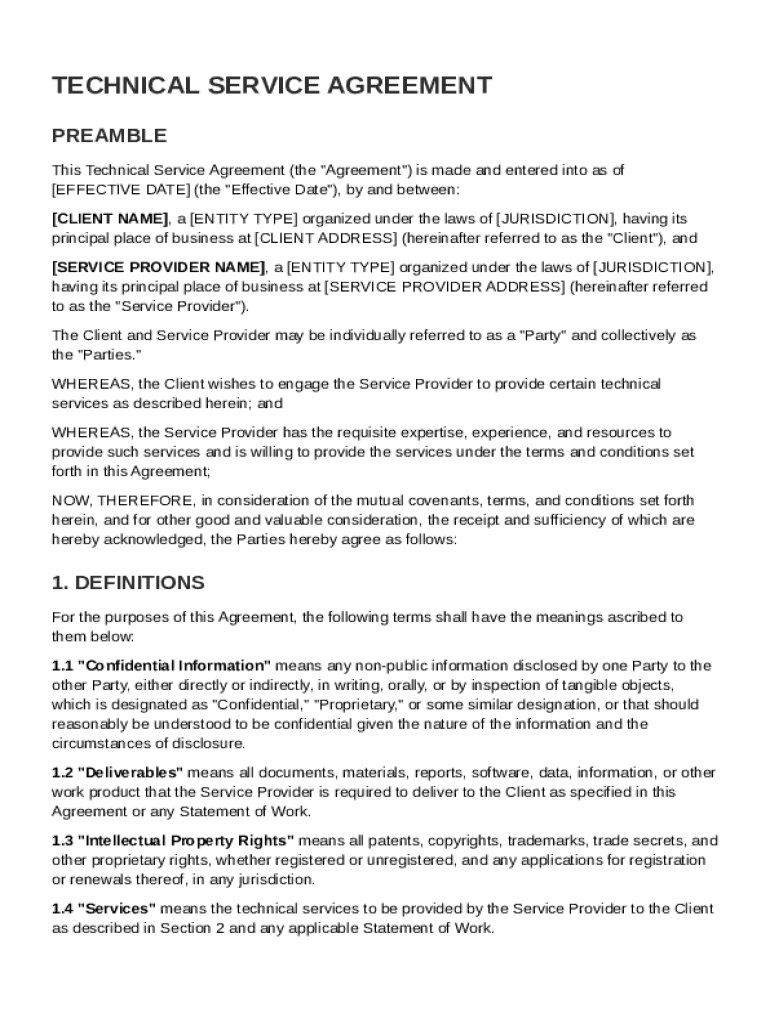







Definition & Meaning
A technical service agreement is a legally binding contract detailing the terms and conditions under which a client engages a service provider to deliver specific technical services. It typically includes definitions of key terms to prevent misunderstandings. These terms clarify expectations, outlining precise service descriptions, including any technical specifications necessary for the services. Additionally, the agreement serves as a foundation for professional relationships by providing clear guidelines on how technical services should be rendered, ensuring both parties understand their roles and responsibilities.
Key Elements of the Technical Service Agreement Template
The template normally incorporates several key components essential for binding the parties to the agreed terms. These elements often include:
- Scope of Services: Detailed description of services to be provided.
- Responsibilities: Duties and accountability of both the client and the service provider.
- Compensation Details: Payment terms, including method, schedule, and amounts.
- Confidentiality Obligations: Terms to protect sensitive information.
- Intellectual Property Rights: Clauses concerning ownership and usage of intellectual properties.
- Indemnification Clauses: Provisions determining liability and protection against third-party claims.
- Limitations of Liability: Terms that limit the extent of the service provider's liability for damages.
- Dispute Resolution Procedures: Processes for resolving any disagreements between the parties.
How to Use the Technical Service Agreement Template
Using the agreement template involves several straightforward steps. Here’s a general guide:
- Review Your Requirements: Clearly understand and outline the services you need.
- Customize the Template: Tailor the sections of the template to fit specific service terms.
- Include All Parties' Details: Accurately input names and addresses.
- Define the Scope of Work: Clearly describe all services, deliverables, and project timelines.
- Agree on Compensation: Specify payment terms including amounts, delivery milestones, and deadlines.
- Ensure Legal Compliance: Verify all legal requirements and clauses such as confidentiality and liability are properly addressed.
Examples of Using the Technical Service Agreement Template
Technical service agreements are employed across various industries. For instance:
- Software Development: An IT company providing software solutions uses the agreement to outline project deliverables and intellectual property rights with a client.
- Telecommunications: Carriers providing services to businesses may use these contracts to specify the terms of data services and infrastructure maintenance.
- Consulting Firms: Firms offering technical consulting services draft these agreements to stipulate project timelines, duties, and confidentiality agreements.
State-Specific Rules for the Technical Service Agreement Template
State laws can impact the structure and content of technical service agreements. For example, in states with more stringent consumer protection laws, additional disclosures about service limitations might be required. Agreements must also comply with state-specific legislative requirements, such as arbitration clauses or restrictions on liability waivers. It is often advisable for businesses to review these agreements with legal counsel to ensure compliance with state laws.
Legal Use of the Technical Service Agreement Template
Using this template legally involves ensuring it meets all contractual requirements and adheres to applicable laws. The agreement must include consent from all involved parties and should be executed in good faith. Legally, it must also adhere to industry standards and common practices, providing equal protection to the signatories. Accessibility to legal recourse in case of disputes is also crucial, as detailed within the template.
Steps to Complete the Technical Service Agreement Template
Completing the template effectively involves:
- Gathering Information: Collect essential data such as service descriptions, client and service provider details, and financial terms.
- Filling Out Sections: Conclude each segment by clearly presenting the necessary information and terms.
- Legal Review: Seek legal advice to vet the agreement’s compliance with relevant laws.
- Review with All Parties: Ensure all stakeholders review and understand the agreement.
- Finalization and Signature: Execute the document by obtaining signatures from all parties involved.
Software Compatibility
The agreement template is often available as a digital document compatible with numerous software applications including DocHub, Microsoft Word, and PDF readers. Utilization of software that supports editing, signing, and sharing of documents is critical for maintaining efficiency and integrity. DocHub, specifically, allows seamless interaction through its integration with cloud services such as Google Drive, Dropbox, and OneDrive, facilitating collaborative work on the agreement.




