






Definition and Purpose of the Event Partnership Agreement Template
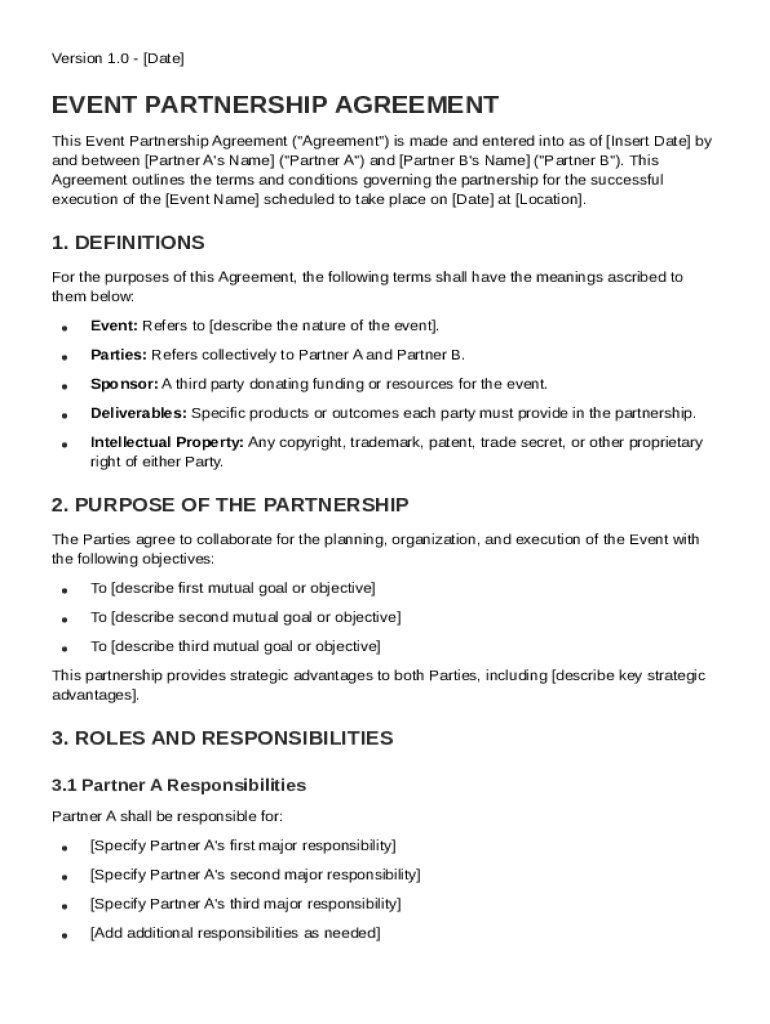
An Event Partnership Agreement Template is a pre-structured document that outlines the specific terms and conditions agreed upon by two or more parties when collaborating on an event. This template serves as a guideline to ensure clarity, mutual understanding, and a successful partnership. It typically includes sections for defining the responsibilities, financial commitments, and roles of each party involved. Additionally, the template addresses promotional strategies, intellectual property considerations, event logistics, and other relevant aspects necessary for the execution of a successful event. Using such a template can save time while reducing the need for constant negotiations on fundamental aspects of the partnership.
Key Components of the Event Partnership Agreement Template
Roles and Responsibilities
- Definition of Roles: Clearly defines the roles of Partner A and Partner B, specifying their responsibilities in the planning and execution phases of the event.
- Task Allocation: Details the distribution of tasks and ownership across various facets such as marketing, logistics, and venue management.
- Performance Standards: Establishes quality and performance benchmarks which partners must meet to fulfill their obligations effectively.
Financial Contributions
- Budget Overview: Provides a detailed outline of expected costs associated with the event, alongside the respective financial commitments of each party.
- Payment Schedules: Describes the timeline for payments, including initial deposits, milestones, and final settlements.
- Budget Amendments: Outlines the process for handling unexpected costs or budget changes, including approval processes and documentation requirements.
Step-by-Step Completion Guide for the Agreement
- Preliminary Discussions: Begin with an initial meeting between all parties to discuss the event’s main objectives and potential partnership.
- Draft Review: Each party should review the draft agreement template, making notes on sections requiring customization or further discussion.
- Customizing the Template: Modify the template to include specific details such as event dates, location, and unique roles or responsibilities.
- Collaborative Edits: Use collaborative platforms like DocHub for real-time editing, enabling all parties to propose changes and reach consensus efficiently.
- Review of Terms: Conduct a final review to ensure all terms, conditions, and responsibilities are accurately outlined and understood by each party.
- Formal Signing: Utilize DocHub’s electronic signature feature to sign the final document, making the agreement legally binding.
Legal and Compliance Aspects
Governing Law and Dispute Resolution
- Applicable Law: Specifies the legal jurisdiction under which the agreement will be governed, often based on the location of the event or the principal place of business of one of the partners.
- Dispute Resolution Methods: Outlines the process for resolving any disputes that may arise, favoring arbitration or mediation before proceeding to litigation.
Compliance with Laws
- Regulatory Compliance: Ensures that the event, as well as the roles of each partner, adhere to all relevant federal, state, and local regulations.
- Permits and Licenses: Details the necessary permits and licenses required for the event and outlines which party is responsible for obtaining them.
Usage Scenarios and Examples
Common Use Cases
- Corporate Joint Ventures: Often used by businesses collaborating on industry conferences, exhibitions, or product launch events.
- Nonprofit Organizations: Utilized by charitable organizations when partnering with sponsors for fundraising events or awareness campaigns.
- Educational Institutions: Employed by colleges and universities when working with external partners on academic conferences or alumni gatherings.
Practical Illustrations
- Music Festival: An event organizer and a venue owner might use this agreement to outline revenue-sharing arrangements from ticket sales.
- Trade Show: A small business might partner with a manufacturer to co-host a booth, using the agreement to specify each company's branding rights and responsibilities.
Who Typically Uses the Event Partnership Agreement Template
This template is frequently used by a variety of stakeholders involved in event planning and execution. These include:
- Event Planners: Professionals responsible for organizing the logistics, marketing, and execution of events.
- Corporate Sponsors: Businesses that provide financial or material support in exchange for marketing or operational roles in an event.
- Nonprofit Organizations: Entities that often rely on partnerships to share resources and expand the reach of their events.
- Venue Owners: Parties providing the physical space where the event occurs, needing clear terms regarding usage rights and responsibilities.
- Marketing Agencies: Entities engaged in promoting events, requiring detailed agreements to outline deliverables and timelines.


Common Variations of the Event Partnership Agreement
State-Specific Modifications
- Local Regulations: Adjustments to align with state-specific laws governing events, especially concerning permits, insurance, and liability.
- Cultural Considerations: Customizations to accommodate cultural norms or preferences specific to a region, impacting event presentation and logistics.
Industry-Specific Adaptations
- Tech and Startups: Agreements focusing on intellectual property protections, critical in sectors involving innovative presentations or concepts.
- Entertainment: Contracts tailored to account for talent bookings, audiovisual requirements, and specific performance clauses.
State-by-State Differences and Considerations
Regulatory Variations
- California: Has specific laws regarding talent engagements and worker classifications that might require additional clauses.
- New York: Known for its extensive advertising and promotional guidelines, necessitating detailed sections on compliance in public-facing activities.
Permitting and Licensing
- Texas: Requires specific permits for large gatherings that might impact public safety, such as fire permits for pyrotechnics at events.
- Florida: Has unique environmental regulations that must be considered for outdoor events, affecting equipment and infrastructure planning.
By leveraging these key components and guidelines, parties involved in organizing events can effectively use an Event Partnership Agreement Template to ensure comprehensive coverage and a successful collaborative endeavor.