






Definition and Meaning of a Startup Agreement Template
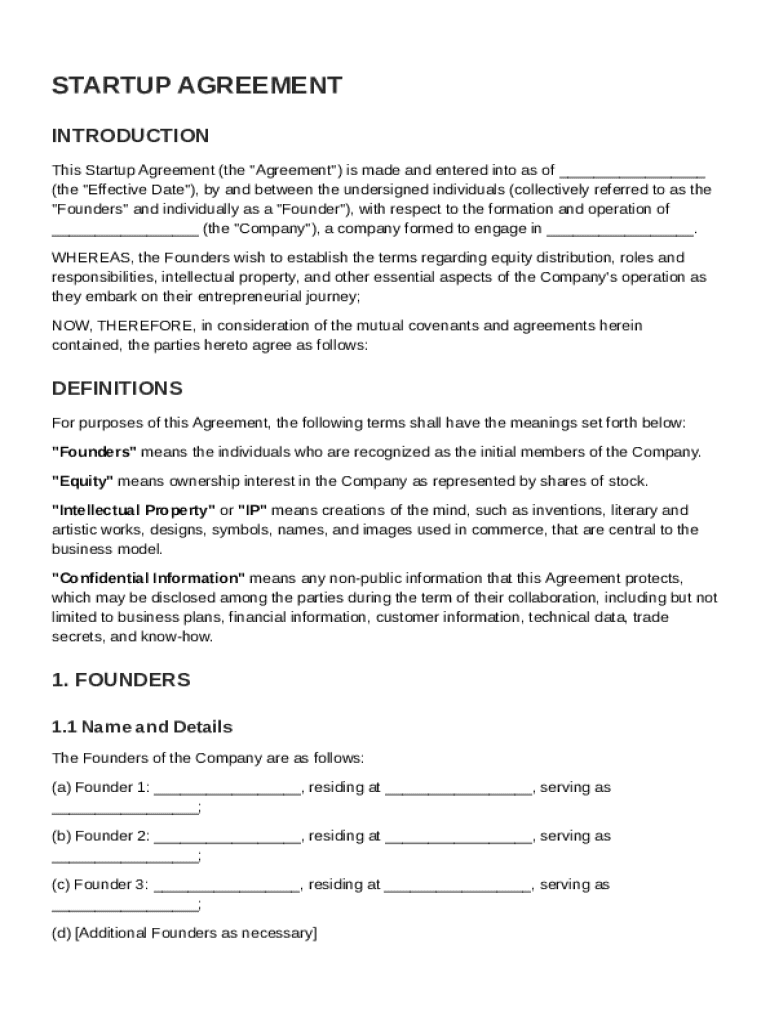
A Startup Agreement Template is a structured document that outlines the foundational terms for the creation and operation of a new business. This template is essential for startup founders as it details key aspects required to establish a clear working framework between the parties involved. These aspects include definitions of founding terms, distribution of equity, vesting schedules, roles and responsibilities of each founder, and the management structure of the startup. By setting out these guidelines, the template aims to prevent misunderstandings and disagreements among founders, thereby fostering smooth and efficient operations.
In addition to operational terms, the agreement often covers intellectual property rights to ensure that the company's innovations are protected, confidentiality obligations to safeguard sensitive information, and dispute resolution processes to prepare for any potential conflicts. Lastly, it includes conditions under which the agreement can be terminated, which helps clarify each party's exit rights and responsibilities. This structured approach aids in aligning the founders' visions and expectations, contributing significantly to the long-term success of the business.
Key Elements of the Startup Agreement Template
Equity Ownership and Vesting Schedules
One of the central components of a Startup Agreement Template is the section detailing equity ownership and vesting schedules. Founders often prioritize these terms as they directly impact each individual's financial stake and incentives in the company.
- Equity Ownership: Specifies the percentage of shares each founder owns, ensuring that ownership is clear from the onset.
- Vesting Schedules: Outlines the timeline over which the founders earn their shares. Commonly, companies adopt a four-year vesting schedule with a one-year cliff, meaning no shares are vested until the founder has stayed for a year, after which vesting occurs gradually.
Roles and Responsibilities
Clear delineation of roles and responsibilities helps ensure that each founder knows their specific duties within the company. This section assigns tasks such as decision-making authority, operational roles, and management responsibilities.
- Management Structure: Defines who is in charge of decisions and how the hierarchy will operate within the startup. This can include titles like CEO, CTO, and COO, with descriptions of their duties.
Legal Use and Compliance
Legally Binding Provisions
The Startup Agreement Template serves as a legally binding contract among founders. It is crafted to comply with the relevant U.S. legal standards, including adherence to federal acts like the ESIGN Act when electronic signatures are used.
Confidentiality and Intellectual Property Rights
Protecting the startup’s proprietary information and innovations is critical. The agreement should include:
- Confidentiality Obligations: Ensure sensitive information shared among founders remains private.
- Intellectual Property Rights: Specify ownership of ideas and inventions developed during the course of work to prevent disputes over who holds the rights to the startup’s innovations.
How to Use the Startup Agreement Template
To effectively use a Startup Agreement Template, founders must follow specific steps to tailor it to their unique business needs. This process involves customization, consultation, and formal agreement among all parties.
Customization and Review
- Customization: Begin by modifying the template to suit your startup’s specific details, such as the number of founders and their shareholding.
- Legal Review: It is advisable to have the draft reviewed by a legal professional who can ensure that all terms comply with applicable laws and protect the interests of all parties involved.
Agreement and Signing
Once the template is customized and legally vetted, founders should review it together to ensure mutual understanding and agreement on all points. Once all parties are satisfied, they can sign the agreement, making use of electronic signing tools if preferred, provided they adhere to legal standards for digital signatures.
Who Typically Uses the Startup Agreement Template
The Startup Agreement Template is primarily utilized by individuals or entities involved in the initial stages of forming a new business. This includes:
- Startup Founders: Entrepreneurs who are establishing a new business and need to outline foundational terms.
- Venture Capitalists and Investors: Although not direct users, they often require evidence of a formalized startup agreement as part of their due diligence before investing.
- Legal Advisors and Consultants: Frequently reference this template to ensure that founder agreements are comprehensive and legally sound.


Steps to Complete the Startup Agreement Template
Completing the Startup Agreement Template systematically can help ensure that no critical elements are overlooked. Below is a step-by-step guide:
- Define Business Purpose and Roles: Clearly outline the nature of the startup and specify roles for each founder.
- Establish Equity Distribution: Agree on and document each founder’s equity stake and vesting terms.
- Detail Management and Operations: Specify management hierarchy and operation methodologies.
- Include Legal Clauses: Add clauses for confidentiality, intellectual property, dispute resolution, and termination conditions.
- Finalize and Sign: Review the agreement collectively and sign. Consider using electronic signature tools for efficiency.
Important Terms Related to the Startup Agreement Template
Understanding key terminology is vital for anyone involved in crafting or signing a Startup Agreement Template. Some essential terms include:
- Equity Vesting: The process by which founders earn their shares over time.
- Dilution: A reduction in each existing shareholder's ownership percentage, often due to the issuance of new shares.
- Cliff: A period at the start of the vesting schedule during which no equity is earned.
- Exit Strategy: Plans and terms related to how founders can leave the startup or transition their stake.
State-Specific Rules for a Startup Agreement Template
While the Startup Agreement Template provides a broad framework, it can also be subject to state-specific regulations that may require additional customization.
- State Filing Requirements: Determine if your state requires additional filings or notifications upon executing a startup agreement.
- Legal Variations: Different states may have unique regulations regarding equity distribution, intellectual property, and dispute resolution processes.
- Consult Local Legal Advice: Engage with a legal professional familiar with state laws to ensure compliance and prevent legal issues down the line.