
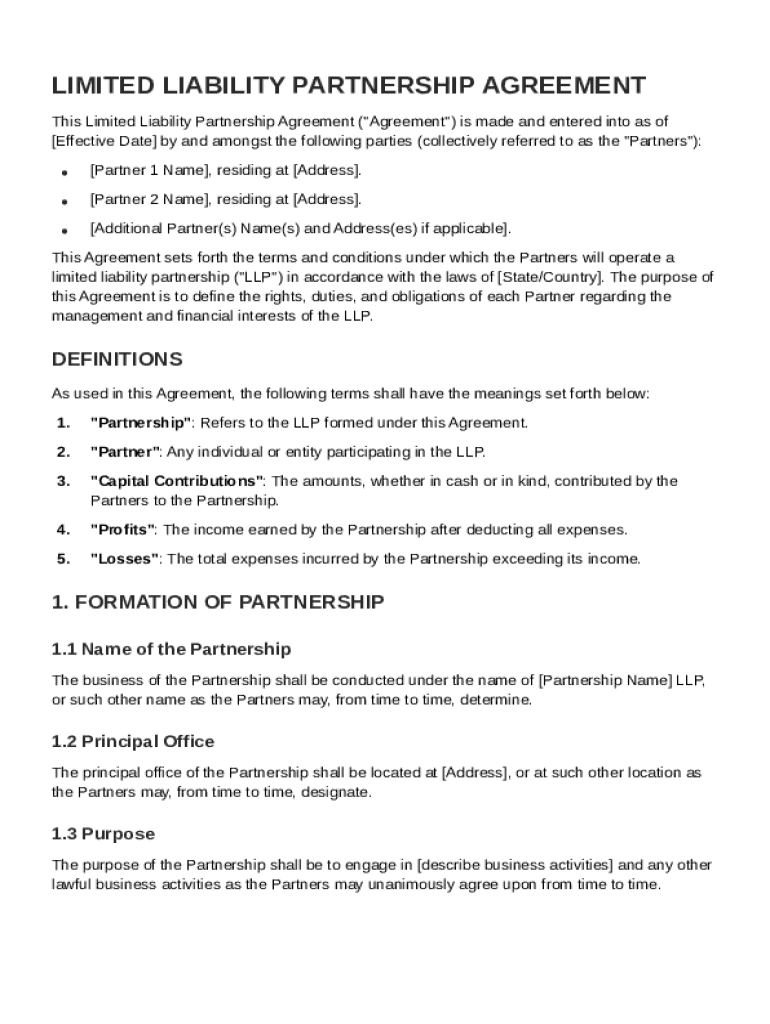







Definition & Meaning
A Limited Liability Partnership Agreement Template is a legal document that outlines the terms and conditions for creating and managing a limited liability partnership (LLP) among its partners. This agreement is crucial in defining the rights, duties, and responsibilities of each partner while establishing the framework for operational procedures, financial management, and the division of profits and losses. It serves as both a guide and legal safeguard for the partners, ensuring that all parties are aligned with the partnership's goals, structure, and legal obligations.
Key Elements of the Limited Liability Partnership Agreement Template
The Limited Liability Partnership Agreement Template includes several critical components to ensure comprehensive coverage of partnership operations. Key elements often consist of:
- Capital Contributions: Detailed descriptions of the initial and future financial contributions made by each partner.
- Management Structure: Guidelines on how the partnership will be managed, including roles, decision-making processes, and authority distribution among partners.
- Profit and Loss Sharing: Clauses outlining how profits and losses are distributed among partners.
- Withdrawal and Termination Procedures: Steps to be followed if a partner chooses to withdraw or in the event of the partnership's termination.
- Indemnification: Provisions protecting partners against certain legal liabilities related to the LLP.
- Miscellaneous Provisions: Includes other legal stipulations such as amendments procedures and dispute resolution processes.
How to Use the Limited Liability Partnership Agreement Template
Utilizing the Limited Liability Partnership Agreement Template involves several important steps to ensure that the document accurately reflects the intended agreements and obligations between partners. Here’s a practical approach:
- Gather Partner Information: Collect detailed information about each partner, including names, contact details, and respective contributions to the partnership.
- Customize the Template: Modify the template to suit the specific requirements and goals of the partnership. This can include adjusting elements like profit-sharing ratios and management roles.
- Legal Review: It is advisable to have the document reviewed by a legal professional to ensure it complies with applicable laws and comprehensively covers all necessary aspects of the partnership.
- Partner Consensus: Discuss the template with all partners to ensure mutual agreement on all terms.
- Execution of the Agreement: Once all partners have agreed, formally sign the document to execute the agreement legally.
Steps to Complete the Limited Liability Partnership Agreement Template
Completing the template requires careful attention to detail to ensure all aspects of the partnership are sufficiently covered. Here’s an instructional guide:
- Input Partner Details: Begin by filling out the identity and contribution details of each partner.
- Define the Partnership Terms: Specify the duration of the partnership, roles of partners, and the decision-making processes.
- Outline Financial Arrangements: Clearly state how capital contributions and profit and loss distributions will be managed.
- Establish Operational Procedures: Detail the processes for carrying out day-to-day operations, including meetings and management procedures.
- Include Legal Provisions: Add required legal clauses such as liability limitations, non-compete agreements, and termination conditions.
- Final Review and Edits: Conduct a thorough review to correct any errors or omissions, ensuring that all partners understand and agree to the terms.
Who Typically Uses the Limited Liability Partnership Agreement Template
This type of agreement is commonly used by business professionals who want to form a structured partnership while maintaining limited liability. Typical users include:
- Law Firms and Accountancy Practices: These businesses often operate under LLPs to limit personal liability while allowing for collaborative business practices.
- Medical and Dental Practices: Professionals opting for partnerships while maintaining a degree of liability protection.
- Real Estate Companies: Partners investing in property ventures use LLPs to delineate roles and management duties clearly.
- Consultancy Firms: Groups of consultants looking to pool resources and expertise benefit from such structured agreements.


Legal Use of the Limited Liability Partnership Agreement Template
The legal use of the partnership agreement template involves ensuring it complies with the statutory requirements of the jurisdiction in which the partnership operates. Compliance can include:
- State Registration: An LLP may need to be registered with the state, following specific local requirements.
- Adherence to State Laws: The agreement must align with the state’s partnership laws, especially concerning liability limitations and operational mandates.
- Regular Updates: Keeping the document updated to reflect any statutory changes or partnership revisions.
- Legal Counsel: Consulting with an attorney to address complex legal issues and ensure comprehensive compliance.
State-Specific Rules for the Limited Liability Partnership Agreement Template
Each state may have varying requirements and regulations that govern LLPs. Here are some considerations:
- Registration and Filing Fees: States may differ in their registration processes and associated costs.
- Reporting Requirements: Some states mandate annual reports or specific documentation to be submitted regularly.
- Liability Provisions: States have varied laws regarding the extent of liability protection offered to partners in an LLP.
- Industry-Specific Regulations: Certain industries may require additional compliance, affecting the partnership agreement's structure.
Examples of Using the Limited Liability Partnership Agreement Template
Practical scenarios demonstrate the value and versatility of using a Limited Liability Partnership Agreement:
- Law Firm Partnership: Two attorneys form an LLP to share their resources while managing liability. The agreement clearly divides roles, administrative responsibilities, and profit share.
- Medical Practice Expansion: Medical professionals join forces under an LLP to open new practice locations. Their agreement specifies management duties and financial contributions.
- Real Estate Joint Venture: Partners seeking to develop a property project use an LLP to ensure transparent operations and profit distribution, governed by their detailed agreement.
By comprehensively addressing each aspect and following these guidelines, businesses can harness the full potential of a Limited Liability Partnership Agreement to foster collaboration and safeguard their interests.




