







Definition and Meaning
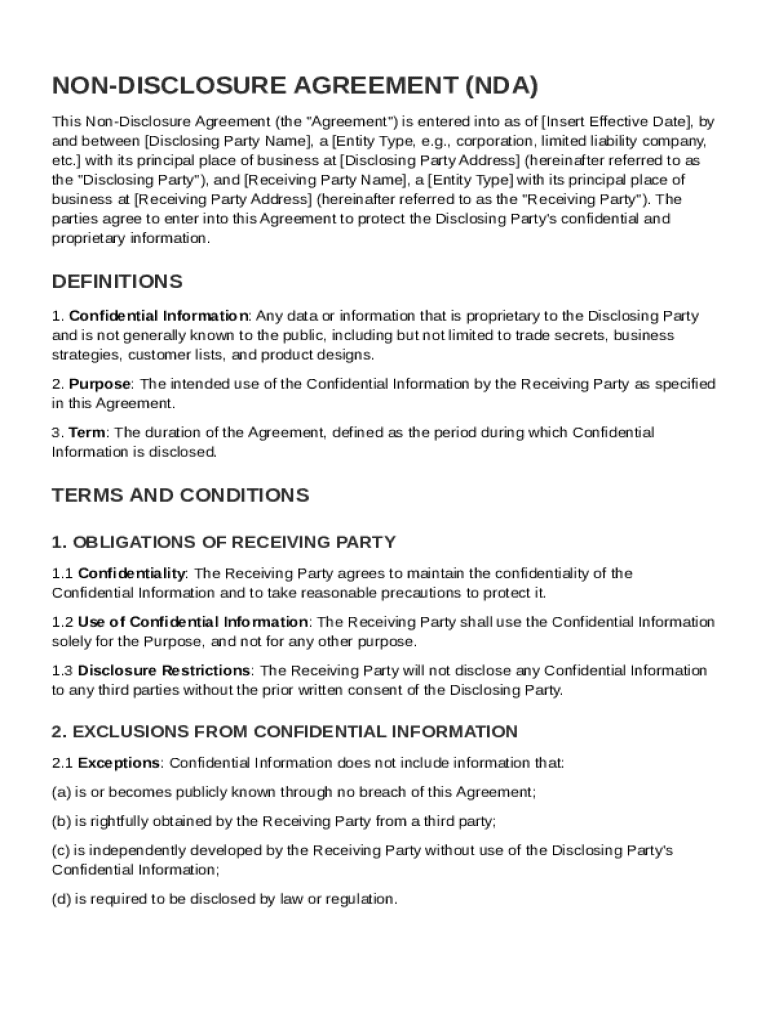
A Standard NDA Agreement, or Non-Disclosure Agreement, establishes a legal framework designed to protect confidential and proprietary information between two parties — typically the Disclosing Party and the Receiving Party. This form is commonly used in business scenarios where sensitive information needs to be shared for collaboration while ensuring privacy and confidentiality. It clearly delineates 'Confidential Information', outlining the rules regarding its use and restrictions on disclosure. Situations like hiring vendors, negotiating with potential partners, and exploring shared ventures often require a well-drafted NDA to safeguard valuable data and trade secrets.
Distinguishing Components
- Confidential Information: This encompasses any data, documents, or communications deemed sensitive and protected under the NDA.
- Exclusions: Information that is already public or independently developed outside of the NDA terms typically doesn't fall under the confidentiality obligation.
- Obligations: The Receiving Party is bound to uphold confidentiality, limiting information usage and disclosure as specified.
Steps to Complete the Standard NDA Agreement Template
Completing the NDA involves several key steps ensuring both parties understand and agree to the terms laid out within.
- Identify the Parties: Clearly state the names and contact details of the Disclosing and Receiving Parties involved.
- Define Confidential Information: Detail what constitutes confidential information, applicable to shared data and proprietary insights.
- State Obligations: Specify what each party must do to protect and manage the confidential information, including any restrictions on distribution.
- Include Exclusions: List circumstances where information may not be protected under the NDA, such as existing public knowledge.
- Set Term and Termination: Clearly outline how long the NDA terms will apply and how the agreement can be terminated.
- Obtain Signatures: Both parties must sign the agreement to acknowledge their understanding and commitment to the terms.
Considerations During Completion
- Clarity: Ensure all clauses are crystal clear and free from ambiguity to prevent future disputes.
- Legal Counsel: It's recommended to have legal experts review your NDA to cater to specific business needs.
Key Elements of the Standard NDA Agreement Template
Understanding the main elements forming a non-disclosure agreement is crucial for effectively implementing it.
Main Components
- Introduction and Background: Sets the stage for the agreement, detailing parties involved and the purpose behind sharing confidential information.
- Definition of Key Terms: Besides confidential information, terms like 'Recipient', 'Term', and 'Exclusions' need precise definitions.
- Detailed Obligations: Encompasses all obligations related to the management and protection of the disclosed information, including safeguarding, permitted use, and constraints on disclosure.
- Remedies: Specifies legal and financial remedies available if a violation occurs, providing a deterrent for potential breaches.
Important Terms Related to Standard NDA Agreement Template
Understanding specialized terminology within the NDA template aids in stronger compliance and protection of intellectual property.
Critical Terms
- Disclosing Party: The individual or organization providing confidential data.
- Receiving Party: The individual or entity given access to confidential data, bound to uphold confidentiality.
- Proprietary Information: Any data or insights owned by a party, holding business, technological, or strategic value.
- Non-Compete Clause: Sometimes included to prevent the Receiving Party from entering into or starting a similar profession or trade that competes with the Disclosing Party.
Legal Use of the Standard NDA Agreement Template
The NDA lays the groundwork for stringent legal protection, ensuring that proprietary information remains secure, thus minimizing risks associated with partnerships or collaborations.
Ensuring Legal Enforceability
- Governing Law: Specify the jurisdiction under which the agreement falls, aligning with state or federal laws for enforceability.
- Remedy and Enforcement: Includes provisions for financial and legal actions in the event of a breach, ensuring the Disclosing Party has recourse in case of confidentiality violations.
- Arbitration Clauses: Sometimes featured to resolve disputes amicably, avoiding lengthy litigation processes.
Examples of Using the Standard NDA Agreement Template
Real-world applicability of NDAs showcases their necessity across various contexts.
Common Scenarios
- Mergers and Acquisitions: NDAs protect sensitive data during negotiations, crucial for securing competitive advantages.
- Vendor Collaborations: When developing new products or services, engaging with third parties often requires secure information sharing.
- Employee Agreements: Employees accessing confidential business strategies or technological formulas may need to sign NDAs.
Who Typically Uses the Standard NDA Agreement Template
Various stakeholders leverage NDAs to safeguard sensitive information against leaks or unauthorized disclosure.


Typical Users
- Startups and Entrepreneurs: To protect innovative ideas while seeking investors or collaborators.
- Corporations: During joint ventures or when outsourcing parts of their business operations to third parties.
- Consultants and Freelancers: To maintain confidentiality when accessing client proprietary information.
State-by-State Differences in Standard NDA Agreement Templates
Different U.S. states may have unique interpretations and enforceability levels regarding NDAs due to varied state laws.
Regional Considerations
- California: Has specific laws safeguarding employee rights, making non-compete clauses largely unenforceable.
- New York and Texas: NDAs are generally enforceable as long as they meet reasonableness standards concerning time, geography, and scope.
Considering these elements allows businesses and individuals to maintain compliant and enforceable NDAs tailored to specific jurisdictions.




