






Definition and Purpose of a Sourcing Agreement Template
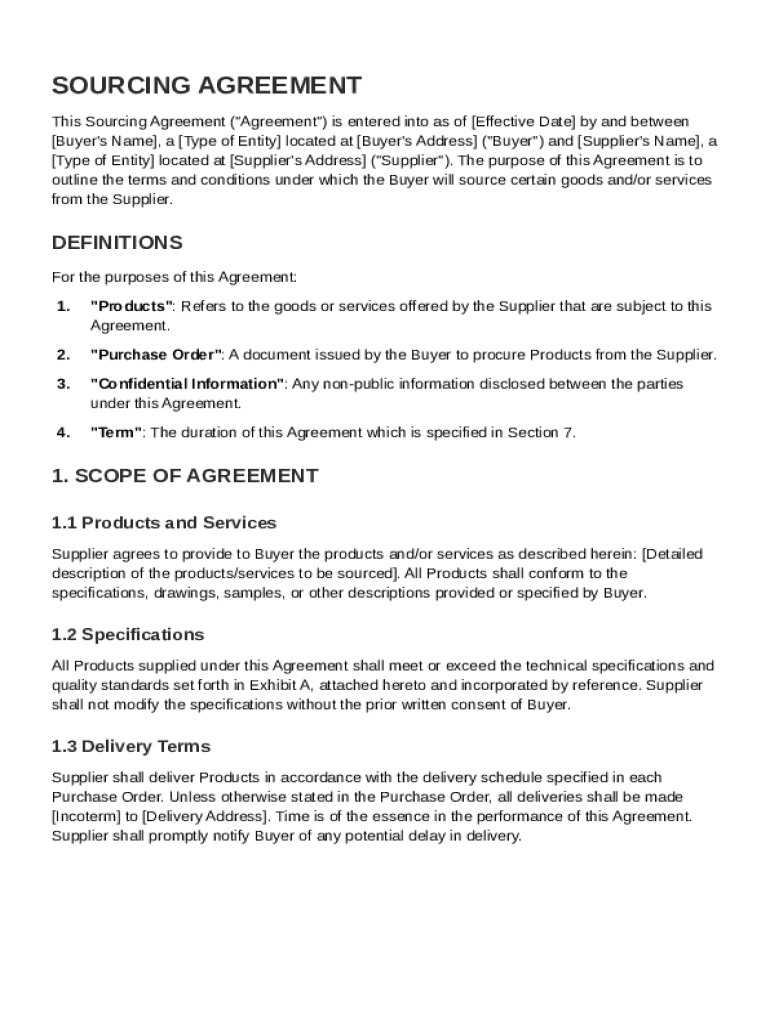
A sourcing agreement template serves as a foundational document outlining the terms and conditions between a buyer and a supplier for procuring goods or services. It defines key elements such as pricing, payment terms, delivery schedules, and product specifications. This template ensures both parties have a clear understanding of their obligations and reduces the likelihood of disputes. By standardizing these terms, businesses can streamline their procurement processes, making it easier to negotiate future contracts. The agreement is particularly beneficial for organizations that regularly engage in purchasing high volumes of goods or services, as it provides a consistent framework for transactions.
How to Use the Sourcing Agreement Template
To effectively use the sourcing agreement template, follow these steps:
-
Customize Template: Adapt the template to fit the specific needs of your business by filling in details such as the parties involved, scope of goods or services, and any unique terms.
-
Legal Review: Have a legal team review the customized template to ensure it complies with relevant laws and regulations, particularly those specific to your industry or locality.
-
Negotiate Terms: Use the template as a baseline during negotiations to adjust terms, pricing, and delivery schedules as needed while protecting your interests.
-
Finalize Agreement: Once both parties are satisfied with the terms, each party should sign and date the document to confirm their commitment.
-
Distribute Copies: Ensure all relevant stakeholders within both organizations have a copy of the finalized agreement for reference.
By following these steps, you can ensure your sourcing agreements are both legally sound and tailored to your operational needs.
Key Elements of the Sourcing Agreement Template
The sourcing agreement template includes several critical sections:
-
Definitions: Clearly define terms used throughout the contract to prevent ambiguity.
-
Scope of Agreement: Specify what goods or services are covered, including quantity, quality standards, and delivery expectations.
-
Pricing and Payment Terms: Outline how payments will be made, any discounts applicable, and penalties for late payment.
-
Warranties and Liabilities: Detail warranties provided by the supplier and limitations of liability to protect both parties.
-
Confidentiality Obligations: Set requirements for maintaining the confidentiality of sensitive business information shared under the agreement.
-
Term and Termination Conditions: Define the duration of the agreement and the circumstances under which it can be terminated.
By structuring your agreement around these elements, you establish a comprehensive understanding for all parties involved.
Legal Use of the Sourcing Agreement Template
The legal use of a sourcing agreement template entails ensuring compliance with the laws governing commercial contracts within the United States. This includes adhering to the Uniform Commercial Code (UCC), which standardizes transactions and ensures fair trade practices across states. The agreement should explicitly state the governing law to handle any disputes, thereby minimizing legal risks.
Additionally, including clauses such as force majeure, dispute resolution, and indemnification provides extra layers of legal protection. These clauses anticipate risks and outline procedures for addressing unforeseen events. For instance, a force majeure clause may absolve parties from liabilities in events beyond their control, such as natural disasters.
Steps to Complete the Sourcing Agreement Template
Completing a sourcing agreement template requires careful attention to detail:
-
Preliminary Discussion: Begin with a meeting between buyer and supplier to discuss expectations and requirements.
-
Enter Details: Input basic information such as party names, addresses, and contact details on the template.
-
Define Products/Services: Clearly specify the goods or services covered under the agreement, along with any technical specifications.
-
Agree on Terms: Negotiate the terms of pricing, delivery, payment, and warranties, and incorporate these into the template.
-
Review and Revise: Have all sections of the template reviewed by both legal teams to identify and address any potential issues.
-
Finalize and Sign: Once all parties agree to the terms, sign and date the document to make it legally binding.
-
Maintain Records: Store copies in a secure location, both digitally and physically, for future reference.
Completing the template with these steps provides clarity and prevents misunderstandings between parties.
Digital vs. Paper Versions of the Sourcing Agreement Template
The decision to use digital or paper versions of a sourcing agreement template depends on organizational needs and processes:
-
Digital Version: Offers ease of access, editing, and sharing. It's ideal for teams that require real-time collaboration or for those managing multiple agreements simultaneously. Digital contracts can be efficiently organized, stored, and retrieved, especially within a cloud-based document management system like DocHub.
-
Paper Version: May be preferred in industries where physical signatures hold traditional value or for record-keeping purposes where digital access is limited. However, paper versions necessitate secure physical storage and are susceptible to loss or damage.
Choosing between these versions involves considering the balance between ease of use and the security of sensitive information.
Important Terms Related to Sourcing Agreement Template
Understanding specific terms within the sourcing agreement template is crucial for clarity:
-
Indemnification: A commitment by one party to compensate the other for any losses or damages specified in the agreement.
-
Force Majeure: A clause that frees both parties from liability or obligation when an extraordinary event or circumstance beyond their control prevents them from fulfilling contractual obligations.
-
Governing Law: The set of laws that governs the agreement, often tied to the location of one of the parties or the jurisdiction agreed upon during negotiation.
These terms ensure that both parties have a clear understanding of the agreement’s legal implications and their respective responsibilities.
Who Typically Uses the Sourcing Agreement Template
The sourcing agreement template is commonly used by:
-
Manufacturers: Companies that require raw materials or components from suppliers to produce finished goods.
-
Retailers: Businesses that source products for resale to consumers, ensuring they maintain consistent quality and delivery schedules.
-
Service Providers: Firms needing specific services from third parties, such as IT support or logistics services.
This template provides a standardized structure for a variety of industries, ensuring efficient and effective procurement processes.