




Definition and Meaning of the Last Chance Agreement Template
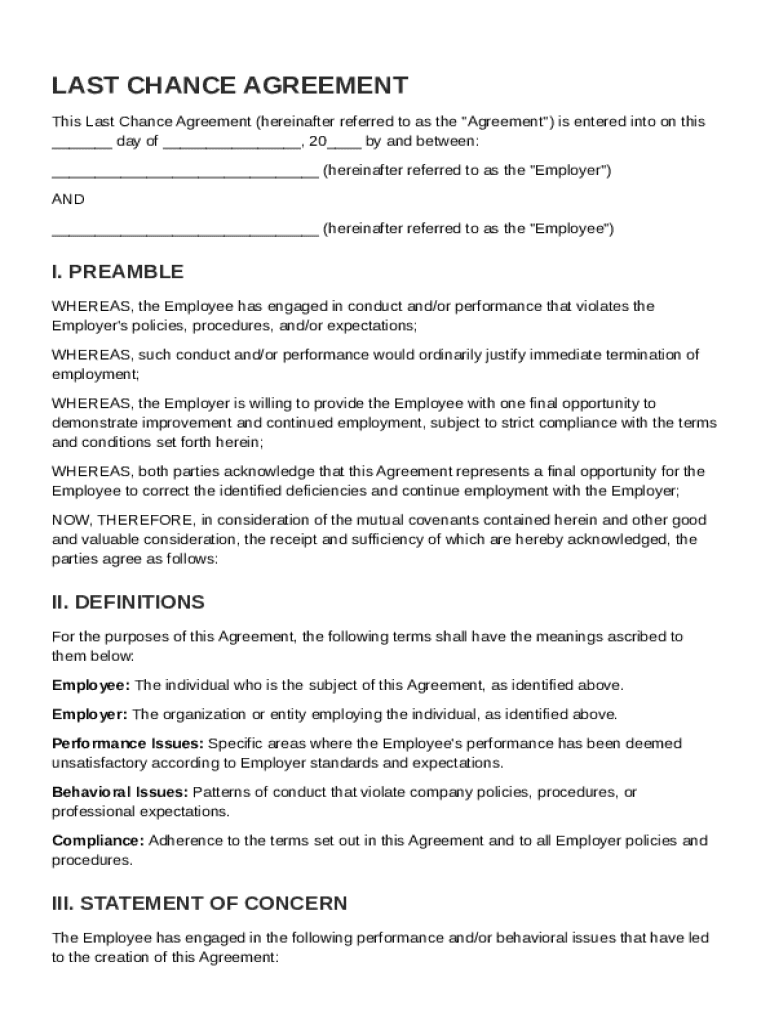
The Last Chance Agreement Template is a formal contract between an employer and an employee. It serves as a final opportunity for the employee to rectify their conduct and performance before termination. This type of agreement is typically used after multiple violations of company policies or performance issues have been documented. The purpose is to clearly outline the expectations for improvement, set a definite timeline for achieving these goals, and specify the consequences of failing to meet these standards. By detailing these elements, the Last Chance Agreement serves both as a tool for rehabilitation and as a record of the employer’s efforts to support the employee’s performance improvement.
How to Use the Last Chance Agreement Template
To effectively utilize the Last Chance Agreement Template, both parties should collaborate to ensure mutual understanding and acceptance of the terms. The process generally begins with a meeting where the employer communicates the reasons necessitating the agreement. During this meeting, the employer should emphasize the importance of the document and how it will be used to guide the employee's path to improvement. Additionally, specifics regarding performance or behavioral expectations should be stated clearly and unambiguously within the form. Incorporating measurable benchmarks allows for proper evaluation of progress at predetermined intervals. Regular check-ins should also be scheduled to discuss progress and make necessary adjustments to the plan.
Practical Examples
- An employee with frequent tardiness issues may be required to arrive on time for six consecutive months.
- A salesperson might need to meet a specific sales target within three months after consistent underperformance.
Key Elements of the Last Chance Agreement
The efficacy of a Last Chance Agreement rests on the precise articulation of its key components. These elements typically include:
- Performance and Behavioral Expectations: Clear and achievable goals that the employee must meet.
- Timeline for Improvement: A specific duration within which the employee must demonstrate improvement.
- Evaluation Methods: Criteria and processes for monitoring and evaluating the employee's progress.
- Consequences for Non-Compliance: The immediate repercussions, often termination, if the employee fails to meet the agreement criteria.
- Support Resources: Available resources such as training or counseling to assist the employee in meeting the agreement’s expectations.
Additional Components
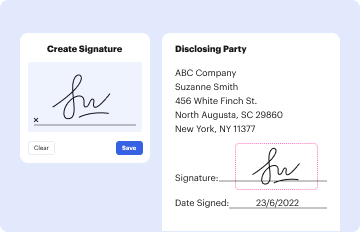
- Signatures of Agreement: Both parties should sign the document to signify their commitment and understanding.
- Review Dates: Pre-scheduled times for reviewing progress, which encourages ongoing communication.
Steps to Complete the Last Chance Agreement Template
- Identify the Issues: Begin by outlining the specific behaviors or performance metrics that necessitated the agreement.
- Draft the Initial Agreement: Include the core expectations, timelines, methods of evaluation, and consequences for failure to improve.
- Conduct a Meeting: Discuss the draft with the employee to ensure clarity and transparency.
- Revise if Necessary: Make adjustments based on input from the employee to ensure the agreement is fair and achievable.
- Finalize and Sign: Once both parties agree, finalize the document and obtain signatures.
- Monitor Progress: Use the agreement as a guide to assess the employee’s performance regularly.
Legal Use of the Last Chance Agreement Template
In the United States, a Last Chance Agreement is recognized as a legally binding document, provided it is drafted clearly and both parties agree to the terms willingly. It should comply with employment law and not infringe on the employee’s statutory rights. Employers are advised to approach such agreements with legal counsel to ensure compliance with state and federal regulations. This is particularly important as laws vary regarding at-will employment, discriminatory practices, and what constitutes reasonable accommodation for disabilities under the Americans with Disabilities Act (ADA).
State-Specific Rules for the Last Chance Agreement Template
While the Last Chance Agreement serves a universal purpose across various states, specific rules and interpretations may differ depending on regional legal frameworks. For instance, some states have laws that affect the enforceability of these agreements, particularly around at-will employment doctrines. Employers need to be mindful of state-specific employment laws which might affect the drafting or enforcement of the agreement.
State-by-State Differences
- California: Stringent labor laws require careful attention to employee rights in drafting.
- Texas: Generally recognizes at-will employment but emphasizes clarity in agreements to avoid disputes.
Examples of Using the Last Chance Agreement Template
Real-world application of this template underscores its utility in diverse scenarios:
- Case of Performance Improvement: An employee in a customer service role consistently receives complaints about rudeness. The agreement requires proof of participation in empathy training sessions and a reduction in complaints within three months.
- Behavioral Correction: An employee with a history of minor theft is provided with a Last Chance Agreement that includes mandatory weekly meetings with a supervisor to discuss accountability and values. Failure to adhere results in termination.
Practical Benefits
- Provides a structured framework for accountability.
- Clearly communicates the organization's commitment to employee development.
- Serves as documentation in potential legal disputes.
Who Typically Uses the Last Chance Agreement Template
Predominantly utilized in employment settings, Last Chance Agreements are most beneficial for:
- Human Resources Departments: For facilitating structured performance improvement plans.
- Managers and Supervisors: As tools to formalize the process of addressing persistent performance issues.
- Legal Advisors: To ensure the compliance of such agreements with legal standards and employee rights.


Beneficial Scenarios
- High Staff Turnover Rates: Where employee retention is a concern, providing last chances can reduce termination rates and preserve valuable talent.
- Regulated Industries: Sectors that require stringent adherence to conduct rules, such as healthcare or legal services, often use these agreements for professional compliance.