




Definition & Meaning
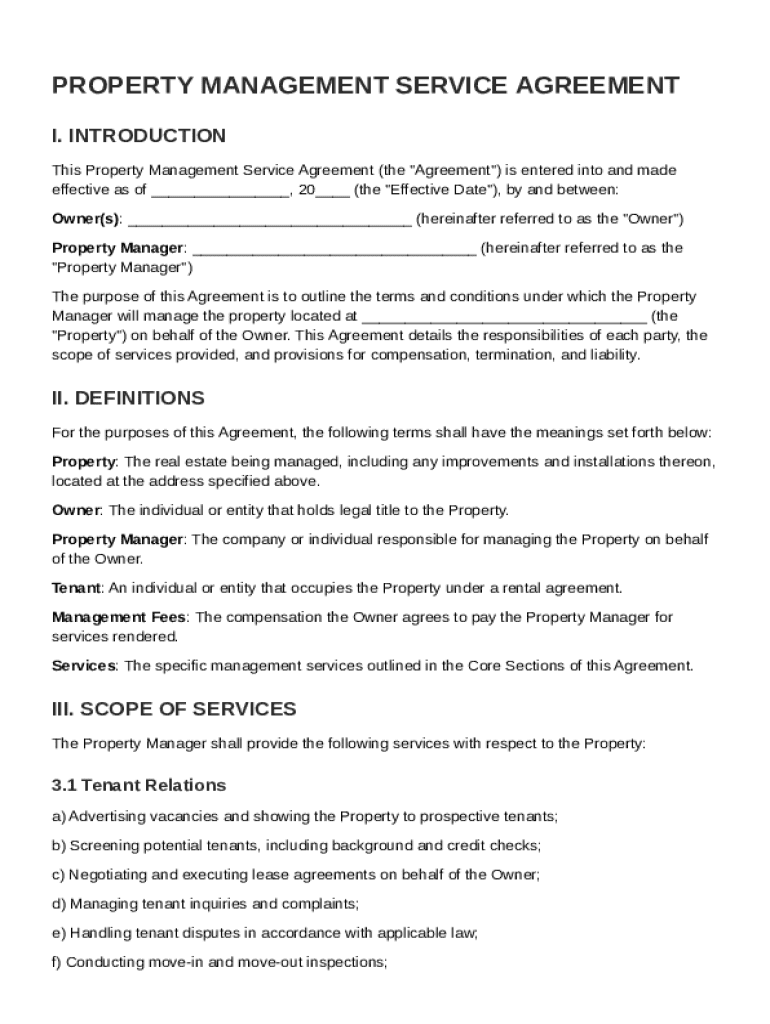
A Property Management Service Agreement Template is a structured document that outlines the formal relationship between a property owner and a property manager. This agreement specifies the responsibilities and expectations of each party in managing a property, ensuring both parties understand their roles and obligations. Key elements typically included are tenant relations, maintenance responsibilities, financial reporting, and compensation structures. The template serves as a legal framework to manage potential disputes and align on fundamental terms.
How to Use the Property Management Service Agreement Template
Using the Property Management Service Agreement Template involves several steps to customize it to specific needs. Begin by reviewing the template to understand the standard terms. Adapt sections like responsibilities and financial arrangements to accurately reflect the conditions agreed upon. You can edit the template directly within a document editor like DocHub, allowing for real-time collaborations. Save the changes and share the document with the involved parties for review and signatures.
Steps to Complete the Property Management Service Agreement Template
-
Fill in Basic Information: Include the names and contact details of the property owner and the property manager.
-
Define Property Management Duties: Clearly specify the tasks the manager will perform, such as rent collection, property maintenance, and tenant management.
-
Specify Financial Terms: Outline the compensation structure and any additional fees for services outside the standard agreement.
-
Include Governing Law and Dispute Resolution: Indicate which state's laws will govern the agreement and how disputes will be resolved.
-
Review and Finalize: Conduct a thorough review of the completed template to ensure accuracy.
-
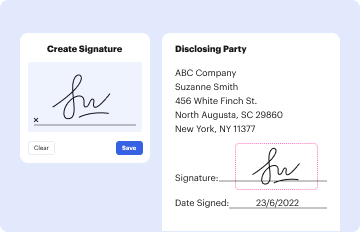
Sign and Store: Both parties should sign the agreement electronically through platforms like DocHub to secure a legally binding agreement. Store the document securely.
Key Elements of the Property Management Service Agreement Template
-
Responsibilities: Encompasses the duties of the property manager and expectations of the property owner.
-
Financial Agreement: Details compensation, fees, and the structure for payment.
-
Duration and Termination: Specifies the term of the agreement and conditions for termination.
-
Liability and Indemnification: Defines the extent of liability for each party and indemnification clauses.
-
Dispute Resolution: Outlines the agreed-upon processes for resolving conflicts.
Important Terms Related to Property Management Service Agreement Template
-
Indemnification: Refers to a clause in the agreement which holds one party harmless from certain obligations or damages.
-
Compensation Structures: Refers to how and when the property manager will be paid.
-
Tenant Relations: Encompasses responsibilities regarding communication and management of tenants to ensure satisfaction and legal compliance.
State-Specific Rules for the Property Management Service Agreement Template
In the United States, property management agreements are subject to state-specific regulations. For example, some states may have particular requirements concerning security deposits, eviction processes, and tenant communication. Understanding these rules is crucial for ensuring that agreements comply with local laws.
Legal Use of the Property Management Service Agreement Template
To ensure a Property Management Service Agreement Template is legally binding, it must comply with federal and state laws regarding property management. The use of electronic signatures is legitimized under the ESIGN Act, giving agreements executed online, such as through DocHub, the same legal standing as paper ones. The agreement must be signed by all parties involved to be enforceable.
Examples of Using the Property Management Service Agreement Template
Consider a scenario where a real estate investor owns several rental properties across different states. They can use the template to standardize agreements with various property managers, customizing each to reflect state-specific laws and unique property requirements. This ensures uniformity in managing properties while accommodating legal differences, helping streamline management processes.