




Definition & Meaning
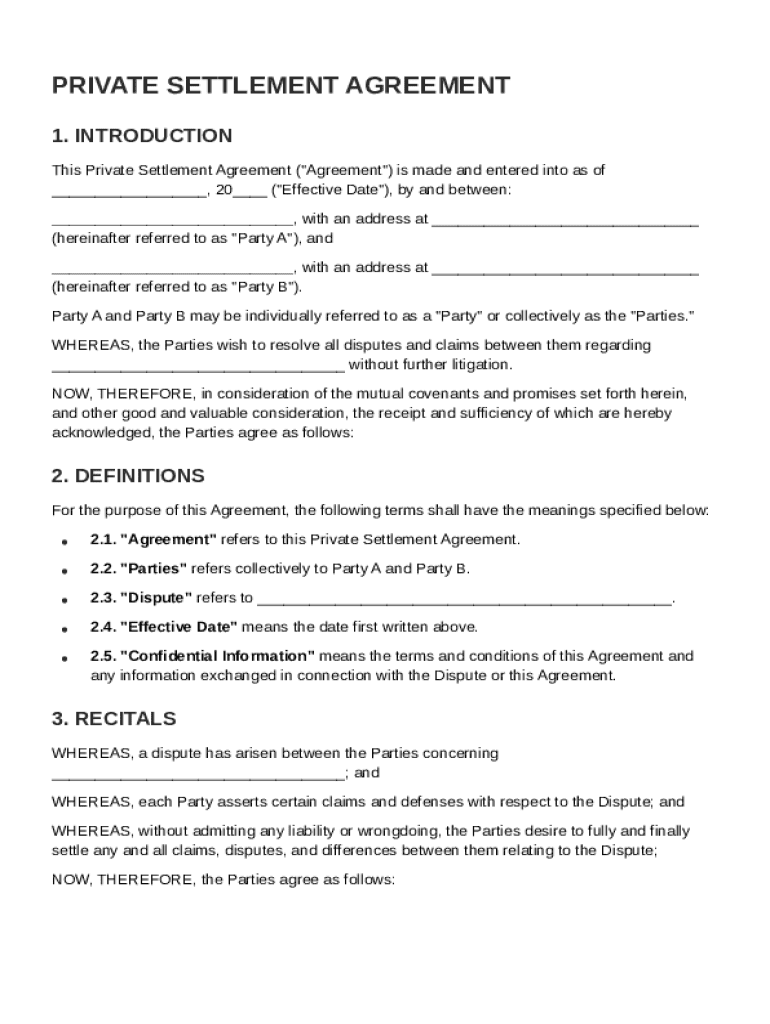
A Private Settlement Agreement Template is a pre-designed document that aids two parties—often referred to as Party A and Party B—in outlining agreed-upon terms to resolve their disputes outside of court litigation. Its structure typically includes essential components such as definitions of key terminology, specific settlement terms, and mutual releases from claims. Among other provisions, it secures confidentiality obligations and includes representations and warranties by both parties, emphasizing that it does not admit liability by either party.
Key Elements of the Private Settlement Agreement Template
This template comprises several key elements that ensure clarity and enforceability of the agreement.
- Settlement Terms: These specify the financial and non-financial agreements between the parties, which may include monetary compensation or non-monetary settlements such as service exchanges.
- Mutual Releases: Both parties agree to release each other from specific claims, preventing future disputes related to the issue at hand.
- Confidentiality Obligations: Often, parties agree to keep the terms of the settlement confidential to protect both parties' interests.
- Governing Law: The agreement stipulates the jurisdiction’s legal framework that will govern the settlement terms.
- Amendments and Severability: These clauses provide guidelines on how modifications can be made to the agreement and ensure that if one part of the contract is invalid, the rest can still be enforceable.
How to Use the Private Settlement Agreement Template
Using this template requires careful attention to detail to ensure all pertinent details are accurately captured.
- Identify the Parties: Clearly state the names and roles of Party A and Party B.
- Outline Dispute and Terms: Accurately describe the origin of the dispute and detail the terms that have been agreed upon for its settlement.
- Fill In Specific Clauses: Complete sections on confidentiality, release of claims, and other standard clauses.
- Legal Review: It is advisable to have the completed document reviewed by a legal professional to ensure compliance with local laws.
Steps to Complete the Private Settlement Agreement Template
Completing this template involves a series of systematic steps to ensure nothing is overlooked.
- Download and Open the Template: Obtain the template and open it in an editable format.
- Insert Party Information: Fill in names, contact information, and designations of both parties.
- Define Key Terms: Ensure clarity by adding precise definitions for all key terms used within the document.
- Elaborate Settlement Conditions: Include financial and non-monetary settlement details along with related timelines.
- Add Legal Provisions: Make sure all legal contingencies, such as governing law and confidentiality, are covered.
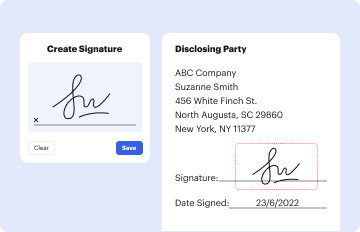
- Signatures: Leave sections for both parties, and if necessary, a legal representative to sign off on.
Legal Use of the Private Settlement Agreement Template
This template is legally significant and ensures agreements reached are enforceable under jurisdictional laws.
- Compliance with ESIGN Act: For electronic signatures, ensuring they adhere to the ESIGN Act is necessary to maintain enforceability.
- Jurisdictional Alignment: The governing law provision ensures that the settlement adheres to specific state laws, crucial for interstate agreements.
Important Terms Related to Private Settlement Agreement Template
Understanding different terms is pivotal to effectively using this template.
- Consideration: This encompasses what each party gains or loses, typically involving something of value.
- Breach: In terms of settlement agreements, a breach refers to a violation of the agreement terms.
- Arbitration: Often referenced in dispute resolution clauses as a less formal alternative to court litigation.
Who Typically Uses the Private Settlement Agreement Template
This template is utilized by various individuals and entities who seek a private resolution to disputes.
- Businesses: Corporations and small businesses frequently use these agreements to settle commercial disputes outside of court.
- Individuals: Particularly in situations involving personal disputes where both parties seek anonymity.
- Legal Representatives: Lawyers who facilitate peaceful resolutions for their clients without extensive litigation.

Examples of Using the Private Settlement Agreement Template
Illustrative case studies can provide an understanding of practical application.
- Workplace Dispute: Two employees resolve a disagreement over project duties with agreed changes in responsibilities, confidentially settled using this template.
- Business Contract Issue: A company and a vendor amend initial terms related to service delivery, avoiding public litigation and safeguarding their business relationship.
- Personal Loan Agreement: Resolving conflicting interpretations of loan repayment terms, ensuring that all parties adhere to new conditions amicably.
State-specific Rules for the Private Settlement Agreement Template
Different states may impose additional requirements that influence the contents and enforcement of a settlement agreement.
- California: State law may demand specific disclosure requirements within the agreement, particularly surrounding consumer rights.
- New York: Often requires additional mandates regarding the confidentiality of settlement terms not always required in other states.
Selecting relevant blocks allows for a comprehensive understanding of the Private Settlement Agreement Template within legal and practical contexts, ensuring enforceability while promoting effective dispute resolution.