
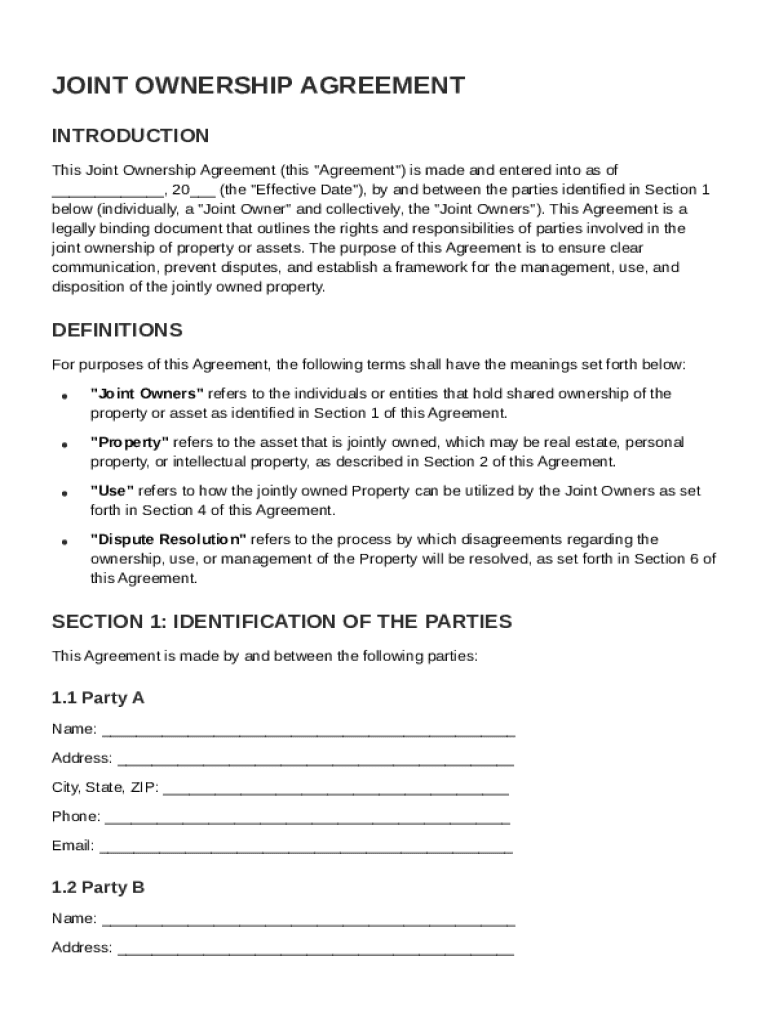







Definition and Purpose of a Joint Ownership Agreement Template
A Joint Ownership Agreement Template is a structured document that formalizes the shared ownership of property or assets. This legally binding agreement delineates the rights and responsibilities of all parties involved in the joint ownership. It ensures that each owner understands their entitlement and obligations and provides a clear framework for decision-making. Essential components of the agreement include identifying the parties involved, describing the property, and spelling out management and use guidelines. By establishing these parameters, the agreement aims to prevent disputes and facilitate smooth cooperation among co-owners.
Key Elements of a Joint Ownership Agreement Template
When creating a joint ownership agreement, several crucial elements must be included to ensure comprehensive coverage and clarity. These elements typically encompass:
-
Identification of Parties: Clearly specify all individuals or entities involved in the ownership. This section often includes personal or organizational details to avoid ambiguity.
-
Description of the Property: Provide a detailed description of the jointly owned property or asset. Include location, dimensions, or specific features as necessary.
-
Management and Use Guidelines: Define how the property will be managed, used, or occupied. This section may include decisions related to maintenance, financial contributions, or specific use cases.
-
Transfer and Disposition Terms: Outline the procedures and conditions under which ownership transfer, sale, or inheritance of the property can occur. Include any restrictions or preferences agreed upon by the parties.
-
Dispute Resolution Processes: Provide methods for resolving any disagreements that may arise between co-owners, such as mediation or arbitration procedures.
-
Miscellaneous Provisions: Any additional clauses that do not fit into other sections, such as insurance requirements or taxation considerations, are included here.
How to Use the Joint Ownership Agreement Template
Using a Joint Ownership Agreement Template involves several steps to ensure all parties’ interests are accurately represented. Follow these general steps:
-
Initial Discussion: Collaborate with all parties involved to discuss the terms and conditions you wish to include in the agreement.
-
Customization of the Template: Use the template to input specific details about the joint ownership and tailor sections to fit the unique circumstances and wishes of the co-owners.
-
Review and Legal Consultation: Obtain feedback from all parties and, if necessary, consult a legal professional to ensure the agreement is comprehensive and legally compliant.
-
Final Agreement and Signatures: After finalizing the terms, all parties should sign the document to make it legally binding.
-
Document Storage and Distribution: Keep copies of the signed agreement accessible to all co-owners. Secure storage is advised to safeguard the document.
Who Typically Uses the Joint Ownership Agreement Template
Various individuals, families, or entities can benefit from using a Joint Ownership Agreement Template:
-
Business Partners: Engaging in co-ownership of business premises or significant assets.
-
Families: Managing inheritance or shared investment properties among siblings or relatives.
-
Friends or Acquaintances: Jointly investing in real estate or assets as a financial venture.
-
Organizations: Non-profits or housing cooperatives sharing property responsibilities with members.
By using a standardized template, all involved parties can formalize expectations and ensure transparent communication.

Important Terms Related to Joint Ownership Agreement Template
A Joint Ownership Agreement may include specific terminology relevant to its function:
-
Tenancy in Common: A form of ownership where multiple parties hold individual shares of the property, which can be transferred independently.
-
Joint Tenancy: A form of ownership where co-owners possess an equal share of the property, with rights of survivorship.
-
Encumbrances: Legal liabilities on the property, such as mortgages or liens, that affect ownership rights.
-
Easements: Legal rights allowing access through the property for specific purposes, which might impact how the property is used or developed.
Understanding these terms facilitates better comprehension and drafting of the contract clauses.
Steps to Complete the Joint Ownership Agreement Template
To complete the Joint Ownership Agreement Template accurately, adhere to the following steps:
-
Gather Parties’ Information: Ensure you have complete information on each party's contact and identification details.
-
Specify Property Details: Clearly document all relevant information about the property, ensuring no details are omitted.
-
Establish Ownership Percentages or Shares: Define and agree upon the percentage of ownership each party holds.
-
Detail Management and Use Instructions: Specify responsibilities for management and conditions for the property’s use.
-
Include Dispute Resolution Clause: Draft clauses outlining procedures for resolving any potential conflicts among co-owners.
-
Final Review: Check that all terms are clear and mutually agreed upon by all the parties involved before finalizing.
Legal Use and Considerations of the Joint Ownership Agreement Template
The Joint Ownership Agreement Template serves numerous legal functions:
-
Establishment of Legality: Provides legal recognition and protection for the rights of all co-owners.
-
Minimization of Risk: Reduces the chances of future legal disputes by clarifying each owner's rights and obligations.
-
Conformity to Laws: Ensure that the agreement complies with relevant state laws, which may vary.
Consulting a legal professional can offer insights into state-specific requirements and provide additional legal verification.
Examples of Using the Joint Ownership Agreement Template
Practical scenarios illustrate how the Joint Ownership Agreement Template can be applied effectively:
-
Two Friends Starting a Business: Two friends co-purchase commercial property for their startup. The agreement specifies each partner's investment percentage and roles concerning the property's usage and upkeep.
-
Family Sharing Inherited Land: Siblings inherit their parent's farmland. The agreement outlines how the land will be managed, agricultural revenue distribution, and conditions for selling any part of the land.
-
Investment Property Purchase: Four acquaintances invest in a rental property together. The agreement defines each partner's financial contributions, profit sharing, and responsibilities for property management and tenant relations.
Each case demonstrates the utility of an agreement in establishing structured, coordinated co-ownership arrangements.




