



01. Edit your form online
Type text, add images, blackout confidential details, add comments, highlights and more.

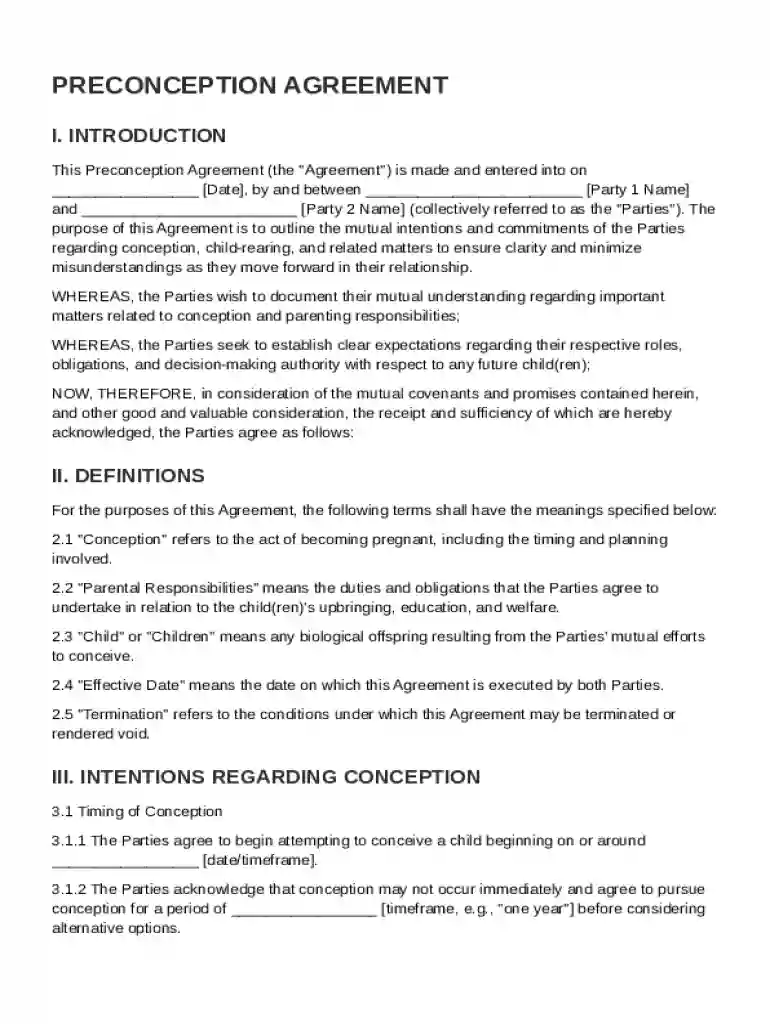
Type text, add images, blackout confidential details, add comments, highlights and more.

Draw your signature, type it, upload its image, or use your mobile device as a signature pad.

Send it via email, link, or fax. You can also download it, export it or print it out.
A Preconception Agreement Template serves as a formal document outlining the mutual intentions and commitments between two parties planning for conception and future parenting responsibilities. This template provides a structured framework to define key aspects such as timelines for conception attempts, family size preferences, health considerations, parenting roles, and financial responsibilities. By laying out these critical components, the Preconception Agreement aims to ensure clarity and minimize misunderstandings as the parties prepare for potential parenthood. Understanding the precise definition and components of this agreement helps all involved parties establish a clear and mutual understanding of expectations before embarking on their parental journey.
Important components include:
The legal framework for using a Preconception Agreement Template is based on creating enforceable contracts that protect the rights and responsibilities of the parties involved. It must comply with local and state laws to be considered legally binding. Ensuring the agreement is clear, consensual, and comprehensive can help in safeguarding future legal disputes. Although not a substitute for legal advice, the template serves as a foundational document that outlines intentions and obligations, providing legal recourse in cases of non-compliance.
Each state may have unique regulations and requirements impacting the enforceability of a Preconception Agreement. For instance, some states might have specific stipulations regarding financial disclosures or parenting time allocations. Engaging with a legal expert familiar with local laws can help navigate these state-specific provisions effectively. Understanding state-specific nuances ensures the agreement is tailored to meet all legal requirements, enhancing its enforceability and relevance.
The Preconception Agreement Template is available in both digital and paper formats. The digital version offers flexibility and accessibility, allowing for easy updates and edits. Users can leverage document management platforms like DocHub to edit, share, and store documents securely. Conversely, the paper version may be suitable for parties preferring physical copies, ensuring the document is accessible without digital means. Considering the benefits and drawbacks of both formats helps in selecting the version that best suits the parties' needs.
Understanding specific terminology used within the agreement is crucial for clear communication and interpretation. Terms such as "primary caregiver," "financial obligations," and "dispute resolution" define the responsibilities and processes agreed upon by the parties. Including a glossary or clarification section within the agreement can enhance understanding, reducing the likelihood of ambiguity or misinterpretation.
While a standard template offers a comprehensive structure, variations or alternatives might better suit specific situations. For instance, couples with specialized needs might require a tailored agreement to address unique circumstances or preferences not covered in the generic template. Exploring alternative document formats or consulting with professionals to draft a custom agreement can provide a more personalized and effective contract, ensuring it addresses all essential elements specific to the parties involved.
At DocHub, your data security is our priority. We follow HIPAA, SOC2, GDPR, and other standards, so you can work on your documents with confidence.


