






Definition & Meaning
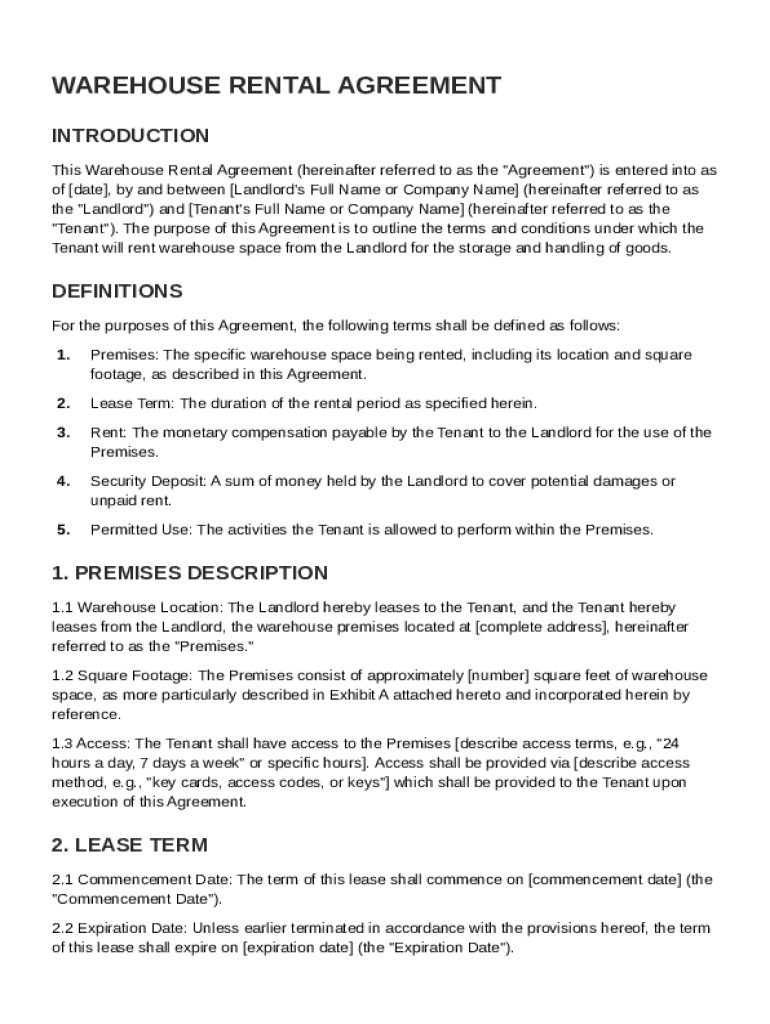
The Warehouse Rental Agreement Template is a legal document used to formalize the leasing of warehouse space between a landlord and a tenant. This document outlines the terms and conditions related to the rental of the property, ensuring that both parties have a mutual understanding of their responsibilities. In this type of agreement, key aspects such as rent amount, lease duration, and termination conditions are specified to avoid any conflict or confusion.
Key Components
- Landlord and Tenant Details: Names, business addresses, and contact information of both parties involved in the agreement.
- Premises Description: A detailed description of the warehouse space being rented, including its location, size, and any specific features.
- Lease Term: The duration of the lease, including the start and end dates, as well as conditions for renewal or extension.
- Rent Payment Terms: The agreed monthly rent amount, the due date for payments, and acceptable payment methods.
Practical Examples
An example might be a distribution company that rents a warehouse to store inventory. The agreement would specify the size of the storage area needed, any specialized equipment that must remain on site, and conditions for renewing the lease based on business growth.
How to Use the Warehouse Rental Agreement Template
The Warehouse Rental Agreement Template can be utilized by landlords and tenants to streamline the leasing process. It focuses on ensuring all necessary legal and practical details are thoroughly covered.
Step-by-Step Instructions
- Obtain the Template: Download the template from a reliable source like DocHub to ensure accuracy and compliance with U.S. legal standards.
- Review the Template: Carefully examine each section to understand the commitments and conditions outlined within the agreement.
- Customize for Specific Needs: Adjust the terms to fit the unique needs of the landlord and tenant. This may include special terms for maintenance, security deposits, or modifications to the space.
Real-World Scenarios
Consider a retailer leasing additional space during peak seasons. By using this template, they can quickly set up short-term lease agreements without significant legal overhead, allowing flexibility in their operations.
Important Terms Related to Warehouse Rental Agreement Template
Understanding key terminology in the Warehouse Rental Agreement Template ensures clarity in the leasing process.
Common Terms Explained
- Lessor/Lessee: The lessor is the landlord or property owner, and the lessee is the tenant or the party renting the space.
- Security Deposit: An upfront amount paid by the tenant to cover any potential damages to the property.
- Indemnification Clause: A section that outlines the responsibility of each party in the case of property damage or personal injury on the premises.
Variations and Exceptions
In some cases, the lease might include unique terms, such as allowances for tenant improvements or clauses detailing shared usage with other tenants, necessitating adjustments to the standard template.
Key Elements of the Warehouse Rental Agreement Template
Several critical elements must be included in the agreement to ensure a comprehensive understanding between parties.
Essential Clauses
- Insurance Requirements: Specifies the types and amounts of insurance the tenant must maintain, such as liability and property coverage.
- Maintenance and Repair Duties: Outlines which party is responsible for maintaining and repairing the premises.
- Alterations and Improvements: Rules for making physical changes to the warehouse.
Specific Examples
A technology company using warehouse space for equipment storage may require clauses specifying climate control, which ensures sensitive equipment remains in optimal condition.
Legal Use of the Warehouse Rental Agreement Template
The legal framework surrounding the Warehouse Rental Agreement Template ensures that parties adhere to state and federal laws.
Compliance Considerations
- Governing Law Clause: Specifies which state’s laws will apply in interpreting the terms of the lease.
- Termination Conditions: Legal reasons for ending the lease agreement, such as non-payment or breach of contract terms.
Legal Variations
Certain states may impose specific requirements on lease agreements, such as landlord disclosure obligations, necessitating additional considerations in the template.
State-Specific Rules for the Warehouse Rental Agreement Template
Warehouse rental agreements may be subject to different regulations based on the state.
Understanding State Differences
- State Disclosure Requirements: Certain states mandate the disclosure of specific property conditions or landlord identities.
- Rent Control Laws: May affect the terms under which rent can be increased by the landlord.
Case-by-Case Adjustments
For instance, in states like California, additional clauses may be required to comply with energy efficiency standards or zoning laws specific to certain counties.
Steps to Complete the Warehouse Rental Agreement Template
Filling out the Warehouse Rental Agreement Template involves several methodical steps.
Detailed Process
- Gather Necessary Information: Ensure all relevant details, such as party information and lease specifics, are ready.
- Complete the Template: Fill in each section with accurate information, adjusting predefined terms as necessary to fit particular needs.
- Review for Accuracy: Verify the completed document for errors or omissions, ensuring compliance with applicable laws.
Final Considerations
After filling out the template, both parties should seek legal counsel to ensure that the agreement meets all legal requirements and accurately reflects their mutual agreement.
Who Typically Uses the Warehouse Rental Agreement Template
This template serves a variety of users, providing value to both large and small scale entities.


Common Users
- Property Owners: Seeking a formal agreement for leasing warehouse spaces.
- Businesses: Requiring temporary or long-term storage or operational space.
- Commercial Real Estate Agents: Facilitating lease agreements between landlords and business tenants.

User Scenarios
A small business might use the agreement for seasonal storage, while a multinational corporation might require detailed amendments to address international shipping and customs regulations for their leased space.