






Definition & Meaning
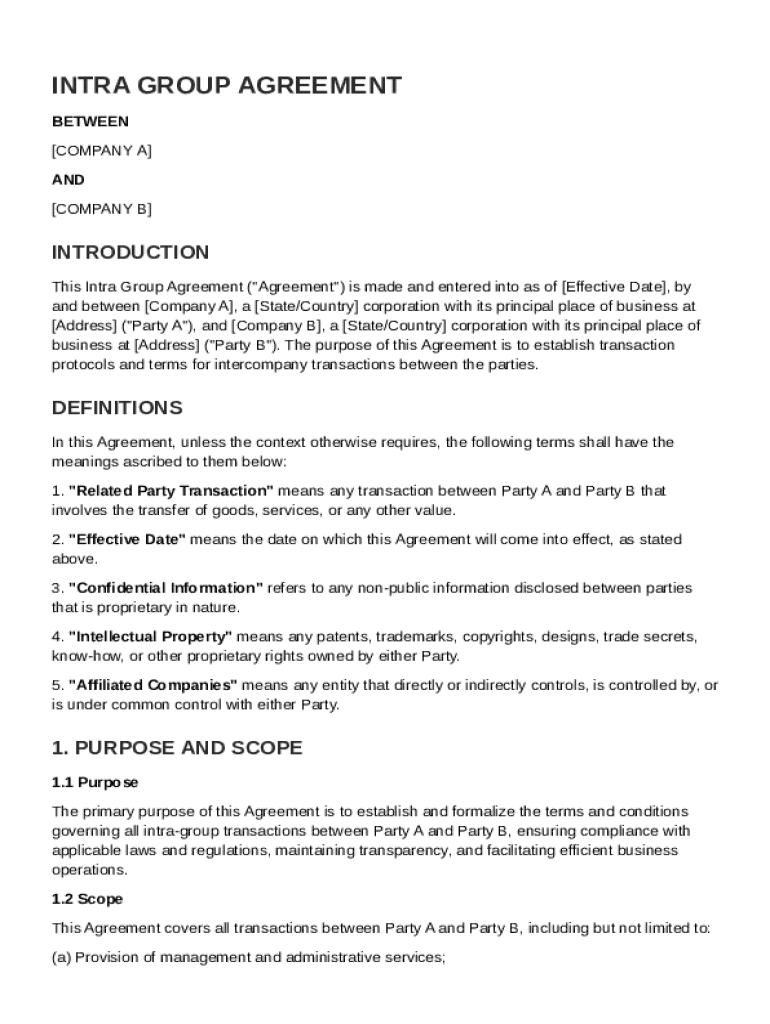
An Intra Group Agreement Template serves as a structured document for establishing terms and conditions governing intercompany transactions within a corporate group. These agreements are critical for defining how affiliated companies, such as subsidiaries and parent companies, operate and engage in transactions with one another. The template often includes provisions related to pricing, payment terms, confidentiality, intellectual property rights, and dispute resolution. Its primary aim is to ensure compliance with applicable laws, maintain transparency, and facilitate smooth business operations within the corporate structure.
Key Elements of the Intra Group Agreement Template
The Intra Group Agreement Template comprises several essential components that collectively ensure clarity and comprehensiveness:
- Parties Involved: Clearly identifies the entities within the corporate group that are parties to the agreement.
- Scope of Transactions: Defines the types of transactions, such as sale of goods, services, or intellectual property transfers.
- Pricing Mechanisms: Provides detailed methodologies for determining prices for goods or services exchanged.
- Confidentiality Clauses: Protects sensitive business information from unauthorized disclosure.
- Dispute Resolution: Outlines mechanisms to resolve disputes, often including mediation or arbitration clauses.
These elements are designed to align with both international standards and specific legal requirements of the United States, ensuring both local and cross-border compliance.
Steps to Complete the Intra Group Agreement Template
Completing an Intra Group Agreement Template involves a sequence of organized steps that require attention to detail:
- Identify Parties: Begin by listing all corporate entities involved in the agreement, ensuring precise identification of each party.
- Define Transaction Types: Clearly state the nature and extent of transactions covered under the agreement.
- Set Terms & Conditions: Specify key terms, including payment terms, delivery schedules, and performance obligations.
- Include Compliance Clauses: Ensure clauses meet U.S. statutory regulations, and international compliance standards if applicable.
- Review & Approval: Conduct a thorough review by legal advisors and obtain necessary approvals from authorized representatives.
This structured approach facilitates the creation of a robust and legally sound agreement that supports the group's operational harmony.
Who Typically Uses the Intra Group Agreement Template
This template is predominantly used by multinational corporations, large conglomerates, and their subsidiaries who engage in regular intercompany transactions. It caters to various departments within a corporation such as finance, legal, and compliance teams that need to ensure that these transactions align with internal policies and external regulatory requirements. This agreement is especially significant for corporations operating across borders with subsidiaries in different countries, necessitating meticulous documentation to manage complex tax and legal landscapes.


Importance of the Intra Group Agreement Template
Using an Intra Group Agreement Template is critical for several reasons:
- Regulatory Compliance: Ensures all intercompany transactions are documented and compliant with U.S. and international regulations.
- Tax Efficiency: Properly structured agreements can aid in optimizing tax obligations and reduce the risk of penalties.
- Risk Management: Provides clear guidelines that mitigate risks associated with intra-group operations, thus enhancing corporate governance.
- Operational Clarity: Streamlines operations by articulating roles and responsibilities, reducing misunderstandings and operational inefficiencies.
Understanding these aspects highlights why these templates are indispensable for robust corporate governance.
Legal Use of the Intra Group Agreement Template
The legal relevance of an Intra Group Agreement Template is anchored in its ability to function as a binding contract between related entities. This status obligates parties to follow agreed terms and can be enforced in legal settings if needed. It helps prevent legal disputes by providing pre-defined mechanisms for any disagreements that might arise. Moreover, it helps in adhering to regulations such as those from the Securities and Exchange Commission (SEC) or Internal Revenue Service (IRS) regarding related party transactions.
Examples of Using the Intra Group Agreement Template
Corporations often employ these templates in various scenarios:
- Shared Service Agreements: For functions like IT support or administrative services centralized within one group entity, but provided across various subsidiaries.
- Intellectual Property Licensing: When innovative technologies or trademarks developed by one subsidiary are utilized by others within the group.
- Cost Sharing: Agreements for shared research and development expenses, enabling multiple entities to benefit while equitably sharing the costs.
These examples highlight the broad applicability and necessity of such agreements in managing intricate corporate affairs.
Required Documents
Completing an Intra Group Agreement may necessitate several supporting documents to ensure transparency and legality:
- Financial Statements: To establish the economic foundation for pricing and payment terms.
- Legal Certifications: Documentations verifying the registration and status of the entities involved.
- Compliance Reports: To demonstrate adherence to relevant tax laws and regulatory requirements.
These documents support the integrity and compliance of the agreement, ensuring that it can withstand scrutiny from internal audits and regulatory investigations.
Software Compatibility
Utilizing digital solutions like DocHub for managing Intra Group Agreements can significantly enhance efficiency. DocHub provides compatibility with various file formats such as PDF, DOC, and TXT, allowing flexibility in document preparation and storage. It seamlessly integrates with tools like Google Workspace, enhancing accessibility and collaboration across geographically dispersed teams. The platform also employs robust security measures like 256-bit SSL encryption, ensuring the safety of sensitive financial and operational data during electronic agreement handling.
In these carefully structured sections, an in-depth exploration of the Intra Group Agreement Template has been provided, delivering significant insights and practical guidance for entities engaged in such intercompany arrangements.