
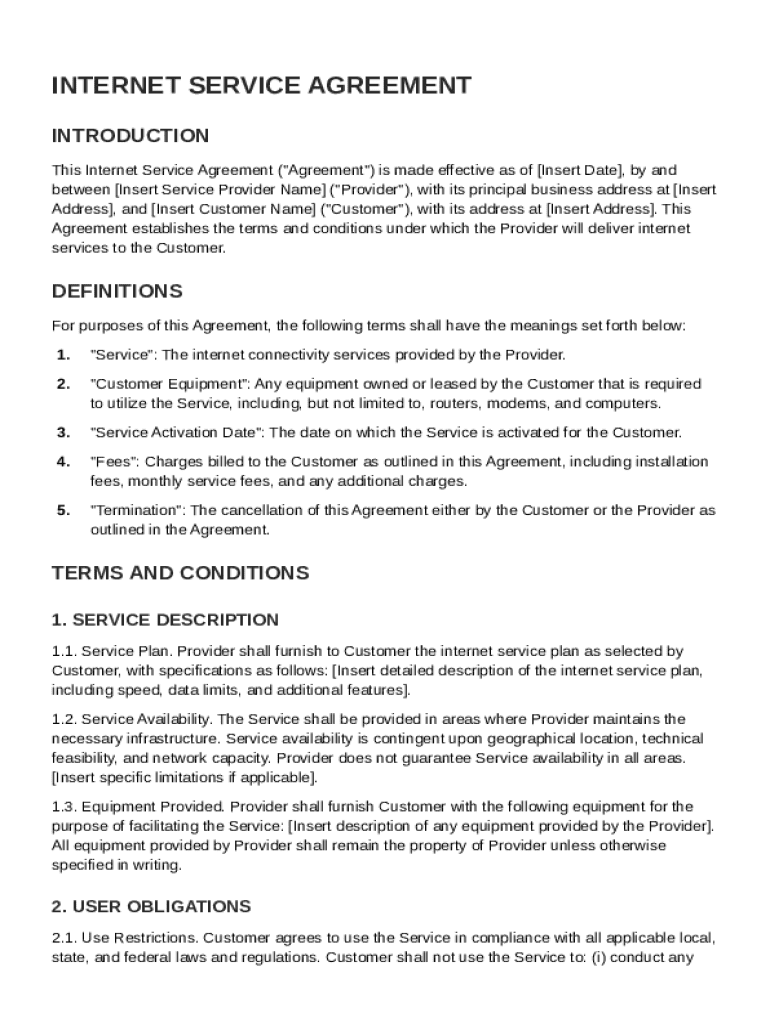







Definition and Purpose of the Internet Service Agreement Template
The Internet Service Agreement Template is a vital document used to establish the terms and conditions between an internet service provider and a customer. This agreement delineates the obligations and responsibilities of both parties regarding service usage, payment terms, and termination processes. It is essential for ensuring clarity and understanding between providers and customers, thereby minimizing potential disputes.
Key Components of the Agreement
- Definitions and Interpretations: Provides precise interpretations of terminology used within the agreement, ensuring both parties understand the context and scope of services.
- Service Descriptions: Outlines the specific services offered, detailing the types of connectivity, speed, and any additional features included in the subscription.
- User Responsibilities: Specifies what is expected from the user, such as maintaining equipment and adhering to usage policies.
- Fees and Payment Terms: Details the pricing structure, payment methods, and schedules, as well as late fee implications.
Practical Examples
- Residential Customers vs. Business Clients: While both may use the template, business clients might have terms that include service level agreements and guaranteed uptime, which are less critical for residential users.
How to Use the Internet Service Agreement Template
Using the Internet Service Agreement Template effectively involves customizing it to meet the specific needs of the service provider and the customer. Below is a step-by-step approach to utilizing the template:
Step-by-Step Guide
-
Gather Necessary Information:
- Identify all parties involved, including legal names and contact details.
- Establish the specifics of the services to be provided.
-
Customize Service Details:
- Modify sections to reflect the offered internet service levels, speeds, and any unique features or limitations.
-
Define Payment and Billing Processes:
- Clearly state the agreed-upon fees, billing cycles, and acceptable payment methods.
-
Outline Legal Obligations:
- Ensure legal compliance by including governing law and dispute resolution mechanisms.
Scenarios
- Household Use vs. Small Business Needs:
- A household may need basic connectivity descriptions, while a small business might require more comprehensive clauses about network security.
Key Elements of the Internet Service Agreement Template
The template consists of essential clauses that serve as the foundation of the agreement. Here are the critical components:
Important Clauses
- Service Level Agreements (SLAs): Defines expected performance levels, including uptime guarantees and support response times.
- Termination Procedures: Outlines the steps and conditions under which either party can terminate the agreement.
Variations and Customizations
- Digital Security Measures: For businesses, emphasize clauses on data protection and cyber-responsibilities.
- Amendment Provisions: Allows for future changes and updates to the agreement's terms without requiring a new contract.
Legal Use and Compliance
Ensuring the Internet Service Agreement Template is legally binding involves adherence to specific legal standards and compliance requirements. This section covers the critical legal considerations:
Legal Framework
- Governing Law: Typically aligned with the jurisdiction where the service is provided or where the service provider is located.
- Liability Limitations: Outlines the extent of liability on both parties, protecting against unforeseen circumstances.
Regulatory Compliance
- Consumer Protection Laws: Include clauses that comply with local regulations and consumer rights statutes to avoid legal complications.
Important Terms Related to the Internet Service Agreement Template
Understanding key terms within the agreement facilitates better comprehension and negotiation. Here are some vital definitions:
Technical Terms
- Bandwidth: The maximum data transfer rate of an internet connection, pivotal for determining service plans.
- Latency: The delay before a transfer of data begins following an instruction, crucial for service quality discussions.
Contractual Terms
- Amendments: Changes or additions to the agreement made post-signing, requiring mutual consent.
Example Usage
- Bandwidth Requirements for Streaming: Customers interested in streaming high-definition content need to understand bandwidth implications to select appropriate service levels.
Who Typically Uses the Internet Service Agreement Template
A broad spectrum of users relies on the Internet Service Agreement Template. This section identifies typical users and their unique needs:

User Categories
-
Residential Customers: Primarily interested in basic connectivity and cost-effective plans.
-
Commercial Entities: Require robust service agreements with guaranteed quality of service and uptime assurances.
User Scenarios
- Startups vs. Established Businesses: Startups may seek flexible terms with lower initial fees while established businesses might require more comprehensive SLAs.
State-Specific Rules and Differences
State regulations can significantly impact the terms of the Internet Service Agreement Template. Here are some considerations:
Regulatory Variations
- Consumer Rights: Vary by state, affecting elements like termination rights and privacy protections.
- Service Obligations: Some states mandate specific service quality or outage notifications.
Examples
- California vs. Texas Internet Regulations: California might have stricter privacy requirements, whereas Texas may focus more on service reliability mandates.
Software Compatibility and Integration with Business Tools
Compatibility with existing tools improves the efficiency of implementing the Internet Service Agreement Template. Here are the platforms and integrations to consider:
Compatible Platforms
-
Document Management Software: Integration with platforms like DocHub enables straightforward customization and signing of agreements online.
-
Business Management Systems: Compatibility with tools like QuickBooks can simplify billing and service tracking.
Enhanced Efficiency
- Streamlined Document Workflows: Using tools integrated with business ecosystems reduces document processing times and improves record-keeping accuracy.
By comprehensively detailing the Internet Service Agreement Template, users can ensure informed and efficient negotiations regardless of circumstances or requirements.




