
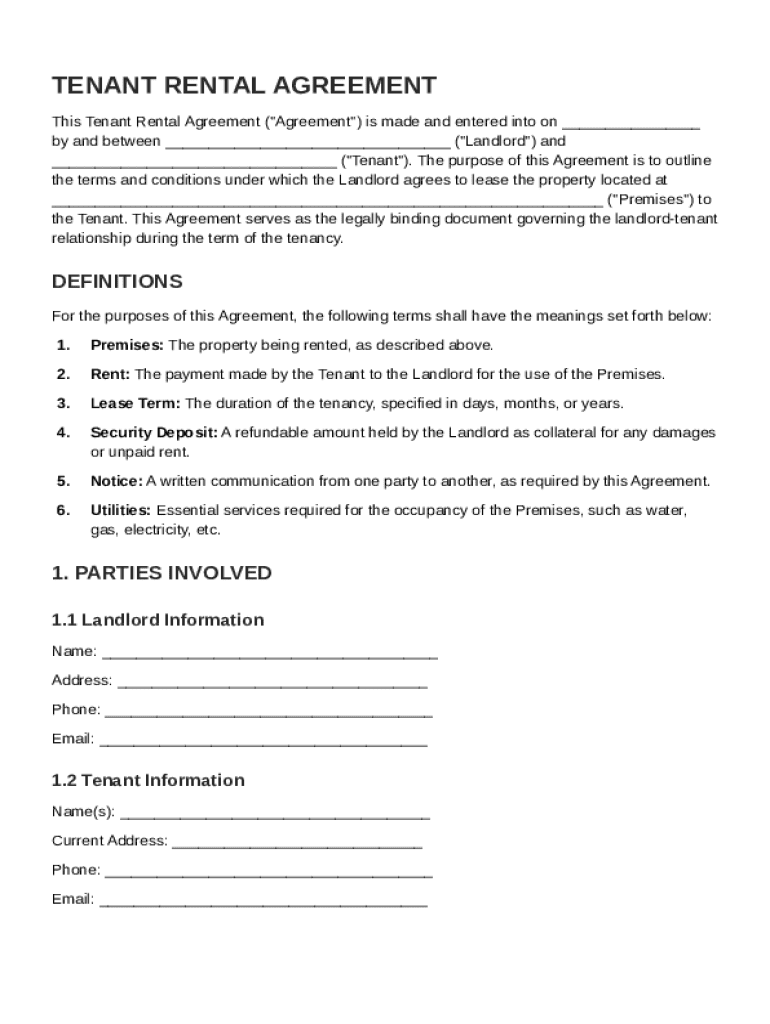







Understanding the Tenant Rental Agreement Template
The Tenant Rental Agreement Template is a foundational document in real estate, serving as a legally binding contract between the landlord and tenant. This agreement specifies the terms and conditions under which the property is leased, establishing a clear framework for both parties. It outlines responsibilities, payment terms, property usage, and legal rights, ensuring a transparent relationship. Recognized for its comprehensive nature, this template is crucial in preventing disputes and misunderstandings between landlords and tenants.
Essential Elements of the Tenant Rental Agreement
A Tenant Rental Agreement Template incorporates several key components to ensure clarity and enforceability:
- Parties Involved: Identification of both the landlord and tenant, including their legal names and contact details.
- Property Description: Precise details about the leased property, including address and specific boundaries.
- Lease Term: Duration of the tenancy, specifying start and end dates.
- Rent Details: Amount of rent, payment schedule, and accepted payment methods.
- Security Deposit: Amount required, conditions for its return, and usage terms.
- Maintenance and Repairs: Obligations for property upkeep by both parties.
- Use of Premises: Restrictions or permissions regarding property use, including allowing pets or business activities.
- Termination Conditions: Procedures and conditions under which the lease can be legally terminated.
Steps to Complete the Tenant Rental Agreement Template
Filling out the Tenant Rental Agreement Template involves several methodical steps:
- Collect Information: Gather all necessary details about the tenant(s) and property.
- Define Terms: Determine the length of the lease, rent amount, and payment terms.
- Include Provisions: Detail any specific provisions or rules unique to the rental situation.
- Review Legally: Optionally have the agreement reviewed by a legal professional.
- Signatures: Ensure both landlord and tenant(s) sign the document, along with dates.
Legal Use and Compliance
The Tenant Rental Agreement is governed by federal and state laws, necessitating adherence to legal standards for enforceability:
- Compliance with Fair Housing Laws: The agreement must not contain discriminatory language or terms.
- Rights and Responsibilities: Clearly outline the rights and duties of both landlord and tenant as per local regulations.
- Consents and Disclosures: Include any mandatory disclosures, like lead-based paint warnings in older buildings.
State-Specific Considerations
Rental agreements might have state-specific variations reflecting local laws and practices:
- Security Deposit Handling: States may have specific rules on how deposits should be handled and returned.
- Notice Periods for Termination: Legal requirements for how much notice must be given to terminate the lease.
- Mandatory Disclosures: Certain information must be shared with tenants depending on the state (e.g., history of flood, utility arrangements).
Real-World Examples of Use
The Tenant Rental Agreement Template is versatile, applicable in numerous rental scenarios:
- Residential Leases: Most commonly used for apartments, homes, and condos.
- Vacation Rentals: Adjusted for short-term stays and typically more stringent.
- Commercial Properties: Adapted for leasing office space with special clauses for business-related activities.
Variants and Alternatives to the Tenant Rental Agreement Template
While the primary template is widely used, alternative forms cater to specific rental needs:
- Month-to-Month Rental Agreements: For more flexible leasing arrangements.
- Sublease Agreements: When the original tenant leases out the property to another party.
- Roommate Agreements: To formalize living arrangements between multiple tenants in shared housing.
Importance of Using a Tenant Rental Agreement Template
Employing a Tenant Rental Agreement Template is crucial for:
- Protection of Rights: Ensures legal protections for both landlord and tenant.
- Clarity of Terms: Clearly delineates expectations and responsibilities.
- Risk Mitigation: Reduces the likelihood of disputes by preemptively addressing potential issues.




