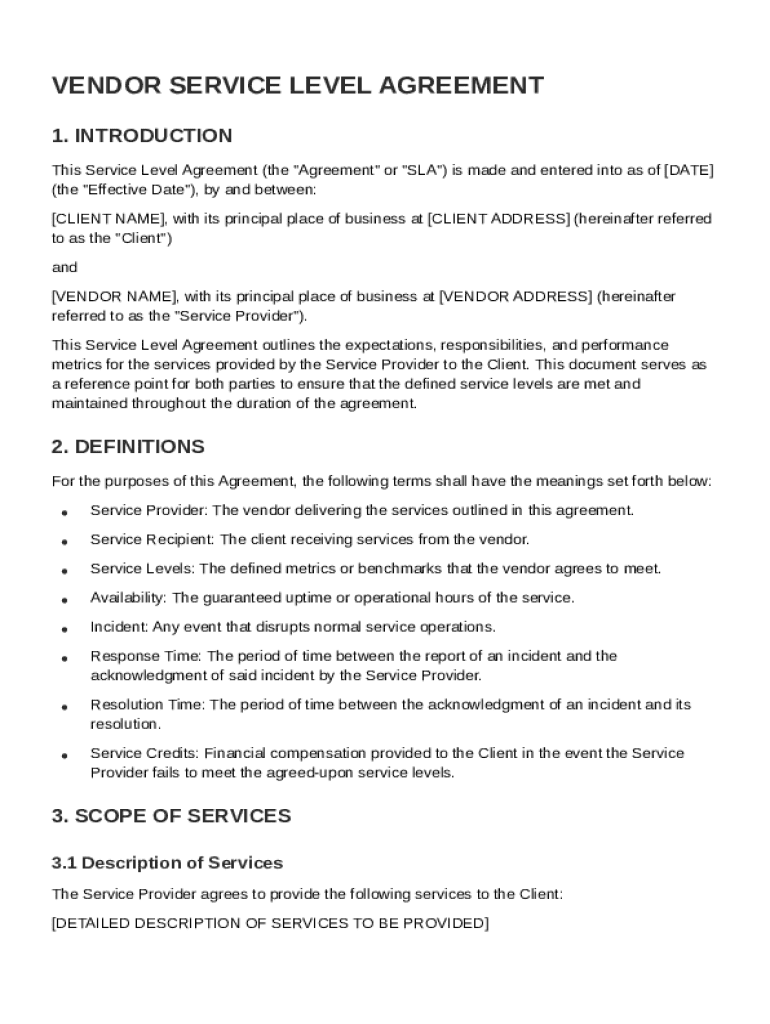







Definition and Purpose of a Vendor Service Level Agreement
A Vendor Service Level Agreement (SLA) Template is a formal document used to outline the terms and conditions under which a service provider delivers services to clients. It serves as a crucial framework to ensure accountability and service quality. The agreement details specific responsibilities and performance metrics for both parties involved. Common elements include service levels, incident management, and penalties for non-compliance. It also covers confidentiality, data protection, dispute resolution processes, and termination conditions. By defining clear expectations, a Vendor SLA can mitigate risks and protect the interests of both the vendor and the client.
Key Elements of the Vendor Service Level Agreement Template
A comprehensive Vendor SLA Template includes several crucial components:
- Service Levels: Specifies the standards for service delivery, such as response and resolution times.
- Incident Management: Outlines procedures for addressing service disruptions, including reporting and response protocols.
- Confidentiality and Data Protection: Ensures that sensitive information shared between parties is safeguarded.
- Reporting Requirements: Dictates how service performance will be monitored and reported.
- Penalties for Non-Compliance: Details consequences for failing to meet service standards.
These elements collectively ensure that both parties have a mutual understanding of service expectations and deliverables.
Steps to Complete the Vendor Service Level Agreement Template
- Identify Service Requirements: Clearly define the services to be provided and the expected performance levels.
- Draft Responsibilities: Outline the obligations of both the vendor and the client, ensuring mutual understanding.
- Incorporate Performance Metrics: Define specific metrics to evaluate service effectiveness and quality.
- Establish Communication Protocols: Detail how and when parties will communicate about service performance and incidents.
- Review Legal Compliance: Ensure the SLA complies with relevant laws and industry standards before finalizing.
This step-by-step process facilitates thorough documentation of expectations and responsibilities, providing a solid foundation for the service relationship.
How to Use the Vendor Service Level Agreement Template
Using the Vendor SLA Template involves customizing it to fit specific business needs:
- Tailor Service Descriptions: Adjust the template’s service descriptions to accurately reflect the services being provided.
- Specify Performance Standards: Set realistic and measurable performance standards based on industry benchmarks.
- Customize Legal Sections: Adapt confidentiality, data protection, and dispute resolution sections to align with organizational policies and legal requirements.
- Review with Legal Counsel: Ensure the agreement is legally sound by consulting with legal professionals if necessary.
Proper customization guarantees that the agreement is relevant and effective for the particular service arrangement.
Legal Use and Compliance with the Vendor Service Level Agreement Template
Compliance with legal standards is crucial for the enforceability of the Vendor SLA:
- Ensures adherence to privacy laws like GDPR or CCPA, if applicable.
- Includes clauses that comply with local and federal regulations.
- Establishes procedures for legal dispute resolution to protect both parties’ interests.
A legally compliant SLA protects both parties and reinforces trust, making it a critical component of business agreements.
Examples of Using the Vendor Service Level Agreement Template
Vendor SLAs are versatile and applicable across various industries:
- IT Services: Used to define support levels, uptime guarantees, and data security measures.
- Facilities Management: Establishes cleaning standards, response times for maintenance, and emergency procedures.
- Telecommunications: Specifies call quality, service availability, and customer support parameters.
These examples demonstrate the adaptability of SLAs in different contexts, tailoring to specific service industries.
Who Typically Uses the Vendor Service Level Agreement Template
The Vendor SLA Template is typically utilized by:
- Large Corporations: To standardize service delivery and safeguard interests in complex contracts.
- Small and Medium Enterprises (SMEs): For ensuring reliable service delivery from third-party vendors.
- Government Agencies: In managing outsourced services, ensuring compliance with public sector obligations.
These diverse users highlight the template’s applicability across different organizational sizes and sectors.


State-Specific Rules for the Vendor Service Level Agreement Template
While Vendor SLAs generally follow a standardized format, state-specific rules may affect their content:
- Regulatory Requirements: Certain states may have unique regulations impacting service agreements, such as data protection laws.
- Industry-Specific Guidelines: Varying by region, some states have stricter guidelines for industries like healthcare or finance.
- Local Business Practices: State norms or customary practices may necessitate additional clauses.
Adapting the SLA to meet these state-specific requirements ensures comprehensive and compliant agreements across jurisdictions.