




01. Edit your form online
Type text, add images, blackout confidential details, add comments, highlights and more.

Type text, add images, blackout confidential details, add comments, highlights and more.

Draw your signature, type it, upload its image, or use your mobile device as a signature pad.

Send it via email, link, or fax. You can also download it, export it or print it out.
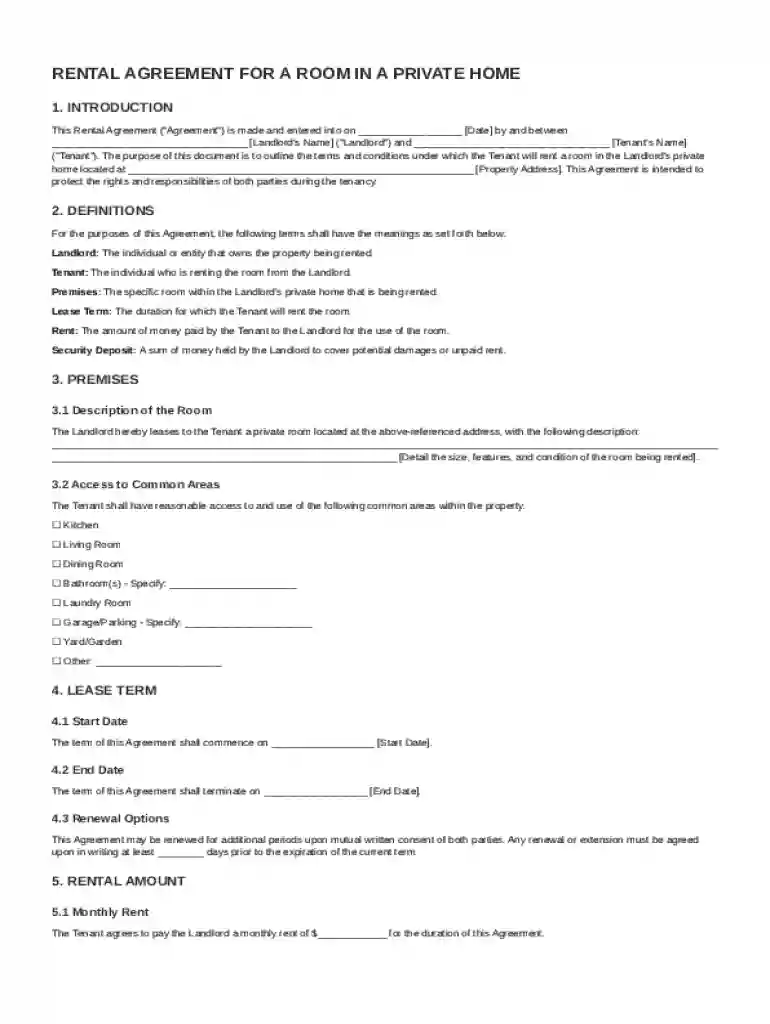
A Rental Agreement for a room in a private home is a legal contract between a landlord and tenant, outlining the terms and conditions for renting a room within a private residence. This document serves as a blueprint for both parties, defining their rights and responsibilities throughout the lease period. It covers detailed aspects such as the rental amount, lease term, security deposit, tenant duties, and termination clauses, ensuring clarity and legal compliance.
This agreement protects both landlord and tenant from potential disputes by clearly documenting expectations and obligations. It fosters a transparent relationship and provides legal remedies if either party defaults.
Customizing the Template: Ensure the agreement includes specifics relevant to your arrangement. Modify sections like rent, lease term, and tenant duties as necessary.
Reviewing Terms and Conditions: Both parties should thoroughly examine all provisions. This step ensures mutual understanding and agreement on all terms.
Signing the Agreement: Once finalized, both landlord and tenant should sign the document. Consider using electronic signature capabilities for convenience and compliance with the ESIGN Act.
Distributing Copies: Provide each party with a signed copy for their records. This practice is essential for future reference and legal validity.
For instance, if a tenant is expected to contribute to utilities, this should be clearly outlined in the tenant responsibilities section, ensuring clarity and preventing future disputes.
This template serves valid legal purposes when the room is rented within a private home. Adhering to state-specific residential leasing laws, the agreement must include all necessary legal disclosures and comply with federal, state, and local regulations.
The lease term outlines the tenancy duration, which can vary from short-term (e.g., month-to-month) to long-term (e.g., one year or more). Clear definition prevents misunderstandings about renewal conditions or notice periods required for termination.
Each state has unique laws affecting rental agreements, such as caps on security deposits or requirements for disclosure of property conditions. It is vital for landlords to adapt their agreements to comply with these specific regulations.
Precise definitions prevent misunderstandings, for instance, outlining which utilities are included in rent and which are payable by the tenant.
Completing and signing the rental agreement digitally provides convenience and efficiency. Electronic versions allow quick modifications, easy distribution, and secure electronic signatures, conforming to ESIGN Act guidelines.
Some situations might necessitate hard copies, possibly for parties who prefer physical documentation or lack internet access.


Landlords who frequently rent to students, single professionals, or seasonal workers might find this template particularly beneficial due to its flexibility and clarity in defining shared space usage.
At DocHub, your data security is our priority. We follow HIPAA, SOC2, GDPR, and other standards, so you can work on your documents with confidence.




This lease will take effect as of. (start date) and will end or be renewed on. (end date). The tenant agrees to pay the amount of $ for rent at. (address).Read more
Mar 31, 2026 Month-to-Month Rental Agreement (PDF) Room rental agreement This can be used by an owner renting out a room or two in their own home,


