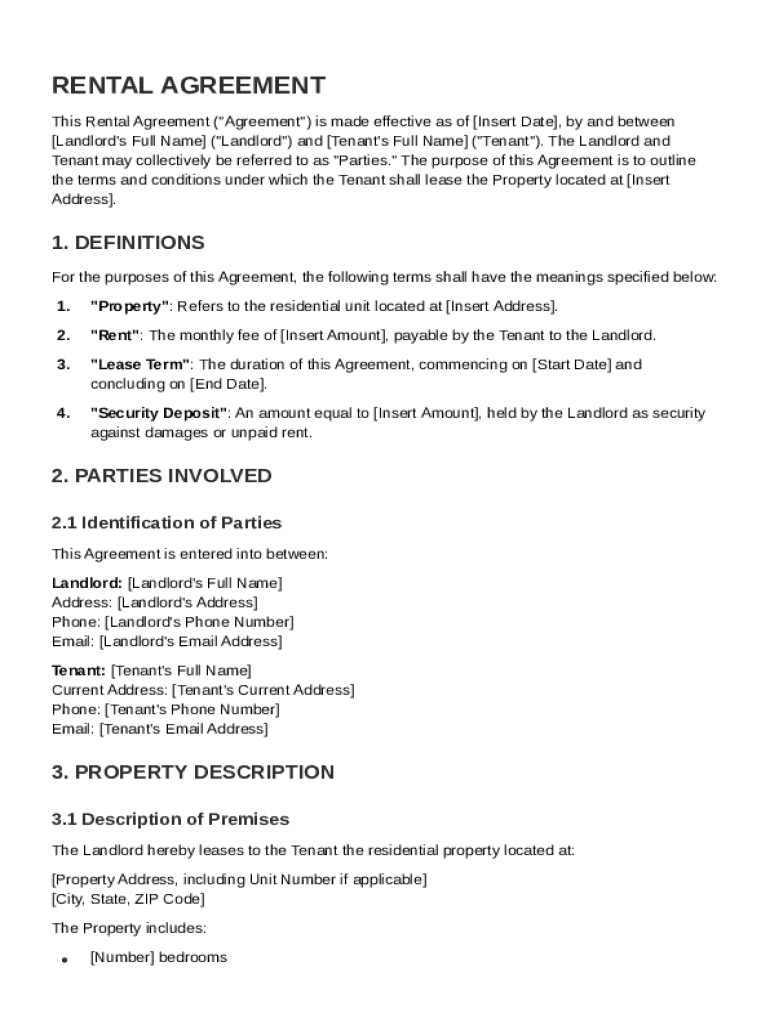







Understanding the Fillable Rental Agreement Template
A fillable rental agreement template is a customizable document designed to capture the essential terms of a leasing arrangement between a landlord and tenant. Unlike standard templates, it allows for specific information to be inserted into pre-defined fields, ensuring all critical details are tailored to the particular rental situation.
Key Elements of the Fillable Rental Agreement Template
- Parties Involved: Names and contact information of both the landlord and tenant.
- Property Details: Address, unit number, and description of the rental property.
- Lease Term: Start and end dates of the lease, along with any renewal options or provisions.
- Rent Payment Details: Monthly rent amount, due date, and acceptable payment methods.
- Security Deposit: Amount required, conditions for deducting charges, and circumstances for return.
Important Terms Related to Fillable Rental Agreement
Understanding rental agreements requires familiarity with several key terms:
- Lease Agreement: A contract outlining the terms under which a tenant rents property from a landlord.
- Tenancy: The period during which the tenant has the right to use the property.
- Security Deposit: Money collected upfront to cover potential damages or unpaid rent.
- Maintenance Obligations: Responsibilities for property upkeep by both the tenant and landlord.
Steps to Complete the Fillable Rental Agreement Template
- Gather Information: Collect necessary details about the parties, property, rent, and terms.
- Open the Template: Access the fillable template on a digital platform like DocHub.
- Fill Out Required Fields: Enter information in designated fields, ensuring accuracy.
- Review Terms and Conditions: Carefully read through the agreement to confirm all details.
- Sign Electronically: Apply digital signatures via the platform's electronic signing tool.
- Save and Share: After completion, save the document and distribute copies to relevant parties.
How to Use the Fillable Rental Agreement Template
- Digital Completion: Use a digital editing tool to fill out the template online, eliminating the need for physical documents.
- Collaborate: Share the document with both the tenant and landlord for input or reviews, if necessary.
- Securely Store Copies: Save backups in a secure cloud storage service for easy access and reference.
Legal Use of the Fillable Rental Agreement Template
The fillable rental agreement template is legally binding once all parties have signed. It complies with rental laws typical in the United States, adhering to the specific requirements of each state regarding lease agreements.
State-Specific Rules
Different states may have unique rules regarding rental agreements, so it is crucial to tailor the template to comply with local laws. This includes considerations such as:
- Maximum Security Deposits: Set by each state’s regulations.
- Notice Requirements: Rules for notifying about contract termination or changes.
Digital vs. Paper Version
Using a digital version of the rental agreement, such as through DocHub, offers substantial benefits over paper copies:
- Convenience: Easily editable and sharable document without the need for printing.
- Security: Documents are encrypted and protected by password options, offering greater security than physical copies.
- Efficiency: Real-time collaboration and updates ensure that all parties have the latest version.
Who Typically Uses the Fillable Rental Agreement Template
The fillable rental agreement template is predominantly used by:
- Landlords: To formalize lease terms with tenants efficiently and securely.
- Property Managers: For managing multiple properties and standardizing agreement processes.
- Tenants: To understand their rights and obligations clearly before signing the lease.


Software Compatibility
To maximize the effectiveness of the fillable rental agreement template, using compatible software like DocHub ensures seamless integration and use. The platform offers:
- Cross-Platform Use: Compatible with various file formats like DOC and PDF.
- Synchronization with Cloud Services: Direct integration with Google Drive, Dropbox, and OneDrive for easy document management.
This structured approach guides users in creating and managing their rental agreements effectively, taking advantage of modern digital tools for maximum ease and security.