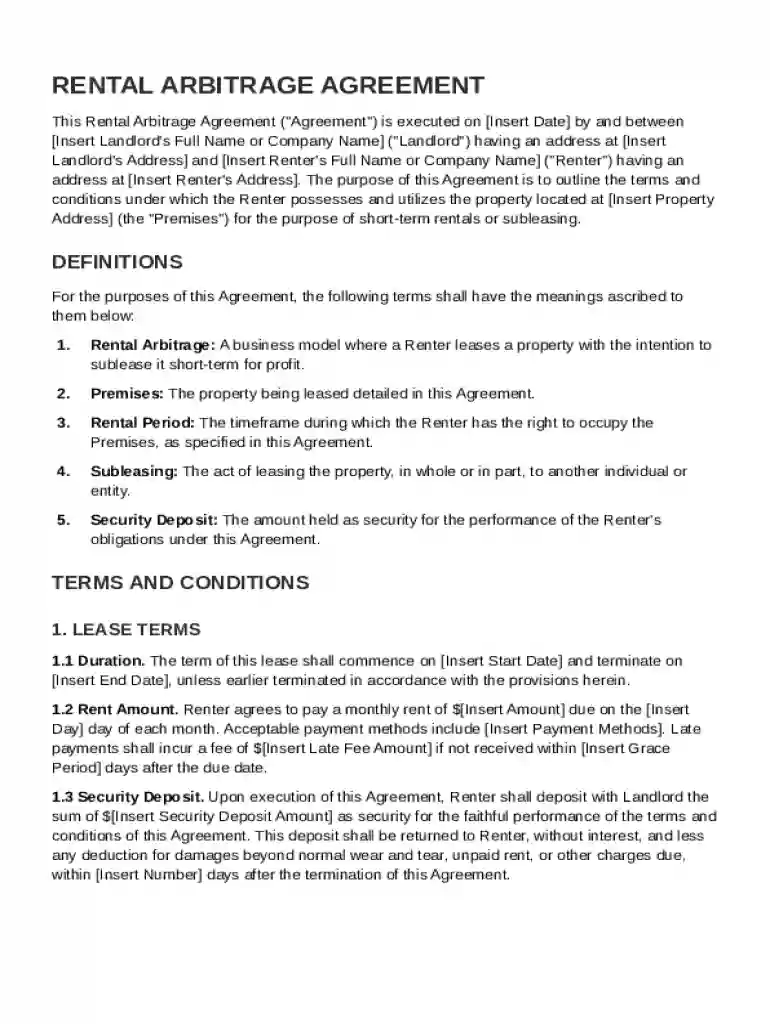
Definition & Meaning
A Rental Arbitrage Agreement Template is a structured document that outlines the terms and conditions between a landlord and a renter for leasing a property intended for short-term rentals. The agreement clearly defines key terms such as lease duration, payment details, and security deposit requirements, ensuring both parties understand their obligations. It is designed to facilitate compliance with relevant laws and provides a framework for protecting the interests of all involved parties. This form of agreement is particularly vital in scenarios where the property is used for generating revenue through platforms like Airbnb or Vrbo.
Key Elements of the Rental Arbitrage Agreement Template
The Rental Arbitrage Agreement Template typically includes several crucial components that govern the relationship between the landlord and the renter.
- Lease Duration: Specifies the start and end dates of the rental period, including any renewal options or terms.
- Rent Payment Details: Clarifies the amount of rent, due dates, and accepted payment methods.
- Security Deposit: Details the required deposit amount, conditions for refund, and any circumstances under which deductions may occur.
- Permitted Use: Defines allowable activities on the property, emphasizing that the use is for short-term rentals.
- Subleasing Permissions: Explains the renter's rights and limitations in subleasing the property to third parties.
- Termination Conditions: Outlines the procedures for early termination by either party, including notification requirements.
- Indemnity Clauses: Protects parties from liabilities arising from certain actions or breaches of the agreement.
- Governing Law: States the legal jurisdiction that governs the agreement, often crucial in the case of disputes.
Steps to Complete the Rental Arbitrage Agreement Template
Completing a Rental Arbitrage Agreement Template involves several important steps to ensure all necessary details are accurately documented.
- Review the Template: Familiarize yourself with all sections of the template to understand what information is required.
- Insert Parties' Information: Input the names and contact information of the landlord and the renter.
- Define Property Details: Specify the address and description of the property being leased.
- Establish Financial Terms: Enter the rent amount, payment schedule, and security deposit details.
- Outline Usage Terms: Clearly state the property's permitted uses and any restrictions.
- State Subleasing Conditions: Include terms regarding the renter's ability to sublease.
- Finalize with Signatures: Ensure both parties sign and date the agreement to make it legally binding.
Legal Use of the Rental Arbitrage Agreement Template
The legal use of a Rental Arbitrage Agreement Template involves considerations to ensure compliance with applicable laws and regulations.
- Local Regulations: The agreement must comply with local and state laws regarding rental properties, including necessary permits or licenses.
- Disclosure Requirements: Landlords might need to disclose certain conditions or defects of the property.
- Fair Housing Compliance: Ensures that the agreement adheres to Fair Housing laws, preventing discrimination against renters.
Important Terms Related to Rental Arbitrage Agreement Template
Key terms related to the Rental Arbitrage Agreement Template clarify the conditions and rights of both parties involved.
- Lease Agreement: A binding contract between the landlord and renter outlining terms of property use.
- Short-Term Rental: Utilization of property for periods typically less than 30 consecutive days.
- Arbitrage: Exploiting price differences in different markets; in real estate, renting low and subletting high.
- Sublease: The practice of leasing a rented property to another party.
Examples of Using the Rental Arbitrage Agreement Template
Renters utilize rental arbitrage to capitalize on temporary housing demands, such as:
- Tourist Destinations: Properties in high-traffic tourist areas leased at a long-term rate and rented short-term to tourists.
- Business Travel Hubs: Apartments near business districts offered as short-term housing for business travelers.
- Event-Driven Demand: Homes rented in conjunction with major local events, such as festivals or sports tournaments.
State-Specific Rules for the Rental Arbitrage Agreement Template
State-specific rules can significantly influence the provisions within a Rental Arbitrage Agreement Template.
- California: Laws may require additional tenant disclosures and habitability clauses.
- New York: Restrictions may apply on short-term rentals in multi-unit buildings.
- Texas: Property tax considerations might differ for properties used primarily for generating rental income.
These state-specific rules highlight the need to consult legal professionals to ensure the Rental Arbitrage Agreement Template is compliant with local regulations.