






Understanding the Hotel Agreement Template
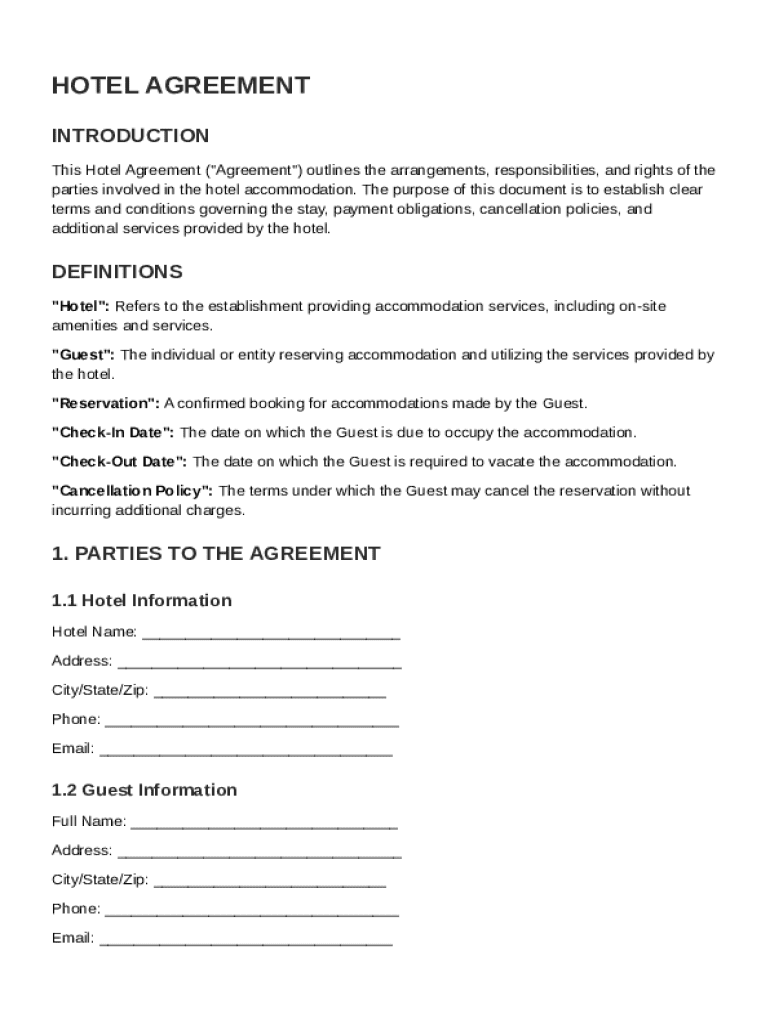
The Hotel Agreement Template is a comprehensive document outlining the terms and conditions for hotel accommodations. It specifies the responsibilities of both the hotel and the guest and includes a detailed description of important elements such as reservation details, payment terms, and services provided. It is crucial for both parties to thoroughly understand these components to ensure a smooth experience and to prevent legal disputes. This template serves as a legal document confirming the agreement between the hotel and its guests and dictates the procedures for check-in, check-out, and cancellations.
Key Elements of the Hotel Agreement Template
The Hotel Agreement Template typically includes various sections, each covering essential aspects of the agreement:
- Definitions: Provides clarity on specific terms used throughout the agreement to prevent ambiguity.
- Reservation Details: Covers dates, room types, and any special requests made at booking.
- Payment Terms: Outlines payment schedules, accepted payment methods, and policies on deposits and fees.
- Check-In/Check-Out Procedures: Specifies timings for check-in and check-out and any provisions for early arrivals or late departures.
Understanding these elements helps hotel operators and guests set expectations and avoid misunderstandings.
Steps to Complete the Hotel Agreement Template
Completing the Hotel Agreement Template requires careful attention to ensure all relevant details are captured accurately. Here’s a step-by-step guide:
- Review the Template: Thoroughly read through the entire document to familiarize yourself with the sections and requirements.
- Enter Reservation Details: Fill in the guest's name, contact information, dates of stay, and room allocation.
- Specify Payment Terms: Record the agreed-upon payment terms, including nightly rates, taxes, and any additional charges.
- Detail Services Provided: List any included services such as breakfast, parking, or Wi-Fi access.
Ensure accuracy in each section by cross-checking with the initial reservation confirmation.
Legal Use of the Hotel Agreement Template
For an agreement to be legally binding, it must meet certain requirements and include specific legal language. The Hotel Agreement Template aligns with these criteria, containing clauses that safeguard both parties' interests:
- Liability Clauses: Define limits of liability for both parties, covering potential damages or losses.
- Cancellation Policies: Detail the terms under which a reservation can be altered or canceled and outline penalties or fees.
- Governing Law: States the jurisdiction under which the contract will be interpreted, typically aligning with the state where the hotel operates.
These legal elements are crucial to ensuring the document's enforceability.
Importance of Using the Hotel Agreement Template
Utilizing a detailed and standardized Hotel Agreement Template offers several benefits:
- Clarity: Ensures both hotel and guest have a clear understanding of expectations and obligations.
- Risk Mitigation: Reduces the risk of disputes by clearly outlining terms and conditions.
- Professionalism: Presents a professional image, showing that the hotel takes its legal and customer service responsibilities seriously.
By using this template, hotels generate trust and confidence among guests.
Who Typically Uses the Hotel Agreement Template
This template is an essential tool for various stakeholders in the accommodation industry:
- Hotels: From large chains to boutique establishments, hotels use this template to standardize guest agreements.
- Property Managers: Individuals managing short-term rentals may adapt the template to suit their needs, ensuring compliance and clarity for guests.
- Event Planners: When booking blocks of rooms for events, this template ensures all terms are agreed upon in writing.
Each user group finds specific value in adapting the template to their unique operational context.


State-Specific Rules for Hotel Agreement Templates
Although many elements of the Hotel Agreement Template are standard, there can be state-specific variations due to differing local regulations. For example:
- Tax Rates: Vary by state and sometimes by city, affecting the total cost of accommodation.
- Consumer Protections: States may have additional requirements regarding guest rights and hotel obligations.
- Accommodation Laws: Certain states may impose specific clauses related to safety and accessibility.
Understanding these differences is key for hotels operating in multiple states or regions.
Examples of Using the Hotel Agreement Template
Real-world applications of the Hotel Agreement Template showcase its versatility:
- Business Travelers: Hotels often tailor agreements to include corporate rates and perks for frequent business travelers.
- Extended Stays: For long-term guests, the template might include additional clauses related to housekeeping services or discounted rates.
- Special Events: When handling wedding parties or conference attendees, hotels may integrate event-specific terms to accommodate special requests or logistics.
These scenarios highlight the template's adaptability to different guest needs and business models.