






Definition and Meaning of Heads Agreement Template
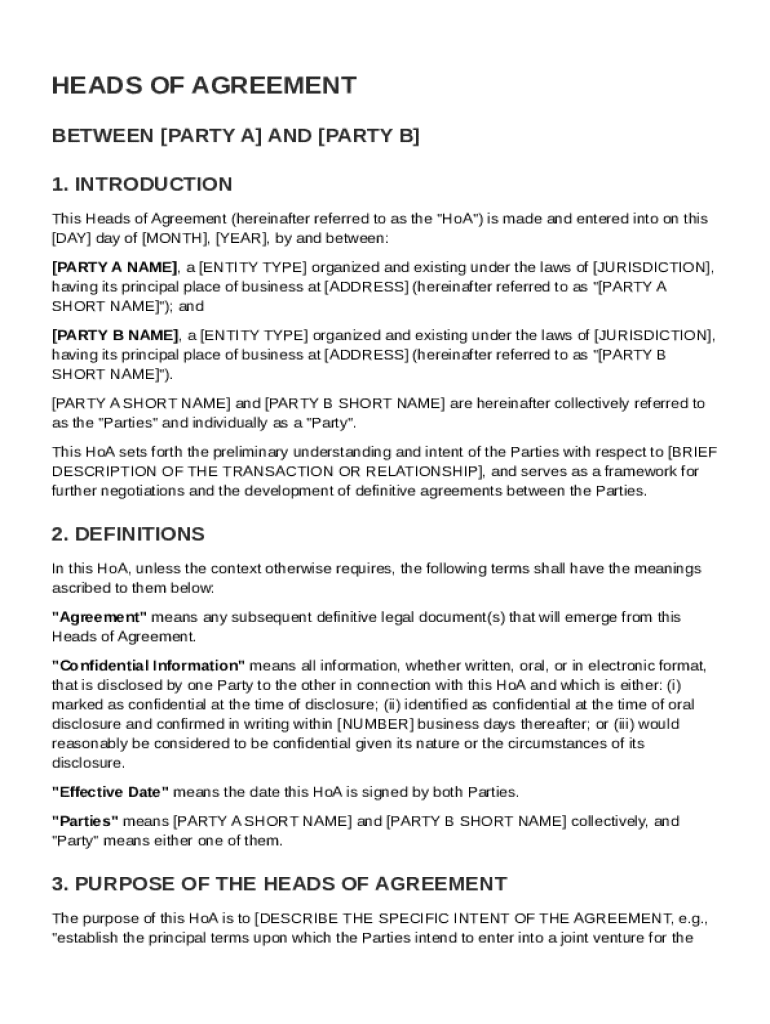
The Heads of Agreement (HoA) template is a preliminary document used during negotiations between two or more parties. It outlines their initial understanding, intent, and basic terms of a potential transaction or relationship. While it guides discussions and sets the groundwork for formal contracts, it is typically not legally binding except for sections that address confidentiality and dispute resolution.
Key Components
- Basic Terms: Typically include pricing, timelines, and conditions.
- Intent and Objectives: Clarifies the overall goals of the parties involved.
- Confidentiality Provisions: Protects sensitive information shared during negotiations.
- Dispute Resolution: Provides mechanisms for resolving disagreements that may arise.
How to Use the Heads Agreement Template
Utilizing the Heads Agreement Template involves several steps to ensure its effectiveness in negotiations. First, identify the key elements and terms that will form the foundation of future agreements.
Steps to Use
- Outline Main Objectives: Define the scope and purpose of the transaction.
- Detail Terms and Conditions: Address major points such as payment terms and responsibilities.
- Secure Approvals: Obtain consent from all parties to confirm mutual understanding.
Practical Examples
- Business Acquisition: Helps businesses agree on preliminary aspects of an acquisition before detailed due diligence.
- Partnership Formation: Useful for setting initial terms among partners planning a joint venture.
Steps to Complete the Heads Agreement Template
Completing a Heads of Agreement template requires comprehensive input from all parties to ensure it accurately reflects the intentions and expectations.
Detailed Completion Process
- Gather Necessary Information: Collect all pertinent details, including backgrounds of parties involved.
- Fill Out Core Sections: Address key terms, such as pricing and project timelines.
- Review and Revisions: Communicate with stakeholders to refine the document for accuracy.
- Finalize the Document: Ensure all parties sign the HoA to indicate preliminary commitment.
Legal Use of the Heads Agreement Template
Though a Heads of Agreement is generally not legally binding, certain sections can hold legal weight, particularly those concerning confidentiality and disagreement resolution.
Important Legal Considerations
- Binding Sections: Clearly identify parts of the document that are legally binding.
- Legal Review: It is advisable to have legal counsel review the HoA to ensure compliance with governing laws.
Key Elements of the Heads Agreement Template
A comprehensive Heads of Agreement should encapsulate several critical elements that facilitate further negotiations.
Essential Components
- Title and Parties Involved: Clearly specify the document's title and parties.
- Negotiation Timeline: Outline the intended timeline for negotiation and finalization of a binding agreement.
- Responsibilities and Obligations: Clearly delineate the responsibilities of each party.
Who Typically Uses the Heads Agreement Template
The Heads Agreement Template is primarily used by businesses and individuals involved in high-level transactions.


Common Users
- Corporate Entities: For mergers and acquisitions.
- Start-ups and Investors: In initial funding discussions.
- Property Developers: During preliminary property purchase negotiations.

Examples of Using the Heads Agreement Template
The Heads Agreement Template can be applied across various scenarios, illustrating its flexibility and extensive applicability.
Real-World Scenarios
- Joint Ventures: Companies use HoA to set the framework for collaborative projects.
- Mergers: Companies negotiating mergers may use HoA to outline major transaction details before final contracts.
Important Terms Related to the Heads Agreement Template
Understanding specific terminology associated with the Heads of Agreement is crucial for context and clarity.
Commonly Used Terms
- Legally Binding: Sections that impose enforceable obligations.
- Non-Disclosure Agreement (NDA): A separate or included agreement to protect confidential information.
- Due Diligence: Investigatory steps taken to confirm details and information about a party.
State-Specific Rules for Heads Agreement Template
While a Heads of Agreement is generally versatile, specific variations might be governed by state laws.
Regional Considerations
- State Laws: Some states may have specific regulations around dispute resolution included within these agreements.
- Jurisdiction Clauses: Often, the HoA will specify which state's laws will govern the agreement.
Business Types That Benefit Most from Heads Agreement Template
Different types of entities can leverage the Heads of Agreement to streamline their transactions and negotiations.
Targeted Beneficiaries
- SMEs and Corporations: Benefit from clear preliminary agreements when entering partnerships or collaborations.
- Real Estate Firms: Use HoA to manage preliminary terms in property deals effectively.
Versions or Alternatives to the Heads Agreement Template
While a standard Heads of Agreement is flexible, alternative document formats may support varying needs in specific contexts.
Alternative Approaches
- Memorandum of Understanding (MOU): Used in settings requiring a more formal expression of mutual intent.
- Letter of Intent (LOI): Offers a simpler alternative to outline key terms without detailed obligations.
Software Compatibility
Integration of software platforms such as DocHub allows users to manage the Heads Agreement Template with ease.
Compatible Software
- DocHub: Allows digital completion, storage, and sharing of Heads of Agreement documents.
- Google Workspace: Supports integration, making access to templates seamless through Drive and Gmail.
Why You Should Use a Heads Agreement Template
Employing a Heads Agreement Template can streamline complex negotiations and foster effective communication between parties.
Core Benefits
- Structured Negotiation: Provides clarity and direction in preliminary discussions.
- Cost Efficiency: Reduces legal expenses by minimizing ambiguity prior to formal contract drafting.