01. Edit your form online
Type text, add images, blackout confidential details, add comments, highlights and more.

Type text, add images, blackout confidential details, add comments, highlights and more.

Draw your signature, type it, upload its image, or use your mobile device as a signature pad.

Send it via email, link, or fax. You can also download it, export it or print it out.
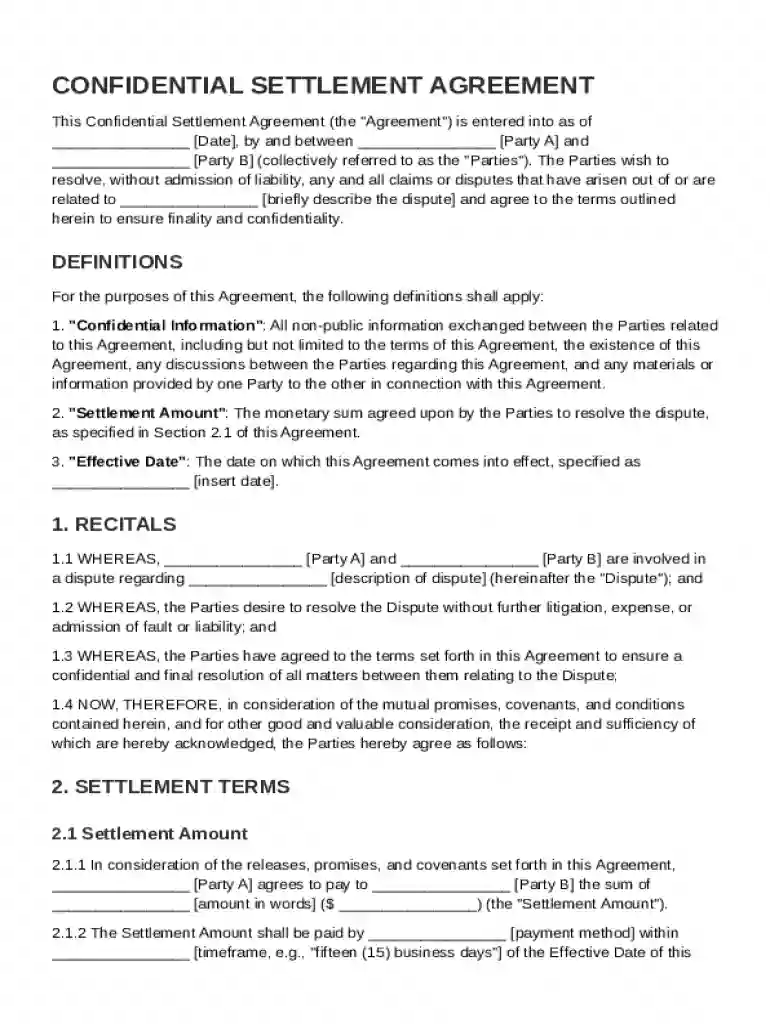
A Confidential Settlement Agreement Template is a formal document used to resolve disputes between two parties, referred to as Party A and Party B, without either party admitting to any liability. This legally binding agreement contains stipulations on how disagreements are settled, setting forth terms such as financial compensation, limitations on disclosures, and the obligations of each party to maintain confidentiality. The agreement facilitates a compromise without the need for litigation, saving both time and resources while offering privacy and control over the solution.
Using the template requires a clear understanding of the nature of the dispute and the specifics agreed upon by both parties. Initially, gather all information pertinent to the dispute, including financial terms and conditions, confidentiality requirements, and obligations of both parties. Proceed to fill in these details in the relevant sections of the template. Key areas include the description of parties involved, detailed settlement terms, and mutual releases. Ensure that all provisions align with the collective intent and understanding of both parties. Consultation with legal advisors is recommended to ensure compliance and accuracy.
Identify Parties: Clearly state the names and details of the involved parties — typically referred to as Party A and Party B.
Outline the Dispute: Briefly describe the dispute being resolved to provide context.
Define Key Terms: Specify settlement amount, any conditions, and the timeline for payments or actions.
Confidentiality Clause: Articulate any confidentiality obligations, including what information cannot be disclosed and any exceptions.
Mutual Releases: Clearly define the release of claims by both parties to avoid future legal actions pertaining to the resolved dispute.
Signatures: Both parties must sign the document to make it legally binding. Utilize tools like DocHub for digital signatures if applicable.
The legal enforcement of a Confidential Settlement Agreement hinges on its adherence to relevant laws and its clear stipulation of settlement terms. This template serves as evidence in legal contexts and is often upheld in court if contested. All involved parties must ensure the agreement meets legal standards, including compliance with regulatory requirements, and does not violate public policy. The document should be tailored to state-specific laws if applicable, maintaining legal validity across jurisdictions.
The template is utilized by businesses, individuals, and legal professionals involved in resolving disputes. Common users include corporate entities facing litigation from employees or competitors, individuals settling personal disputes, and lawyers drafting agreements for clients. Businesses and individuals alike benefit from the privacy this agreement provides, as it keeps settlement details discrete.


State laws may affect how a Confidential Settlement Agreement is enforced or what requirements must be fulfilled. For example, some states may have specific clauses regarding disclosure or mandatory mediations before such agreements can take effect. It's crucial for parties to consult with local legal counsel to adapt the template to meet state-specific requirements.
Confidential Settlement Agreements can be rendered in both digital and paper formats. Digital formats, facilitated by platforms like DocHub, offer convenience and efficiency with features like e-signatures and cloud storage. The digital version supports remote accessibility and ease of sharing, streamlining the agreement process while maintaining legal integrity comparable to traditional paper agreements.
At DocHub, your data security is our priority. We follow HIPAA, SOC2, GDPR, and other standards, so you can work on your documents with confidence.