






Definition and Meaning
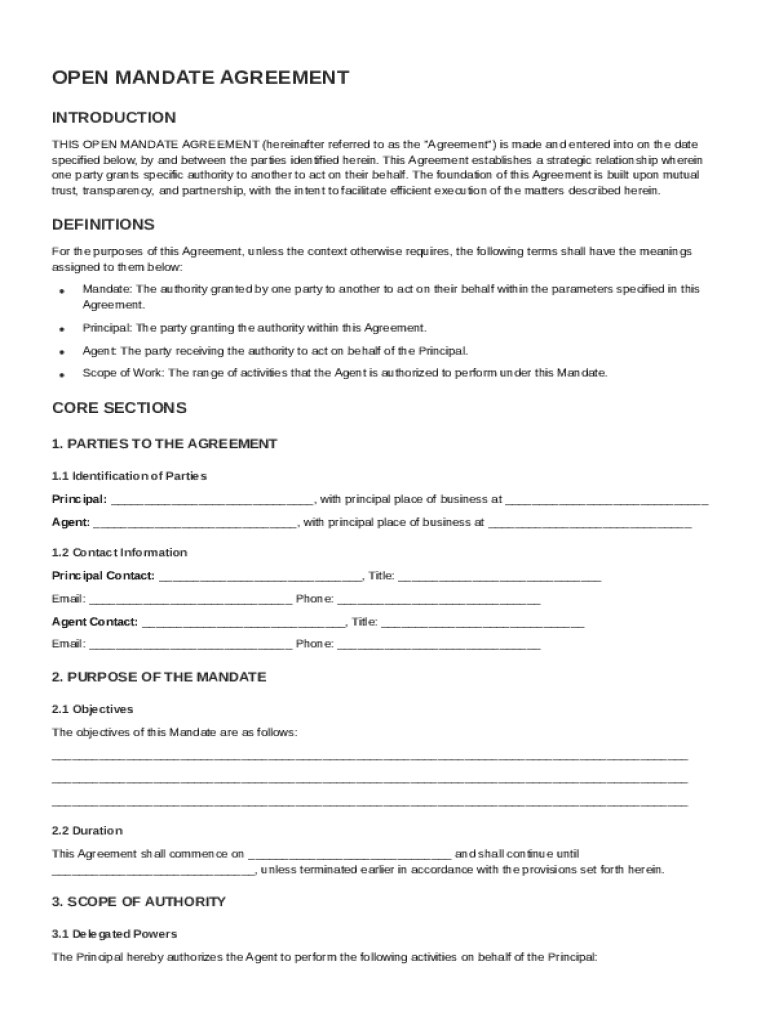
An Open Mandate Agreement is a strategic legal document that establishes a relationship between a Principal and an Agent. The Principal grants the Agent specific authority to act on their behalf, allowing for the execution of designated tasks. This agreement outlines key definitions, objectives, and the scope of authority, providing a clear framework for responsibilities and expectations. Its central purpose is to facilitate mutual trust and transparency, ensuring both parties can collaborate efficiently while adhering to the specified terms.
Key Elements of the Open Mandate Agreement Template
Understanding the key elements of the Open Mandate Agreement Template is crucial for its effective use. The template typically includes several fundamental sections:
- Scope of Authority: Clearly defines the extent of the Agent's power and the limitations on their actions.
- Responsibilities: Details the obligations of both the Principal and the Agent to ensure clarity in duties.
- Reporting Requirements: Specifies the necessary communication and updates between parties, including frequency and format.
- Confidentiality Obligations: Protects sensitive information shared between the Principal and the Agent.
- Indemnification Clauses: Outlines protections and liabilities related to the agreement's execution.
These elements ensure that the agreement is comprehensive, guiding both parties through their professional engagement.
Steps to Complete the Open Mandate Agreement Template
Completing an Open Mandate Agreement Template involves several structured steps:
- Review Definitions and Objectives: Ensure both parties have a clear understanding of the terms and goals.
- Outline Authority and Responsibilities: Specify the Agent's powers and the duties of each party.
- Establish Reporting and Confidentiality Protocols: Agree on how information will be shared and protected.
- Include Termination Conditions: Define how either party can end the agreement and under what circumstances.
- Review Governing Laws: Agree on the legal framework that will govern the agreement.
Completing these steps methodically helps prevent misunderstandings and ensures the agreement is actionable and legally sound.
Who Typically Uses the Open Mandate Agreement Template
Several professionals and entities make use of the Open Mandate Agreement Template, including:
- Real Estate Agents: To act on behalf of property owners.
- Financial Advisors: When managing investments for clients.
- Corporate Executives: Empowering senior managers to make decisions.
- Legal Advisors: Acting as representatives for their clients in specific areas.
The template's flexibility makes it suitable across various industries, providing a consistent framework for authorized representation.


Legal Use of the Open Mandate Agreement Template
The Open Mandate Agreement Template must adhere to legal standards to be enforceable. Key legal considerations include:
- Compliance with Local Laws: Ensure the agreement meets the legal requirements of the relevant state or jurisdiction.
- Clarity of Terms: Ambiguities can lead to disputes; clear, precise language is crucial.
- Signatures: Both parties must sign the document to acknowledge consent and understanding.
- Retention of Records: Keep copies for reference and legal compliance.
Adhering to these legal guidelines helps avoid disputes and ensures the contract is valid and respected by all parties.
Software Compatibility for the Open Mandate Agreement Template
Compatibility with document editing software is essential for effective use of the Open Mandate Agreement Template. Considerations include:
- File Format: The template should be available in formats like DOC, PDF, or XLS for easy editing.
- Integration with Platforms: It may require integration with Google Workspace or cloud services for collaborative editing.
- Editing Features: Use platforms that offer robust editing capabilities, such as inserting comments or signatures.
- Security Protocols: Software with encryption and secure access ensures data protection.
These technical features enhance the template's usability and security, making it suitable for professional environments.
Examples of Using the Open Mandate Agreement Template
Real-world scenarios illustrate the practical application of the Open Mandate Agreement Template:
- Real Estate Transactions: Agents use it to manage multiple property sales, ensuring they can make timely decisions on behalf of clients.
- Investment Management: Financial advisors leverage it to navigate complex investment portfolios, aligning their actions with client interests.
- Corporate Delegation: Senior managers are empowered to negotiate contracts or partnerships in alignment with company objectives.
These examples highlight the template's versatility in facilitating diverse professional interactions.
Digital vs. Paper Version of the Open Mandate Agreement
Choosing between digital and paper versions of the Open Mandate Agreement involves weighing various factors:
- Digital Version: Offers ease of access, editing, and sharing—ideal for remote and collaborative work environments.
- Paper Version: Provides a tangible record and might be preferred where digital signatures are not yet accepted.
Both versions have their merits, but the choice often depends on the organization's needs, technological infrastructure, and legal acceptance of digital signatures.
Business Types That Benefit Most from the Open Mandate Agreement Template
Different types of businesses gain significant advantages from the Open Mandate Agreement Template:
- Consulting Firms: Use the agreement to delineate authority and responsibilities in client engagements.
- Technology Companies: Particularly when outsourcing development or IT services, ensuring alignment with corporate goals.
- Healthcare Organizations: For delegating administrative or fundraising tasks while maintaining control over sensitive activities.
The template's adaptability makes it an invaluable tool for businesses looking to formalize delegated authority and maintain oversight.