






Definition and Purpose of the Community Agreement Template
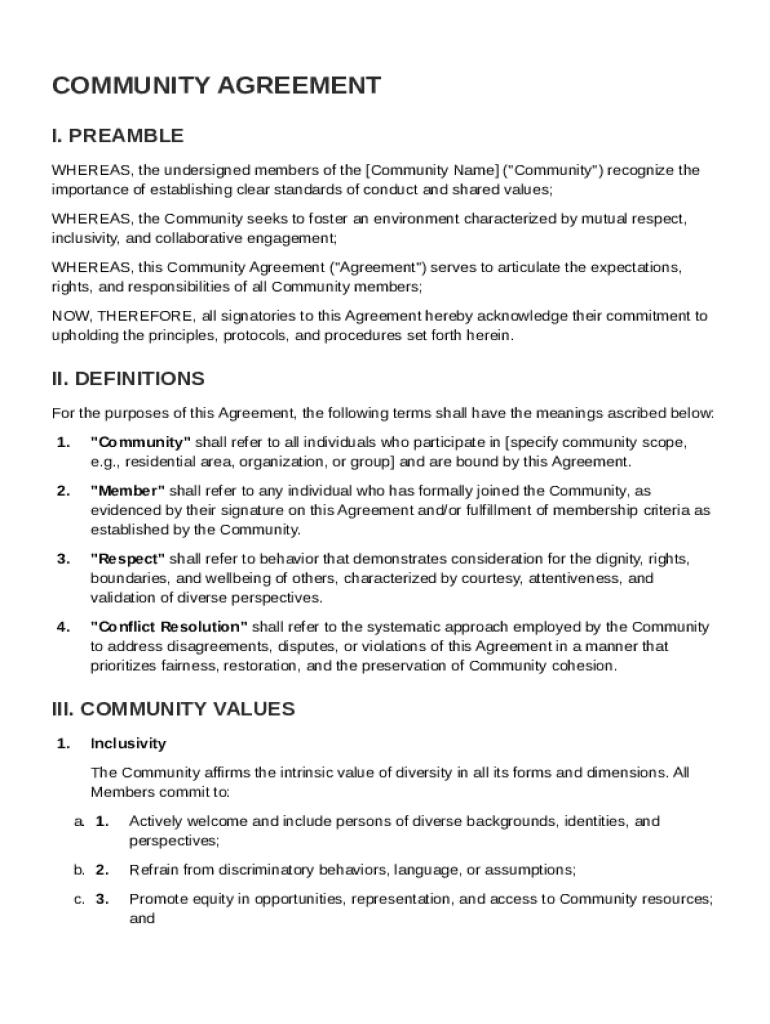
The Community Agreement Template serves as a foundational document that outlines the standards of conduct, shared values, and responsibilities for members within a community. This framework highlights mutual respect, inclusivity, and collaboration, ensuring that all participants work towards a harmonious environment. Essential aspects of the template involve establishing a code of conduct, detailing the processes for community participation, conflict resolution, and amendments. Members commit to these principles, thereby fostering a cohesive and positive community atmosphere.
Practical Applications
- Community Events: Used by event organizers to ensure all participants understand and agree to the community values.
- Online Forums: Facilitates respectful interactions in digital spaces by setting behavioral guidelines.
- Shared Workspaces: Encourages cooperation and mutual respect in co-working environments.
How to Use the Community Agreement Template
Using the Community Agreement Template effectively involves several steps to tailor it to specific community needs. This involves assessing community values, understanding the expected conduct, and incorporating these elements into the template.
Step-by-Step Instructions
- Identify Community Values: Understand core values like diversity, respect, and inclusivity which reflect the community’s mission.
- Customize Conduct Guidelines: Include clear behavior expectations relevant to the community setting.
- Establish Conflict Resolution Procedures: Detail processes for mediating disputes to maintain harmony.
- Review and Approve: Engage community leaders or stakeholders to review the draft for alignment with community ethos.
- Distribute and Implement: Share the finalized document with all members and integrate it into everyday interactions.
Key Elements of the Community Agreement Template
The template is structured to cover several crucial elements necessary for maintaining a fair and respectful community environment.
Core Sections
- Introduction to Community Values: Describes the mission and overarching values guiding the community.
- Code of Conduct: Offers specific behavior guidelines members are expected to follow.
- Responsibilities of Members: Lists obligations and roles assumed by community members to contribute positively.
- Conflict Resolution Methods: Details the steps for resolving disputes collaboratively and constructively.
- Protocol for Amendments: Outlines how changes to the agreement will be proposed and approved.
Steps to Complete the Community Agreement Template
Filling out the Community Agreement Template requires careful consideration to ensure it precisely reflects community needs and dynamics.
Completion Process
- Assess Community Needs: Gather input from members on key issues and values.
- Draft Initial Agreement: Use the template to write preliminary sections focusing on values and conduct.
- Incorporate Feedback: Collect and integrate feedback from community representatives.
- Finalize the Document: Edit the document for clarity, accuracy, and comprehensive coverage.
- Formalize Adoption: Seek formal approval or voting to adopt the agreement by community consensus.
Who Typically Uses the Community Agreement Template
The use of a Community Agreement Template is prevalent across diverse groups and sectors aiming to promote inclusivity and cooperation.


Typical Users
- Community Organizations: Non-profits and advocacy groups setting standards for member interactions.
- Educational Institutions: Schools and universities establishing guidelines for student and faculty interaction.
- Workplace Teams: Corporate teams and departments fostering a positive and collaborative work culture.
- Public Gatherings: Event organizers ensuring participant conduct aligns with communal goals.
Important Legal Considerations
Legal considerations ensure that the Community Agreement Template aligns with applicable laws and fosters legitimate community governance.
Legal Aspects
- Compliance with Local Laws: Ensure adherence to local regulations regarding group gatherings and public conduct.
- Privacy Considerations: Address confidentiality and personal data protection issues.
- Dispute Resolutions and Enforcements: Clarify legal standing of the agreement in conflict or legal disputes.
- Amendment Provisions: Include processes for legal review when amendments are proposed.
Examples of Using the Community Agreement Template
Real-world scenarios demonstrate the effectiveness of the Community Agreement Template in promoting a positive community atmosphere.
Case Studies
- Neighborhood Associations: Utilize agreements to manage shared community resources and address common concerns.
- Professional Conferences: Implement agreements to ensure respectful networking and discussion.
- Environmental Groups: Outline conservation practices and member responsibilities in support of ecological objectives.
Versions or Alternatives to the Community Agreement Template
The template can be adapted to suit various settings or be replaced with alternative documents when specific contexts demand.
Variations and Alternatives
- Digital Community Guidelines: Adapted version suited for online communities, focusing on cyber behavior and moderation.
- Event-Specific Agreements: Tailored versions for specific events or short-term engagements.
- Cultural Community Charters: Alternatives for communities with unique cultural practices or values requiring special consideration.
By detailing these blocks, the content caters to users seeking a comprehensive and practical understanding of the Community Agreement Template, its applications, and its integration into various community settings.