




01. Edit your form online
Type text, add images, blackout confidential details, add comments, highlights and more.

Type text, add images, blackout confidential details, add comments, highlights and more.

Draw your signature, type it, upload its image, or use your mobile device as a signature pad.

Send it via email, link, or fax. You can also download it, export it or print it out.
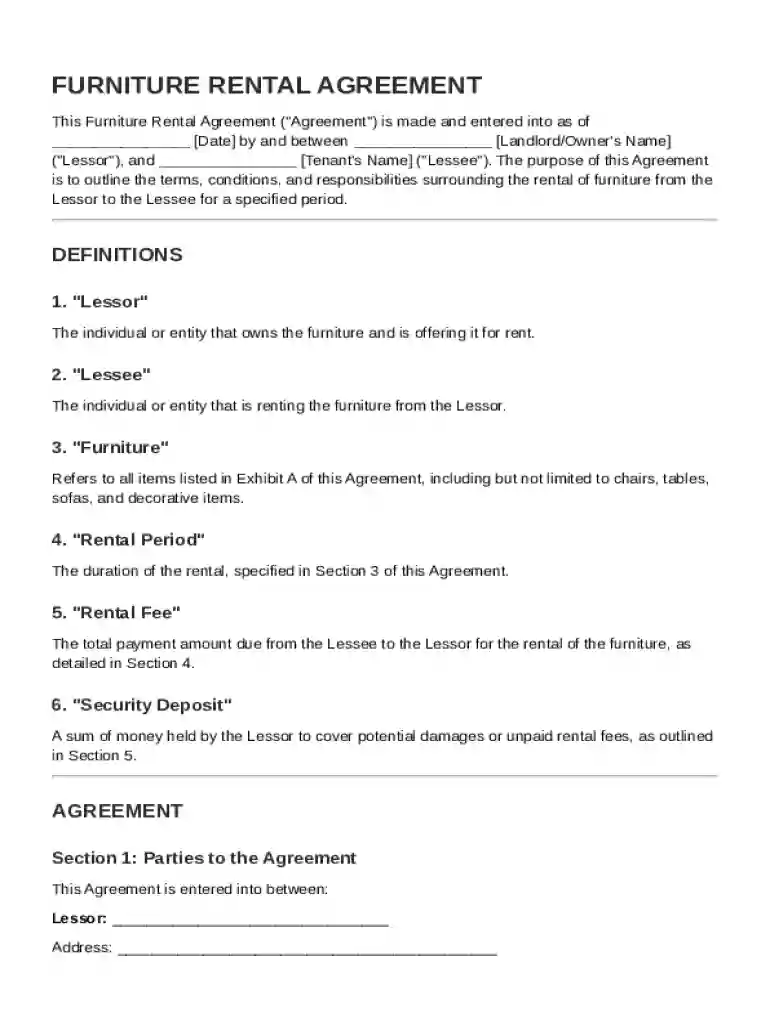
A Furniture Rental Agreement Template is a standardized document used to formalize the rental of furniture from a lessor to a lessee. This agreement specifies the terms and conditions that both parties must adhere to during the rental period. It is designed to provide clarity and legal structure to the rental process, ensuring all parties understand their rights and responsibilities. The template typically includes sections on rental fees, security deposits, maintenance expectations, and grounds for termination. By using this template, parties can prevent misunderstandings and disputes by clearly outlining the obligations of each party.
Identify Parties Involved: Clearly state the names and contact information of both the lessor (furniture owner) and the lessee (renter).
Describe Rental Items: List all furniture items included in the rental. Each item should be described in detail, including brand, model, and condition at the start of the rental.
Set Rental Duration and Terms: Specify the start and end dates of the rental period. Include any provisions for renewals or extensions if applicable.
Determine Rental Payment Details: Outline the rental fee, payment schedule, and preferred method of payment. Clarify any late payment fees or penalties.
Security Deposits and Conditions: Define the amount of the security deposit required, how it should be paid, and the conditions under which it will be returned.
Outline Maintenance Responsibilities: Specify who is responsible for furniture maintenance and repairs. Include instructions for reporting damage or requesting repairs.
Include Indemnity and Liability Clauses: Detail the liability of each party for damage, loss, or injury related to the furniture during the rental period.
Finalize the Agreement: Both parties should review the entire document, make necessary amendments, and sign the agreement. Ensure each party retains a copy for their records.
Identifying Details: This includes the information about the parties involved in the contract—names, contact details, and addresses.
Inventory List: A comprehensive list of all furniture pieces being rented, including their current condition and any identifying features such as serial numbers.
Rental Terms: This section should clearly state how long the rental is for, conditions for early termination, or the potential for renewal.
Payment Terms: An explanation of all costs involved, including the monthly rental fee, how it should be paid, and penalties for late payments.
Security Deposit Requirements: Detail how much is required upfront as a security deposit, the handling of this deposit, and conditions for its return.
Furniture Maintenance: Outlines the obligations of both the lessor and lessee regarding the upkeep of furniture and procedures in the event of damage.
Liability and Insurance: Allocates risk between parties for potential damages or losses and addresses any insurance coverages that might be applicable.
Amendments Clause: This should cover how changes to the agreement can be made and ensure both parties agree to them in writing.
The Furniture Rental Agreement Template provides a legally binding framework that clearly delineates the legal responsibilities between a lessor and lessee. It is crucial for protecting the rights of both parties and providing a basis for legal recourse if terms are violated. It adheres to general contract law principles, including offer, acceptance, and consideration, which ensures its enforceability in court. By defining liability clauses and indemnity, the agreement also addresses how disputes will be handled, offering a clear path for legal resolution in case of a disagreement.
Rental laws can vary significantly from one state to another within the United States, so it's essential to adapt the Furniture Rental Agreement Template to comply with local regulations. Some states might have specific legislation concerning security deposits, repairs, and allowable fee structures that must be adhered to. For example, certain states regulate the maximum security deposit a lessor can demand, while others might detail specific notice periods for termination. Anyone using the template should consult local laws or seek legal counsel to ensure compliance with these jurisdiction-specific requirements.
Short-Term Corporate Rentals: A business renting office furniture for a temporary project can use this template to clearly define terms and conditions for the duration of the project.
Event Planning: Companies specializing in event management may frequently need to rent furniture for weddings or conferences. This template can outline the specifics of each arrangement, ensuring clarity on delivery, setup, and pickup logistics.
Residential Staging Services: Real estate agents who stage homes for sale can utilize the agreement to cover the details around renting furniture for the staging period.
Furniture Rental Companies: These businesses regularly use such agreements for leasing furniture to clients ranging from individuals to corporations.
Event Planners: They often need to procure furniture on a temporary basis for events such as weddings, corporate meetings, and parties.
Property Managers and Landlords: Those who offer furnished rental properties may use these agreements to manage the temporary use of furnishings within their buildings.
Individuals: People moving to a new city for a short-term work assignment might rent furniture instead of purchasing new items, benefiting from a temporary, flexible arrangement.


At DocHub, your data security is our priority. We follow HIPAA, SOC2, GDPR, and other standards, so you can work on your documents with confidence.






The Landlord and Tenant agree to lease the Premises. Moving furniture, fixtures or equipment must be scheduled with Landlord. All furniture and fixtures shall
Cancellation/Early Termination Policy. Cancellation of furniture rental agreements must be communicated directly to Housing Residence Life and Triad Leasing.Read more


