






Definition and Meaning of Non-Piracy Agreement
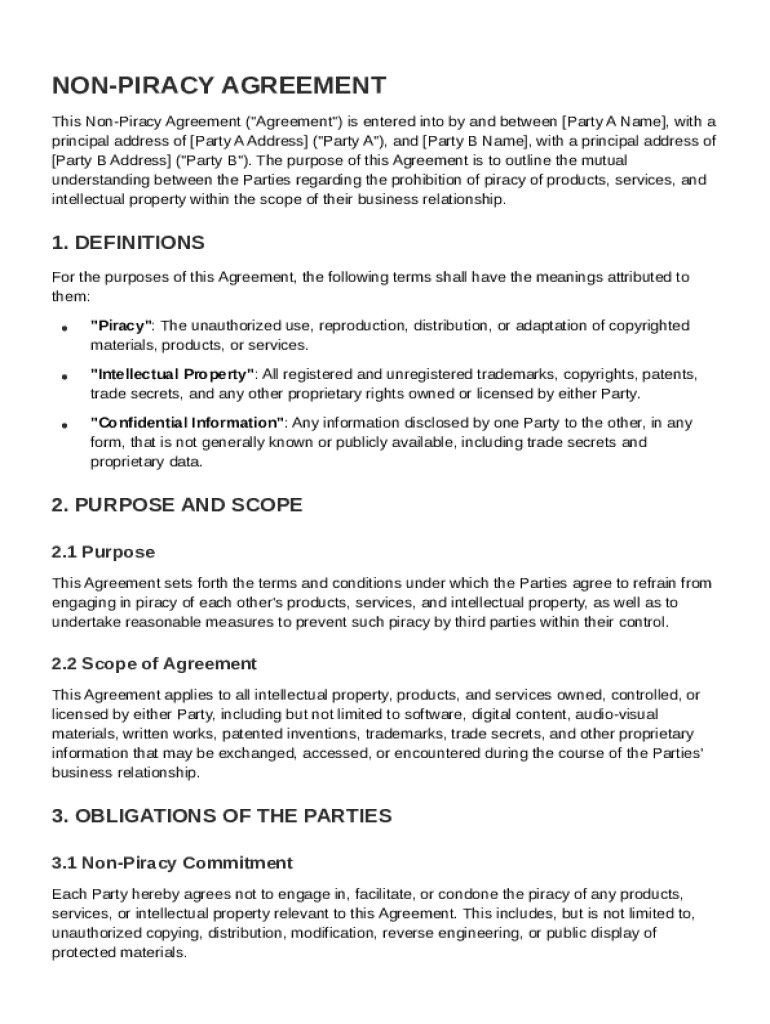
A Non-Piracy Agreement is a formal contract between two parties, often referred to as Party A and Party B, that establishes a mutual understanding to prevent the unauthorized use and reproduction of each other's products, services, and intellectual property. This agreement typically outlines key definitions, such as what constitutes 'piracy' and 'intellectual property,' to eliminate any ambiguity that could lead to different interpretations.
- Piracy: Unauthorized use, reproduction, or distribution of another's work that violates their intellectual property rights.
- Intellectual Property: Creations of the mind, including inventions, literary and artistic works, designs, symbols, names, and images used in commerce.
The purpose of this agreement is not only to safeguard proprietary rights but also to facilitate a cooperative business environment, encouraging fair play and ethical business practices.
Steps to Complete the Non-Piracy Agreement Template
Completing a Non-Piracy Agreement Template involves several steps to ensure that the document is thorough and legally binding.
- Gather Necessary Information: Obtain detailed descriptions of the intellectual property and any relevant product or service details that need protection.
- Define Key Terms: Clearly outline the terms such as 'piracy' and 'intellectual property' within the document to avoid misinterpretation.
- Outline Obligations: Specify the responsibilities of each party in terms of protecting intellectual property and preventing piracy.
- Confidentiality Provisions: Include clauses that safeguard sensitive information from unauthorized disclosure.
- Specify Remedies for Breach: Detail the consequences and legal remedies available in case of a breach of agreement.
- Final Review and Signatures: Ensure both parties review the document thoroughly, make any necessary revisions, and sign in agreement.
These steps help in creating a comprehensive Non-Piracy Agreement that reflects the needs and specifications of both signatories.
Key Elements of the Non-Piracy Agreement Template
The Non-Piracy Agreement Template comprises several key elements that are essential for its effectiveness and enforceability.
-
Introduction and Definitions: Clarifies the parties involved and crucial terms used throughout the document.
-
Obligations of Parties: Lists each party's responsibilities to prevent piracy and protect intellectual property.
-
Confidentiality Clause: Protects the exchanged information from unauthorized disclosure.
-
Remedies and Enforcement: States the actions to be taken in case of breach and how the agreement is enforced.
-
Dispute Resolution: Outlines the process for resolving any disputes that may arise during the agreement's duration.
These components ensure that the agreement is comprehensive, addressing all possible scenarios related to piracy.
Legal Use of the Non-Piracy Agreement Template
The legal use of a Non-Piracy Agreement Template involves ensuring that the document complies with state and federal laws applicable to intellectual property and contract law in the United States.
-
Compliance with Intellectual Property Laws: Ensure the agreement aligns with laws protecting trademarks, copyrights, and patents.
-
Enforceability: For the agreement to be enforceable, it must be clear, specific, and supported by legal consideration.
It is often advisable for both parties to seek legal counsel to customize the template to meet specific legal requirements and ensure full compliance.
Examples of Using the Non-Piracy Agreement Template
A variety of scenarios exist where a Non-Piracy Agreement may be utilized effectively:
-
Technology Companies: To protect software applications and proprietary algorithms from unauthorized reproduction or distribution.
-
Creative Agencies: To safeguard artistic works, including graphic designs, logos, and marketing collateral.
-
Manufacturers: To prevent the unauthorized replication of patented inventions and processes.
These examples illustrate the versatility and necessity of Non-Piracy Agreements across different industries.
State-Specific Rules for the Non-Piracy Agreement Template
Each state in the U.S. may have specific rules and regulations that can influence the formation and enforcement of a Non-Piracy Agreement.
-
Variation in State Laws: Different states may offer varying levels of protection for intellectual property, impacting the terms within the agreement.
-
State-Specific Requirements: Some states may require additional clauses or specific language for the agreement to be considered valid.
It is crucial to understand the particularities of state laws where the agreement will be enforceable to ensure its legal effectiveness.
Who Typically Uses the Non-Piracy Agreement Template
Various business entities and individuals can find use in a Non-Piracy Agreement Template:
-
Entrepreneurs and Startups: To protect new ideas and creative solutions from being pirated.
-
Established Companies: To uphold existing intellectual property rights and prevent infringement by competitors.
-
Freelancers and Consultants: To establish ownership and restrict unauthorized use of their work products.
These users rely on the agreement to legally protect their creative and technological innovations.


Important Terms Related to the Non-Piracy Agreement Template
Understanding the specific terms related to the Non-Piracy Agreement Template is essential for clarity and proper implementation.
-
Licensing: Permission granted by the intellectual property owner to use the work under specific conditions.
-
Breach of Agreement: Occurs when one or more parties fail to fulfill their obligations as outlined in the agreement.
-
Non-Disclosure: A commitment by the parties to not disclose any confidential information shared during the course of this agreement.
Knowledge of these terms supports both parties in successfully navigating the stipulations of the agreement.