
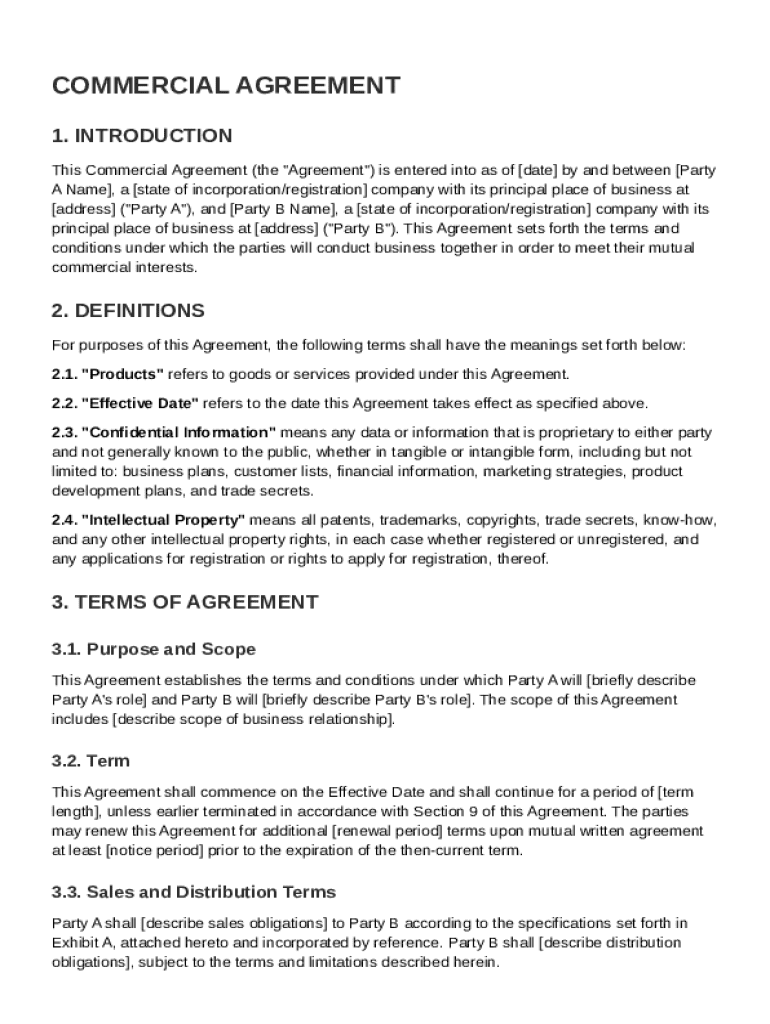







Definition and Purpose of a Commercial Agreement Template
A Commercial Agreement Template serves as a pre-drafted framework for establishing business relationships between two or more parties. It outlines the essential terms and conditions that govern the interactions and transactions involved. The document typically includes definitions of key terms, obligations of the involved parties, and structures for payment and pricing. By providing a standardized format, the template streamlines the process of entering commercial agreements, ensuring legal compliance and clarity in all business dealings. This template is versatile, facilitating mutual commercial interests and setting a clear foundation for executing business operations.
Key Elements of the Commercial Agreement Template
A comprehensive Commercial Agreement Template should encompass several critical elements to ensure it is legally robust and functional. These elements typically include:
- Definitions: Clear definitions of key terms used within the agreement to avoid ambiguity.
- Obligations: Specific duties and responsibilities assigned to each party involved.
- Payment Terms: Detailed breakdown of pricing structures, payment methods, and schedules.
- Confidentiality Clauses: Provisions to safeguard sensitive business information shared during the agreement.
- Intellectual Property Rights: Clauses determining the ownership and usage rights of intellectual property developed or exchanged.
- Dispute Resolution Mechanisms: Established procedures for resolving any disputes that may arise.
- Termination Clauses: Conditions under which the agreement may be terminated by either party.
Understanding these elements is crucial for anyone creating or using a commercial agreement to ensure comprehensive coverage of all necessary legal and business standards.
How to Use the Commercial Agreement Template
Using a Commercial Agreement Template involves several key steps to customize the document for specific business needs:
- Review the Template: Begin by thoroughly reviewing the template to understand the foundational structure and content.
- Customize Terms: Tailor the agreement terms to fit the unique requirements of the transaction or business relationship.
- Insert Specific Details: Include specific dates, names of the parties, and any unique obligations or rights relevant to the agreement.
- Consult Legal Counsel: For complex agreements, consulting with legal professionals can ensure all elements meet applicable legal standards and protect your interests.
- Final Review and Acceptance: Before executing the agreement, conduct a final review with all parties involved to confirm understanding and acceptance of terms.
- Execute the Agreement: After all parties agree, the agreement should be signed and dated to formalize the contract.
This process ensures the Commercial Agreement Template is effectively adapted for the intended business purpose and maintains its legal enforceability.
Who Typically Uses the Commercial Agreement Template
A wide range of professionals and organizations employ Commercial Agreement Templates. Key users include:
- Business Owners and Entrepreneurs: For establishing terms of trade and collaborations with suppliers, clients, or partners.
- Legal Professionals: Lawyers use these templates as a foundation for drafting more complex customized agreements for their clients.
- Corporate Entities: Large corporations may utilize templates to expedite agreements with vendors and partners, ensuring standardization across contracts.
- Start-ups: Start-ups often resort to templates to quickly and efficiently establish preliminary agreements as they seek to grow their business operations.
These users benefit from the structured framework and time-saving efficiency that a Commercial Agreement Template provides, making it an essential tool in diverse business environments.


Important Terms Related to Commercial Agreement Template
Understanding certain critical terms is essential when dealing with a Commercial Agreement Template:
- Consideration: The value exchanged between parties, such as monetary compensation or goods and services.
- Liability: The legal responsibilities each party has under the terms of the contract.
- Force Majeure: Clauses that absolve parties from liability in events of unforeseen circumstances beyond control, like natural disasters.
- Indemnity: Provisions protecting one party from loss or damage claims made by a third party.
- Jurisdiction: The legal authority under which disputes will be resolved, often dictated by geographical location.
These terms help clarify the responsibilities and protections within the agreement, ensuring that all parties are aligned in their understanding and expectations.
Legal Use and Compliance of the Commercial Agreement Template
To ensure legal compliance, the Commercial Agreement Template should incorporate:
- Accurate Legal Language: Use of precise legal terminology to prevent misinterpretation.
- Regulatory Compliance: Alignment with applicable laws and regulations relevant to the industry and jurisdiction, such as UCC Article 2 for sales of goods.
- Signatures: Both parties must sign the agreement for it to be legally binding, following proper witness and notarization procedures if necessary.
- Amendment Procedures: Clearly defined processes for making future modifications to the agreement with mutual consent.
Ensuring these factors are addressed in the template helps uphold the contract's enforceability and legal validity.
State-by-State Differences in Commercial Agreement Templates
While the basic structure of a Commercial Agreement Template remains consistent, certain variations may arise depending on the state:
- Governing Law Clauses: Each state has different statutes that may affect how agreements are interpreted and enforced.
- Filing and Notarization Requirements: Some states may require commercial contracts to be filed with state authorities or notarized to be considered valid.
- Specific Provisions: Certain states might have unique laws concerning trade practices, employment terms, or liability that need to be reflected in agreements.
Users must ensure the template is adjusted to accommodate such state-specific legal requirements to maintain compliance and minimize legal risks.
Examples of Using the Commercial Agreement Template
Practical use cases of a Commercial Agreement Template include:
- Supplier Contracts: Businesses use these templates to outline terms for purchasing goods from vendors, ensuring clarity around delivery times, payment terms, and quality standards.
- Service Agreements: Companies establish terms for services received from external providers, detailing performance expectations and compensation.
- Partnership Agreements: Templates help define roles, responsibilities, and profit-sharing in business partnerships.
These examples illustrate the template's versatility in fulfilling diverse commercial needs, allowing businesses to establish clear, enforceable contracts with their partners and clients.




