






Definition and Meaning of the Co-Branding Agreement Template
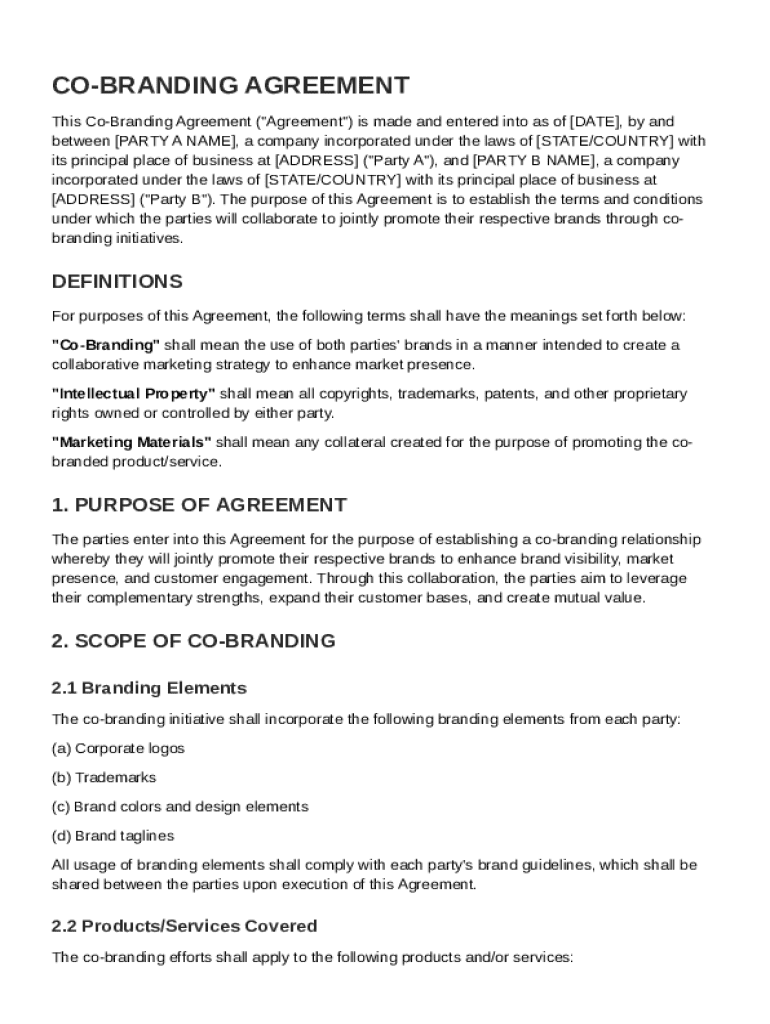
A Co-Branding Agreement Template is a structured document that sets forth the terms under which two or more parties engage in collaborative marketing efforts to promote their respective brands. Co-branding initiatives may include jointly produced products, advertising campaigns, or promotional events designed to leverage each party's brand strength. This agreement serves as a formal understanding of the roles, responsibilities, and expectations of the involved parties.
- Collaboration Goals: The primary aim is to mutually benefit from the shared resources, audience, and brand prestige.
- Scope of Agreement: Includes joint marketing, product development, and brand integration strategies.
- Legal Framework: Establishes binding obligations for each party, ensuring a protected and secure partnership.
Key Elements of the Co-Branding Agreement Template
The Co-Branding Agreement Template encapsulates several vital components critical to its execution and enforcement. These elements ensure comprehensive coverage of the partnership's scope and legal matters.
- Roles and Responsibilities: Clearly defines individual obligations, accountability, and authority assigned to each party.
- Intellectual Property Rights: Specifies ownership rights for any co-created materials and rules for brand usage.
- Financial Arrangements: Outlines revenue distribution, expense sharing, and financial responsibilities.
- Joint Marketing Efforts: Details the collaborative strategies, shared resources, and promotional duties.
Steps to Complete the Co-Branding Agreement Template
Completing a Co-Branding Agreement Template is a methodical process that ensures all relevant provisions are accurately captured and agreed upon.
- Identify the Parties: Clearly define the entities involved, including contact details and legal identities.
- Outline Objectives: Specify the goals and desired outcomes of the co-branding initiative.
- Detail Financial Terms: Agree on cost-sharing mechanisms, revenue allocations, and financial reporting requirements.
- Specify Brand Usage: Establish guidelines for using each party’s brand elements, like logos and trademarks.
- Review Legal Clauses: Ensure clauses on confidentiality, indemnity, and dispute resolution are thoroughly examined.
- Final Approval: Both parties must review and provide consent, typically through signatures from authorized representatives.
Legal Use of the Co-Branding Agreement Template
A Co-Branding Agreement Template must adhere to federal and state laws to ensure its legal standing and enforceability.
- Compliance with Contracts Law: Must be constructed in line with state-specific contract laws to be valid and enforceable.
- Adherence to Intellectual Property Laws: Proper expressions of intellectual property rights must be consistent with statutory obligations.
- Confidentiality Provisions: Legally binding clauses should protect sensitive information exchanged during the agreement.
- Mitigation against Unauthorized Use: Contains preventive measures against potential misuse of brand assets or co-produced materials.
Who Typically Uses the Co-Branding Agreement Template
The Co-Branding Agreement Template is especially beneficial for entities aiming to collaborate to enhance marketing reach and brand perception.
- Corporations and Enterprises: Large businesses looking to leverage co-branding for strategic market positioning.
- Startups and Small Businesses: Smaller entities aiming for growth through partnership with established brands.
- Advertising Agencies: Organizations managing co-branded campaigns for different businesses.
- Non-Profit Organizations: Entities collaborating with corporate partners for awareness-raising initiatives.


Important Terms Related to the Co-Branding Agreement Template
The Co-Branding Agreement Template incorporates specific terminology essential for understanding and implementation.
- Licensing Agreement: A subset of the agreement relating to brand and intellectual property usage rights.
- Revenue Sharing Model: Defined methods for dividing profits generated from the co-branded initiatives.
- Indemnification Clause: A provision safeguarding parties against losses resulting from another's negligence in the partnership.
- Termination Clause: Formalizes the conditions under which the agreement may be concluded ahead of its natural expiration.
Business Types That Benefit Most from the Co-Branding Agreement Template
Some types of businesses derive significant advantages from Co-Branding Agreements through increased market reach and brand synergy.
- Retail Chains: Benefit from joint product promotions with manufacturers to attract more customers.
- Technology Firms: Collaborate with hardware or software partners to co-design and market new technologies.
- Consumer Goods: Utilize partner networks to extend the brand presence across varied regions.
- Service Providers: Can enhance service offerings through partnerships that add value to customer experiences.
Who Issues the Co-Branding Agreement Template
The Co-Branding Agreement Template is generally drafted and issued by the legal department or an external legal counsel of the participating parties.
- In-House Legal Teams: Ensure the document aligns with corporate policies and legal standards.
- Law Firms: Offer tailored advice and drafting services based on industry-specific co-branding needs.
- Business Consultants: Facilitate the creation of the document by aligning the strategic goals of each party.