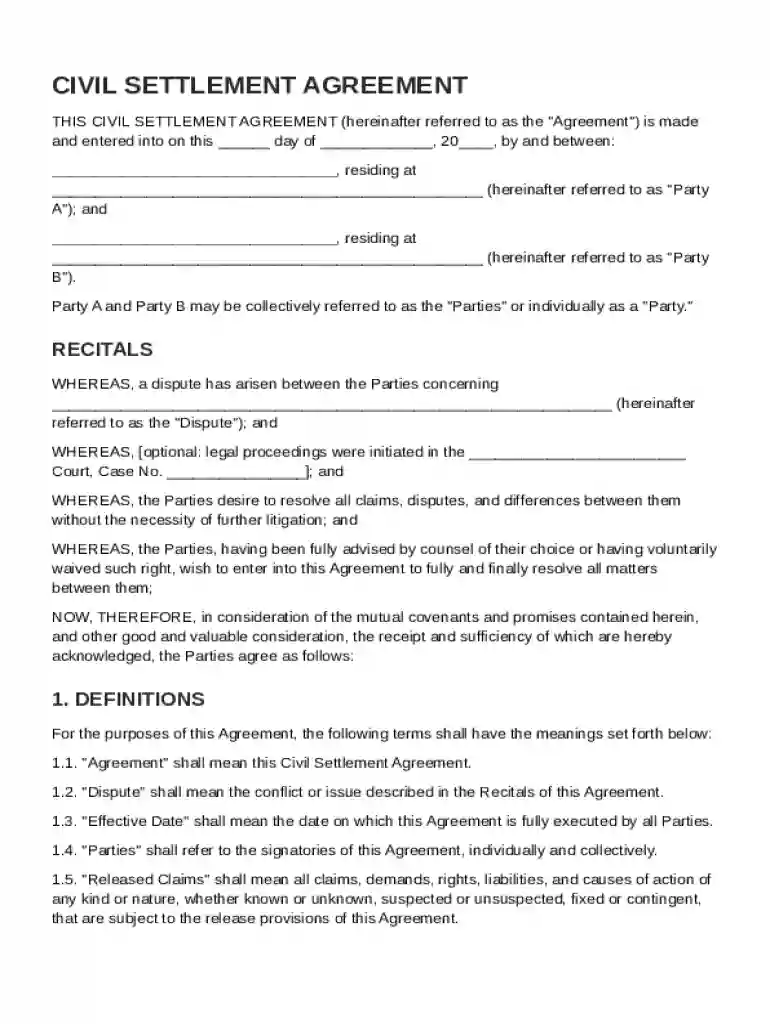
Definition & Meaning
A Civil Settlement Agreement Template is a legally binding document used to resolve disputes between two parties without further litigation. It sets out the terms under which Party A and Party B agree to settle their differences. This agreement includes crucial elements such as definitions of key terms, details about the settlement payments, confidentiality clauses, non-disparagement agreements, and provisions for future disputes. The primary aim of such a template is to achieve a mutual release of claims, ensuring both parties can move forward without the burden of ongoing legal action.
Core Components
- Settlement Payment Terms: Defines how and when any financial settlements will be made between the parties.
- Confidentiality Clauses: Protects sensitive information from being disclosed to external parties.
- Governing Law: Specifies which state's legal standards apply to the agreement, guiding interpretation and enforcement.
Real-World Application
Settlement agreements are commonly used in civil litigation to provide a cost-effective and timely resolution. By clarifying obligations and expectations, these agreements can prevent further legal disputes, saving time and money for all involved parties.
Key Elements of the Civil Settlement Agreement Template
The Civil Settlement Agreement Template comprises several essential sections to ensure complete and effective documentation of the agreement.
Major Sections
- Definitions and Interpretation: Clarifies the meaning of key terms used within the agreement to prevent misunderstandings.
- Background and Recitals: Provides context by outlining the nature of the dispute and the rationale for the settlement.
- Settlement Terms: Details the conditions each party must meet, including financial settlements and deadlines.
- Confidentiality and Non-Disclosure: Stipulates obligations related to keeping the terms and details of the agreement private.
Detailed Breakdown
- Mutual Release of Claims: Protects both parties from future litigation over the issues outlined in the agreement.
- Non-Disparagement Clause: Prevents parties from making negative statements about one another following the settlement.
Importance
Each component serves a vital role in protecting the interests of the parties involved, ensuring clarity, precision, and comprehensive coverage.
How to Use the Civil Settlement Agreement Template
Utilizing a Civil Settlement Agreement Template can be an efficient way to formalize a dispute resolution. The process involves several steps to ensure that the document accurately reflects the terms agreed upon by both parties.
Steps to Use
- Gather Information: Compile all relevant details about the dispute and the settlement terms agreed upon by both parties.
- Customize the Template: Modify the template to include specific details pertinent to the particular situation.
- Review by Legal Counsel: Have a legal professional review the modified template to ensure compliance with applicable laws and regulations.
- Mutual Agreement and Signatures: Once both parties agree on the terms, signatures should be collected as a binding acknowledgment of consent.
Practical Considerations
- Customization: Carefully tailor the template sections to fit the unique aspects of your settlement.
- Review and Modify Clauses: Ensure clauses related to confidentiality, payment, and legal governance are appropriate for all parties.
Utilizing such a template streamlines the settlement process, facilitating quick and effective resolutions while minimizing legal risks.
Legal Use of the Civil Settlement Agreement Template
The legal effectiveness of a Civil Settlement Agreement Template depends on its proper use and adherence to relevant statutory requirements.
Compliance with Legal Standards
- Adherence to ESIGN Act: When signed electronically, ensures all digital signatures within the template are legally binding.
- State-Specific Laws: The governing law clause must reflect relevant local regulations where enforcement is anticipated.
Protection and Enforceability
- Ensuring Legitimacy: Have legal counsel review the document to confirm all required elements are included and adequately addressed.
- Limitations and Constraints: Parties should be aware of specific legal enforceability, especially concerning non-disclosure and non-disparagement clauses.
Legal Risks
- Incomplete Documentation: Failing to include critical terms could result in a non-enforceable agreement.
- Ambiguous Terms: Vague clauses may lead to further disputes and possibly litigation.
By recognizing these considerations, parties can ensure an enforceable and fair settlement process.
Important Terms Related to Civil Settlement Agreement Template
Understanding the terminology within a Civil Settlement Agreement Template is crucial for its effective use. Mastery of these terms ensures both parties fully comprehend their obligations and rights.
Key Terms Defined
- Parties: References to Party A and Party B involved in the dispute resolution process.
- Consideration: The compensation or value exchanged between parties in settling their claims.
- Release: A clause where parties waive their right to pursue further legal action on settled claims.
Practical Examples
- Consideration Example: "Party A agrees to pay Party B $50,000 as a one-time settlement consideration."
- Release Example: "Both parties release each other from any past, present, or future claims related to the initial dispute."
Understanding Scenarios
Mastery of these terms aids in assessing the agreement's scope and limits, enhancing negotiation strategies and ensuring mutual comprehension and satisfaction.
Steps to Complete the Civil Settlement Agreement Template
Effectively completing a Civil Settlement Agreement Template involves several detailed steps to ensure accuracy and compliance.
Step-by-Step Process
- Identify Parties Involved: Clearly name and describe the parties in the opening section.
- Draft Settlement Terms: Outline the specifics, including financial settlements and any actions both parties agree to perform.
- Include Legal Clauses: Build in clauses for confidentiality, non-disparagement, and governing law.
- Consult Legal Experts: Arrange for skilled legal advice to validate all terms are correctly drafted and meet legal standards.
- Final Review and Signatures: Both parties must thoroughly review the finalized document and provide signatures.
Nuances and Considerations
- Validation: Confirm the document reflects the complete agreement between the parties.
- Record Keeping: Maintain copies for both parties, storing them securely to ensure they are accessible when required.
Following these steps can lead to a smooth completion process, reducing potential legal complications or misunderstandings.
Examples of Using the Civil Settlement Agreement Template
Examples illustrate how the Civil Settlement Agreement Template can resolve real-world disputes effectively.
Common Scenarios
- Employment Dispute: A past employee alleges wrongful termination. Both parties agree to a financial settlement without admitting fault.
- Business Contract Dispute: Two companies have a disagreement over a service contract. They reach an agreement on a settlement amount and non-disclosure of terms to avoid further litigation.
Illustrative Contracts
- Property Damage Claim: A neighbor causes damage to another's property. Through negotiation, they settle with an agreed amount, documented in the template.
- Intellectual Property: Two businesses dispute the use of a trademark and agree on a settlement involving shared usage rights.
Key Takeaways
By examining these scenarios, users can appreciate the versatility and utility of the template, realizing its potential in various settings while ensuring clear and fair outcomes.
Primary Users
- Businesses: Corporate entities often settle disputes related to contractual breaches or commercial disagreements.
- Individuals: Private parties use the agreements to resolve personal disputes, such as neighbor disagreements or small financial claims.
- Legal Professionals: Attorneys leverage these templates to streamline dispute resolutions and provide value to clients through efficient legal processes.
Beneficial Contexts
- Workplace Issues: Employers and employees may utilize the template to handle disputes over employment terms or termination.
- Family Disputes: Families can resolve inheritance or property disputes without involving courts extensively.
By focusing on diverse use cases, the template is proven to be an invaluable tool in achieving amicable settlements across various sectors and scenarios.