Definition and Meaning
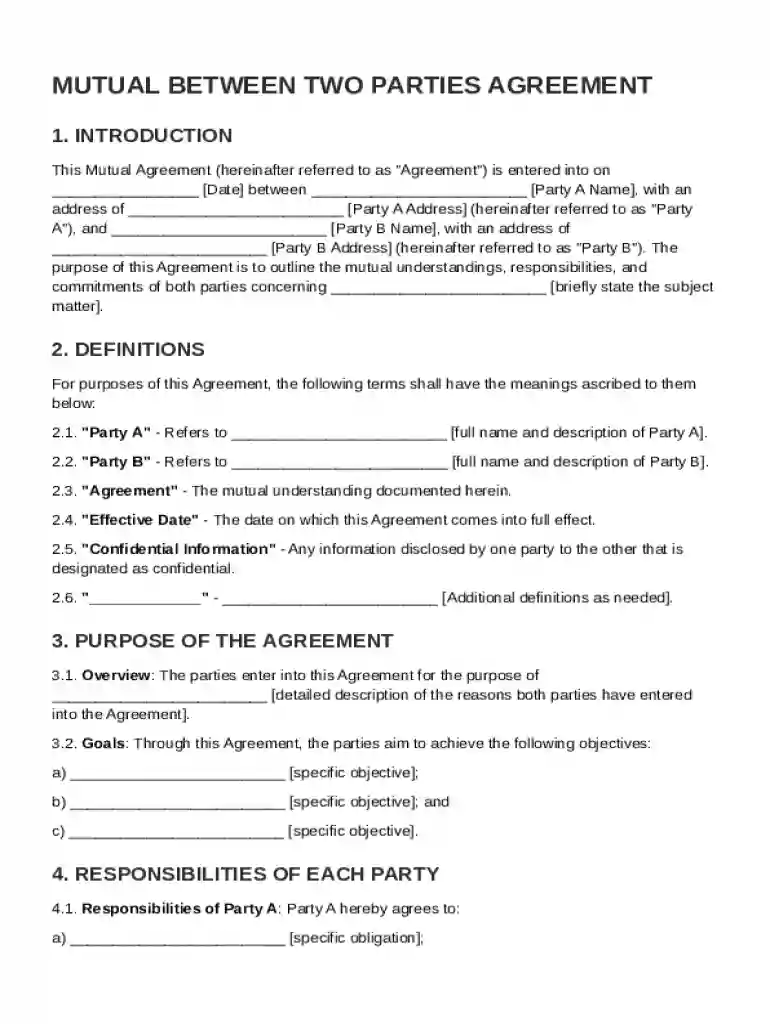
A Mutual Between Two Parties Agreement Template is a formal document that solidifies the understanding and commitments shared by two parties. This agreement is used to outline all essential terms and conditions, ensuring that each party fully comprehends and agrees to the responsibilities and rights entailed in the arrangement. Key components often include defining roles, responsibilities, obligations, and the scope of the agreement. By laying out these parameters, the document serves as a safeguard to protect the interests of both parties.
Key Elements of the Agreement Template
The template is structured to cover several critical areas that ensure both parties’ interests are considered and protected:
- Definitions: Emphasizes key terms to avoid ambiguity.
- Purpose: Articulates the primary objectives and intentions behind the agreement.
- Responsibilities: Clearly delineates duties assigned to each party.
- Terms and Conditions: Specifies duration, renewal terms, and termination clauses.
- Confidentiality Obligations: Ensures sensitive information remains protected.
- Indemnification Provisions: Outlines liability and compensation terms for damages or losses.
- Miscellaneous Provisions: Covers additional clauses for comprehensive protection.
How to Use the Template
To effectively utilize the Mutual Between Two Parties Agreement Template, it is essential to follow certain steps that ensure thorough completion and comprehension:
- Review the Template: Understand the structure and contents of the agreement.
- Identify Relevant Sections: Highlight sections pertinent to the specific agreement.
- Customize the Template: Adjust the language and clauses to fit the specific situation and legal requirements.
- Consult with Legal Counsel: Ensure that all terms are comprehensive and enforceable.
- Finalize and Sign: Verify all details before signing to ensure mutual understanding and consent.
Important Terms Related to the Agreement Template
Several terms are critical when discussing the Mutual Between Two Parties Agreement Template:
- Parties: The individuals or entities involved in the agreement.
- Consideration: What each party stands to gain or exchange.
- Clauses: Specific provisions outlined within the agreement.
- Binding: Legally enforceable commitments made by the parties.
- Arbitration: A method for resolving disputes, often outlined in the agreement.
Legal Use of the Agreement Template
The use of this template is governed by legal statutes to ensure fairness and enforceability. It is crucial to adhere to these legal norms:
- Compliance with Laws: Align the agreement with applicable federal and state laws.
- Legally Binding: Ensure that the agreement is signed with full awareness by all parties.
- Validity: Confirm that all sections are clear and non-contradictory.
- Dispute Resolution: Incorporate arbitration or mediation clauses where necessary.
Examples of Using the Agreement Template
Practical applications of the template can be seen in various scenarios:
- Joint Ventures: Used by businesses collaborating on a shared project.
- Service Contracts: Employed in agreements between service providers and clients.
- Licensing Agreements: Applied when one party grants another the rights to use a specific property or technology.
- Sales Agreements: Commonly used in transactions where terms of sale and delivery are outlined.
Steps to Complete the Template
Completing the template involves a series of specific actions to ensure accuracy and clarity:
- Gather Essential Information: Collect all necessary data about the parties and the subject matter.
- Fill Out the Template: Input details into the relevant sections of the template.
- Review for Completeness: Check that all relevant sections are addressed.
- Negotiate Terms: Discuss and agree on terms that meet both parties’ needs.
- Sign and Date: Both parties should sign the agreement in the presence of witnesses, if required.
State-Specific Rules for the Agreement Template
Legal requirements for agreements can vary by state. It's important to:
- Research State Laws: Ensure compliance with local jurisdiction rules.
- Adjust Provisions: Modify clauses to reflect state-specific regulations.
- Seek Local Legal Advice: Engage with legal professionals familiar with local laws.
- Acknowledge Variations: Recognize differences in enforceability and default laws across state lines.
Software Compatibility
The Mutual Between Two Parties Agreement Template can be seamlessly integrated into various software platforms to facilitate ease of use:
- Document Editors: Compatible with word processors like Microsoft Word and Google Docs.
- PDF Editors: Supports software such as Adobe Acrobat for editing PDFs.
- Cloud Services: Accessible through cloud storage platforms like Google Drive and Dropbox.
- Collaboration Tools: Integrated with tools like DocHub for online editing and signing.
Business Types That Benefit Most
Certain businesses are more likely to use a Mutual Between Two Parties Agreement Template:
- Startups: For defining roles and partnerships in early business stages.
- Consulting Firms: To outline the scope of services and client expectations.
- Technology Companies: When licensing software or technology to partners.
- Manufacturers: For agreements with suppliers and distributors.